


A major part of the charm that comes with Magic: The Gathering’s Final Fantasy Universes Beyond set is the way so many of the cards tell familiar stories. Tidus, Blitzball Star gives us a snapshot of the character at the very start of Final Fantasy 10: he’s a wildly famous pro athlete whose secret weapon is a fancy Blitzball shot that knocks a defender out of the way. The card’s mechanics reflect that in nuanced ways. These kinds of stories are all over the Final Fantasy set, and not all of them are fun and games. Some of them remind us of tragedies we still mull over decades later.
Yoni Skolnik, a principal game designer at Wizards of the Coast, said in a blog post that when the team approached the set, they were careful to find a way to “let people enjoy their nostalgia without alienating everyone else” that also honored the “emotional resonance of the games.” As such, the final product is full of little narrative Easter eggs that hint at, but never spoil, major plot beats from the games.
“Emotional stories are a key part of the Final Fantasy franchise,” Skolnik wrote. “Some folks balked at the idea that we needed to worry about story reveals for games that are decades old, but it was an important matter for us to discuss with Square Enix. We built some general rules, but in the end, it was mostly on a card-by-card, moment-by-moment basis.”
Though the Zack Fair card isn’t a competitive powerhouse, it’s one of the set’s most elegant pieces of storytelling through mechanics. It artfully reflects one of Final Fantasy 7’s most important cinematic moments in spectacular fashion, all while capitalizing on some of the set’s core mechanics. And while it doesn’t spoil anything at all, those familiar with the tale will instantly understand the meaning behind it.
For one white mana (the color of heroes in this set), Zack Fair has a base of 0/1 but enters with a +1/+1 counter. By paying one colorless mana, you can sacrifice the card to give another creature you control indestructible and put all of Zack’s counters, along with an Equipment, on that other creature.
This card paints a scene FF fans are all too familiar with, a moment Square Enix has retold again and again — in the original FF7, Crisis Core, and even alternate-timeline retellings in FF7 Remake. But somehow it hits just as hard here, conveyed entirely through rules text. Zack sacrifices himself to save Cloud, who then picks up the Buster Sword as his own. Cloud’s mind never fully recovers from the trauma, which is why the scene of Zack handing him the sword and Cloud unconsciously adopting Zack’s identity, becomes one of the most important reveals in the entire game.

Some necessary backstory, and consider this your FF7 spoiler alert: After the burning of Nibelheim years before the primary events of the game, Zack and Cloud (along with Tifa) are gravely wounded in the confrontation with Sephiroth. After Sephiroth impales Cloud with his sword, the hero is somehow able to hurl the villain into a pit of liquid mako. (It’s a lot like Darth Vader throwing Palpatine down the ventilation shaft in Return of the Jedi, for the record.) In the aftermath, Professor Hojo arrives and kidnaps Zack and Cloud, experimenting on them with mako and Jenova cells for four years before they manage to escape.
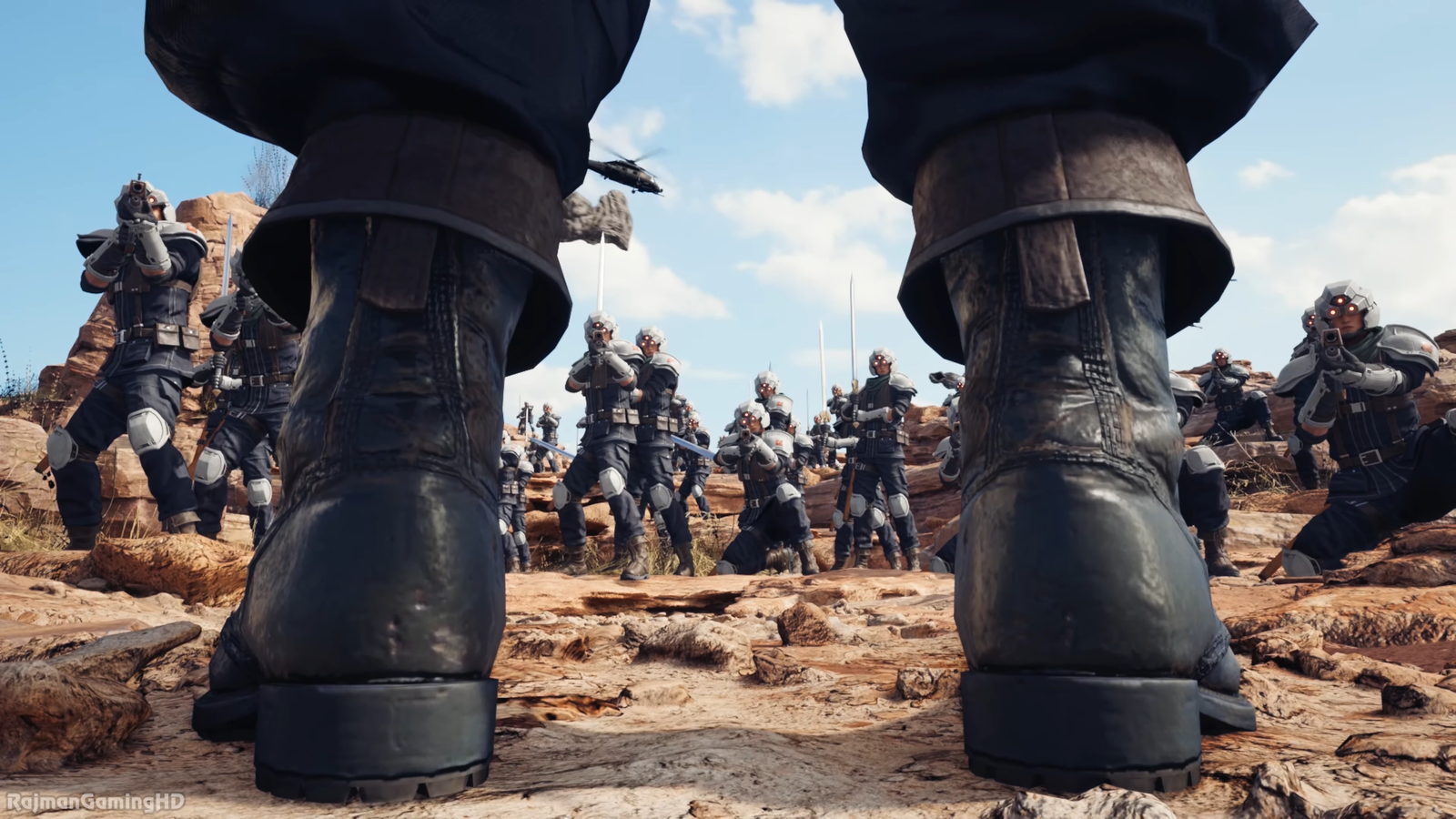
The entire time, Cloud is delirious and practically comatose, but Zack makes sure to take care of his friend. The pair eventually make it all the way to the outskirts of Midgar before a group of Shinra soldiers gun Zack down. They leave Cloud on the ground, thinking he won’t live to see tomorrow. That’s when Cloud takes up Zack’s Buster Sword and adopts the persona of a first-class SOLDIER, leading directly into the start of FF7.
On the tabletop, card mechanics essentially let you reenact this entire scene. Buster Sword appears as a top-tier piece of equipment in the set that costs three mana and gives the equipped creature +3/+2, and it has an equip cost of two mana. So, for a total of six mana, you can make Zack a respectable 4/6 with the Buster Sword equipped. The Buster Sword also has a powerful extra ability: if the equipped creature deals combat damage to a player, you draw a card and play a spell equal to or less than the amount — but that doesn’t really have much narrative weight to it.
The Cloud, Midgar Mercenary card also doesn’t really fit the narrative here, but it does have deliberate synergy with the Buster Sword, allowing you to search your deck for an equipment card, and his abilities also double-trigger (kind of like the Double Cut materia!). Together, these three cards play out like this: You play Zack, and he gets the +1/+1 counter. Then you play Cloud to pull the Buster Sword out of your deck. Then you play and equip it to Zack.
Because of the way Zack’s sacrifice ability is structured, you can technically use it during combat, meaning you can “block” an attack and trigger it to cancel out the attack altogether. So you can do this at any time, transferring the +1/+1 counter and the Buster Sword to Cloud. He then becomes a 6/4 that, every time he does damage to a player, lets you draw two cards and play two spells that cost six mana or less for free. This is exactly the kind of moment Skolnik meant when he talked about “emotional resonance” — not spoiling the scene, but letting the mechanics make you remember it.
This complicated baton-toss maneuver isn’t terribly useful within a game of Magic, but in equipment-heavy voltron decks (where you focus on beefing up one or a few of your creatures), Cloud is totally viable. He could even make a decent Commander, albeit one that limits you to a mono-white deck. As a cheap one-cost creature, Zack really isn’t a terrible choice in decks like this, either.

But the flavor here is oh-so-delicious, and it extends beyond just these cards too. The Jenova, Ancient Calamity card appears in the set as a 1/5 with a cost of two colorless, one black, and one green mana. At the start of combat, she puts a number of +1/+1 counters equal to her power on one target creature, and that creature also becomes a Mutant. This sort of implies that Zack’s initial +1/+1 token is, in a way, the SOLDIER conditioning he received that included genetic manipulation with Jenova cells. Sephiroth, Zack, and Cloud are all technically mutants. It’s a tiny nod, but one that subtly connects the entire SOLDIER program to the +1/+1 counter ecosystem in the set.
Zack’s card doesn’t show his death, or Cloud’s breakdown, or the rain-soaked cliff where it all ends. It doesn’t have to. Magic lets you reenact the moment yourself. You make the sacrifice. You pass the sword on. And for a brief second, while playing a trading card game, you remember why Final Fantasy 7 remains the most impactful game in the series to date.