

![29th Aug: Hush & Brush (2026), 3 Seasons [TV-MA] – New Episodes (6/10)](https://occ-0-772-1001.1.nflxso.net/dnm/api/v6/0Qzqdxw-HG1AiOKLWWPsFOUDA2E/AAAABeGK_dT20GJ7SGnjSdIHafCMxrdBBce1FtFdpNWZ1SezMVFFBkYhL9NE633PBRsChArxoxTsfCXDikRB1RcwpbQE63GZCZOtw4ReivxtjYisTvMOA9dtOkS2mg_J77j2e-1sgjvMWIg3YbUu5Hjjj43R_jr3jV_ZK-Aa3E1F.jpg?r=782 "29th Aug: Hush & Brush (2026), 3 Seasons [TV-MA] – New Episodes (6/10)")


![29th Aug: The PEOPLE Interview (2026), 3 Seasons [TV-14] – New Episodes (6/10)](https://occ-0-772-1001.1.nflxso.net/dnm/api/v6/0Qzqdxw-HG1AiOKLWWPsFOUDA2E/AAAABdAaBqjLltX8v8l3ffQUjsymIAwrViyYQ5xo8VEw7-DW3tetx_Jio_KTzmjsE00HxgGHsyVbwYOxYM-ImVhYfsyG4US0ss8AvNC9beyXDB8ANDI8-RbQWpPW2IkwnqSDmPzrp95PqFnyaCe6vOLTAEXRTjRKe4jqtQFcXMay.jpg?r=d79 "29th Aug: The PEOPLE Interview (2026), 3 Seasons [TV-14] – New Episodes (6/10)")



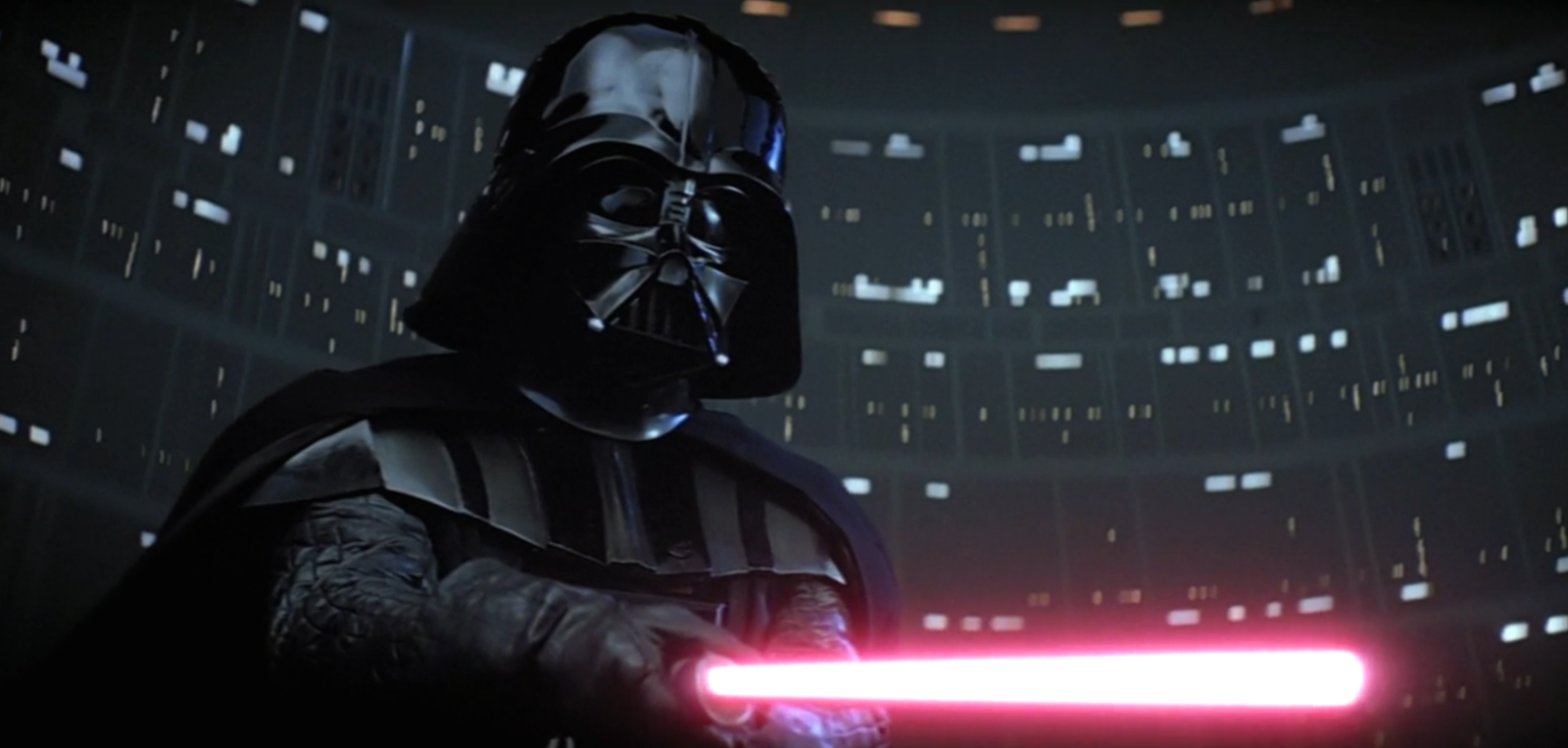
The lightsabers in The Ninth Jedi have puzzled Star Wars fans ever since the original Star Wars: Visions short debuted in 2021. Rather than adhering to the familiar blue, green, and red saber colors (and sometimes purple or yellow), these blades shift hues depending on their wielder’s connection to the Force. It’s a fascinating idea that has become a pivotal part of The Ninth Jedi’s lore while giving Star Wars a chance to expand its canon in surprising new ways.
This becomes particularly apparent with the introduction of a silver (or perhaps clear) lightsaber, which represents a state of balance within the Force. But where did this idea come from? And how does it redefine Star Wars in general? Ahead of Star Wars Visions Presents — The Ninth Jedi, Polygon spoke with supervising director Kenji Kamiyama, director Shunsuke Tada, and producer Hitoshi Ito through a translator at Anime Expo to discuss the long-awaited continuation.
While The Ninth Jedi promises to answer many of the still-burning questions surrounding those unusual lightsabers — particularly the silver ones that prove a vital part of the story this time — Kamiyama revealed their origins were rooted in an attempt to translate a distinctly Japanese way of thinking in the Star Wars universe, rather than expand existing lore.
“When we first designed it, we made the blade transparent because it represented a pure existence that wasn’t bound to anything,” Kamiyama said. “Eventually it became silver.”
The decision to change the color wasn’t immediate.
“We discussed many different ideas,” he said. “Should it become black? Should it become another color?”
Silver ultimately won out because it represented something neither entirely light nor dark. For Kamiyama, the idea wasn’t inspired by the popular Star Wars fan concept of “gray Jedi” or by creating another mystical faction within Star Wars. Instead, it grew from Eastern philosophy and samurai storytelling, where mastery is often represented not by overwhelming power, but by reaching a state of pure balance.

“In Eastern thinking, when a master reaches a higher plane, there’s a sense of nothingness,” Kamiyama said. “It felt natural that the color would become silver or clear.”
That concept proved surprisingly difficult to communicate across cultures. Without giving any specific titles, Kamiyama pointed to classic samurai cinema as an example of these drastic differences in storytelling conventions across cultures.
“In samurai films, a master senses the enemy’s presence without any external cue,” he said. “When those films were adapted into Westerns, filmmakers often felt they needed to add a sound: a twig snaps or some kind of cue so the audience understands the enemy is there.” In the original Japanese stories, that moment often happens in complete silence. “The master senses the opponent without any sign.”
I felt the Jedi Order itself had become restrictive.
Trying to express that same state of awareness through a lightsaber became one of the team’s biggest creative challenges.
“It wasn’t enough just to make it transparent,” Kamiyama said. “Representing silver itself was surprisingly difficult.”
The Ninth Jedi isn’t the only anime to use silver as a way to represent this “mastery” and balanced mindset. In Akira Toriyama’s Dragon Ball Super, the mighty Saiyan Goku learns one of his most heightened transformations yet in what’s called “Ultra Instinct.” The form not only changes his hair to silver but also gives him autonomous dodging and movement, essentially mastery over his body to the point where he doesn’t have to think to move. When I mentioned those parallels, the filmmakers laughed. The comparison underscores just how naturally these visual associations exist within Japanese storytelling — and the challenge of translating a feeling that’s intuitive in one culture into something a global audience can understand.

Similar themes of balance and heightened awareness also extend to the characters themselves. Throughout the interview, Kamiyama repeatedly returned to the idea that The Ninth Jedi isn’t interested in dividing characters into simple categories of Light and Dark. Balance, or even a state beyond the binary of good and evil, is key.
“I felt the Jedi Order itself had become restrictive,” he said. “If a Jedi doesn’t contain their own darkness, I don’t think you can portray them as truly strong.” That belief shaped series protagonist Kara, who represents a new generation of Jedi rather than another flawless guardian of the Force. “I wanted her to embody what a new generation of Jedi should be.”
In some ways, Kara is reminiscent of Qui-Gon Jinn (Liam Neeson) in Episode I: The Phantom Menace. Fans often associate the character with the concept of a “gray Jedi” who exists at the center of the Force, due to his refusal to sit on the High Council and radical independence from the Jedi Order. Qui-Gon prioritizes the Living Force — which emphasizes immediate empathy, instinct, and the present moment — over the institution’s detached, future-focused fixation on prophecy and the Cosmic Force. It’s similar to that same balanced mindset presented at the end of Kara’s journey.

When I brought up Qui-Gon and mentioned these similarities, Kamiyama smiled.
“If fans feel that connection,” he said, “that makes me happy.”
Whether audiences see echoes of Gray Jedi, Goku’s Ultra Instinct, or something entirely new, Kamiyama hopes they understand that The Ninth Jedi’s lightsabers weren’t created simply to add another color to Star Wars’ mythology.
The silver blade evokes something more difficult to define: a state of mastery where true strength comes not from denying the Dark side, but from understanding its power without allowing it to take control and define you. In The Ninth Jedi, balance is not the absence of conflict — it’s the ability to face that conflict and remain whole.
Star Wars Visions Presents — The Ninth Jedi is streaming on Disney Plus and Hulu