





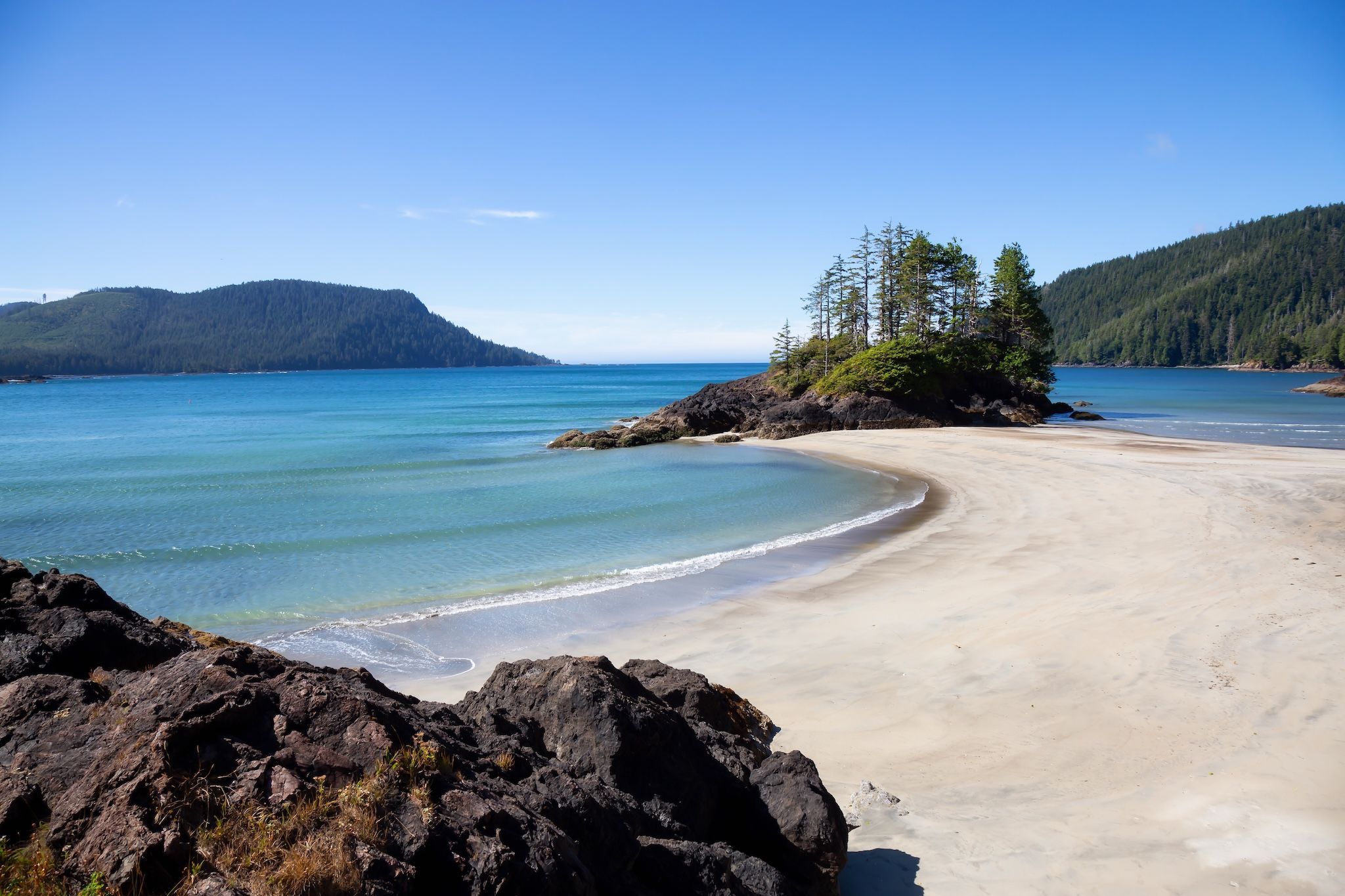
Looking for an outdoor destination to enjoy no matter the weather? Situated on the northwestern tip of Vancouver Island, Cape Scott Park is a fantastic option, revered for its remote, pristine beaches and scenic shoreline.
It was named after a historical lighthouse that has guided mariners since 1960, stretching from Shushartie Bay in the east to Cape Scott in the west. At the park’s centre, you’ll find everything from rocky cliffs to white-sand beaches to salt marshes. You’re guaranteed a memorable time no matter which you choose to explore.
While its namesake lighthouse is not technically located within the park boundary (and is inaccessible to the public), there are plenty of unique natural features to enjoy at this rugged park.
Visitors who explore the area during low tide are treated ot views of fascinating sea stacks, towering above the shore in all shapes and sizes. On the eastern half of the park, a number of estuaries are accessible by boat, offering visitors a glimpse of a variety of bird species.
Cape Scott is also covered in lush old-growth forest, including giant Sitka Spruces that measure over three metres in diameter. This includes impressively large Western Red Cedars, as seen on the hike to the famed San Josef Beach.
According to BC Parks, one of the most significant trees can be found about 20 minutes north of the Eric Lake campsite: a Sitka Spruce measuring more than seven metres in circumference!
The most well-known beach, Nels Bight, is over 2,400 metres long (and 210 metres wide at low tide), and is one of the park’s most popular camping spots.
Other notable beaches to roam include San Josef Bay, Guise Bay, Experiment Bight, Lowrie Bay, and Nissen Bight.
Happy exploring!
How to get there: Take a ferry from Vancouver to Nanaimo or Victoria and drive to Port Hardy. Drive approximately 64 km west of Port Hardy to the only parking available at Cape Scott Park, near the San Josef Bay Trailhead.
Recent Posts:
Over 20 of the biggest concerts coming to Vancouver in 2026 (so far)
Canada’s fourth-highest waterfall is in B.C. and it freezes over into an ice cone every winter