






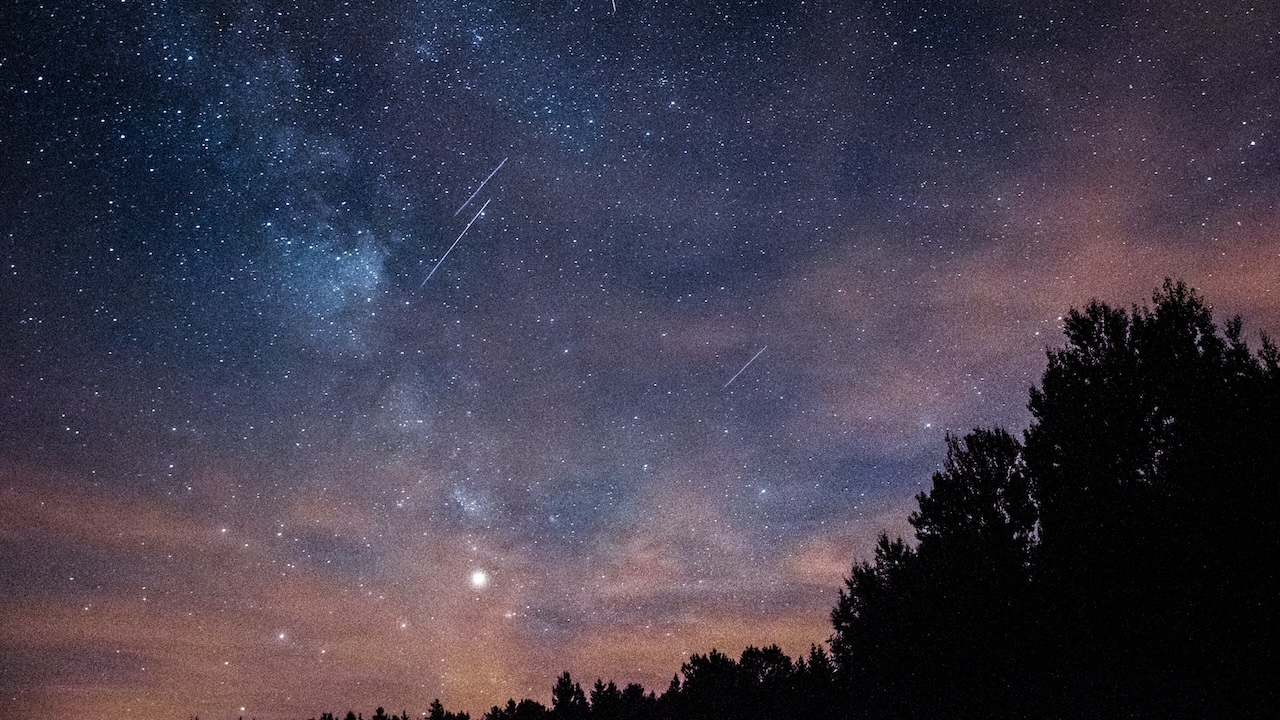
Toronto’s night sky is about to light up with colourful streaks of cosmic dust, and you won’t even need a telescope to see it.
The annual Lyrid meteor shower returns later this month, with the strongest activity taking place around the nights of April 21-22 and April 22-23. The shower is active through the second half of April and, under ideal dark-sky conditions, can produce about 18 meteors an hour at peak, so more than enough to make it worth the lost sleep.
In Southern Ontario, the nighttime streaks will appear a bit subtler and prettier than a nonstop fireworks show. Expect fast streaks flashing out from the direction of Lyra, near the bright star Vega, with the occasional brighter fireball mixed in! The Lyrids are considered a medium-strength shower, and the meteors travel at about 49 kilometres per second, so you might spot a few surprise bright meteors, even if they usually don’t leave the longer “trains” people sometimes associate with bigger summer showers.
And don’t worry about knowing exactly where Lyra or Vega are in the sky! The real key to seeing the shower is timing. For Torontonians, the best viewing time is in the darker stretch after the Moon drops and before dawn starts to brighten the sky. The Moon will set around 1:49 a.m. on April 22 and 2:36 a.m. on April 23, while twilight begins at about 4:35 a.m. and 4:33 a.m., which makes the best viewing time between 2 and 4:30 a.m. on both mornings (with the April 22 predawn window looking especially strong).
Now, you just need to find the perfect spot to watch the shower. Meteor viewing is best away from city lights, and is better seen with the naked eye, so the best setup is a safe, dark spot with a wide view of the sky (just give your eyes about 15 to 30 minutes to adjust).
Click here for all the must-see stargazing events in Toronto for 2026, and check out some of the best spots in Southern Ontario to watch celestial events.