![28th Feb: The Net (1995), 1hr 54m [PG-13] – Streaming Again (6/10)](https://occ-0-772-999.1.nflxso.net/dnm/api/v6/Qs00mKCpRvrkl3HZAN5KwEL1kpE/AAAABXGPgfVzlHlSmLHd3Uv23_ZA7RKZVHrVGOlhEhUfCKp8KKh-3RNmZJGJmemLlurSedq9UcwJtf54_m5dr6aESyySHZ7wSWuSupGU.jpg?r=a7c "28th Feb: The Net (1995), 1hr 54m [PG-13] – Streaming Again (6/10)")






In a 1997 interview, Wes Craven was asked to explain the difference between his latest movie, Scream, and his preceding film, Wes Craven’s New Nightmare. It was a fair question. After spending more than two decades churning out reliably gruesome horror flicks, the director had suddenly taken a sharp pivot into metatextual filmmaking, with two strikingly different films both designed to explore the concept of horror itself.
“[Scream] was much bolder, and more comprehensive,” Craven said, “declaring that it was a movie looking at movies, and yet, at the same time, it’s not […] It had very interesting philosophical permutations that New Nightmare didn’t have.”
In a sense, Craven was right. Scream’s clever subversion of the slasher genre turns the usual group of teenage victims into a squad of horror-obsessed film buffs capable of predicting the killer’s next move. That idea immediately resonated with fans. Three decades after its release, Scream is still one of the best scary movies ever made, and even its worst sequels typically make a killing at the box office.
But in another sense, maybe Craven was wrong. While New Nightmare doesn’t have the cultural cachet of the slashers that followed it, this Elm Street ouroboros was ahead of its time in more ways than one. And now, as the Scream franchise begins to devour itself, it’s worth reappraising Wes Craven’s New Nightmare as the masterpiece it truly is.
New Nightmare’s conceit boils down to one deliciously silly idea: What if Freddy Krueger was a real-life demon, and the Elm Street movies were the only thing keeping him from escaping into our world? The film stars Nightmare on Elm Street final girl and franchise lead Heather Langenkamp, this time portraying herself rather than her onscreen persona, Nancy Thompson. Heather has moved on from her slasher-movie days. She’s married and raising a child. Then she begins to have nightmares.
After Freddy claims his first victim (Heather’s husband), she visits Wes, who calmly but seriously explains that the demon escaped after they ended the franchise with Freddy’s Dead: The Final Nightmare. Don’t worry, though, Wes is working on a new script, and if Heather agrees to reprise her role, they can stop the nightmares and the killing that comes with it. In a particularly meta moment, the camera pans to a copy of Wes’ script, which shows the exact conversation the two just had. Reality is already folding in on itself as the world becomes warped by Freddy’s dream logic.
(Fun fact: Craven’s original script featured a version of himself so tortured by Freddy’s nightmares that he cut off his eyelids to avoid falling asleep. However, the director later decided to change the script so his scenes took place in a Hollywood mansion, rather than a psychiatric facility. He kept his eyelids, too.)
Beyond repeatedly breaking the fourth wall, Craven’s goal with New Nightmare was to bring the Elm Street franchise back to its roots. After watching his creation grow into something more cartoonish over the previous decade as various other directors left their mark on the franchise, he pushed hard in the opposite direction. Freddy’s makeup was amped up, with patches of skin completely missing from his burnt face. The bladed gloves were redesigned to look like muscle and bone, as if the iconic weapons had fused with his hands over the years.
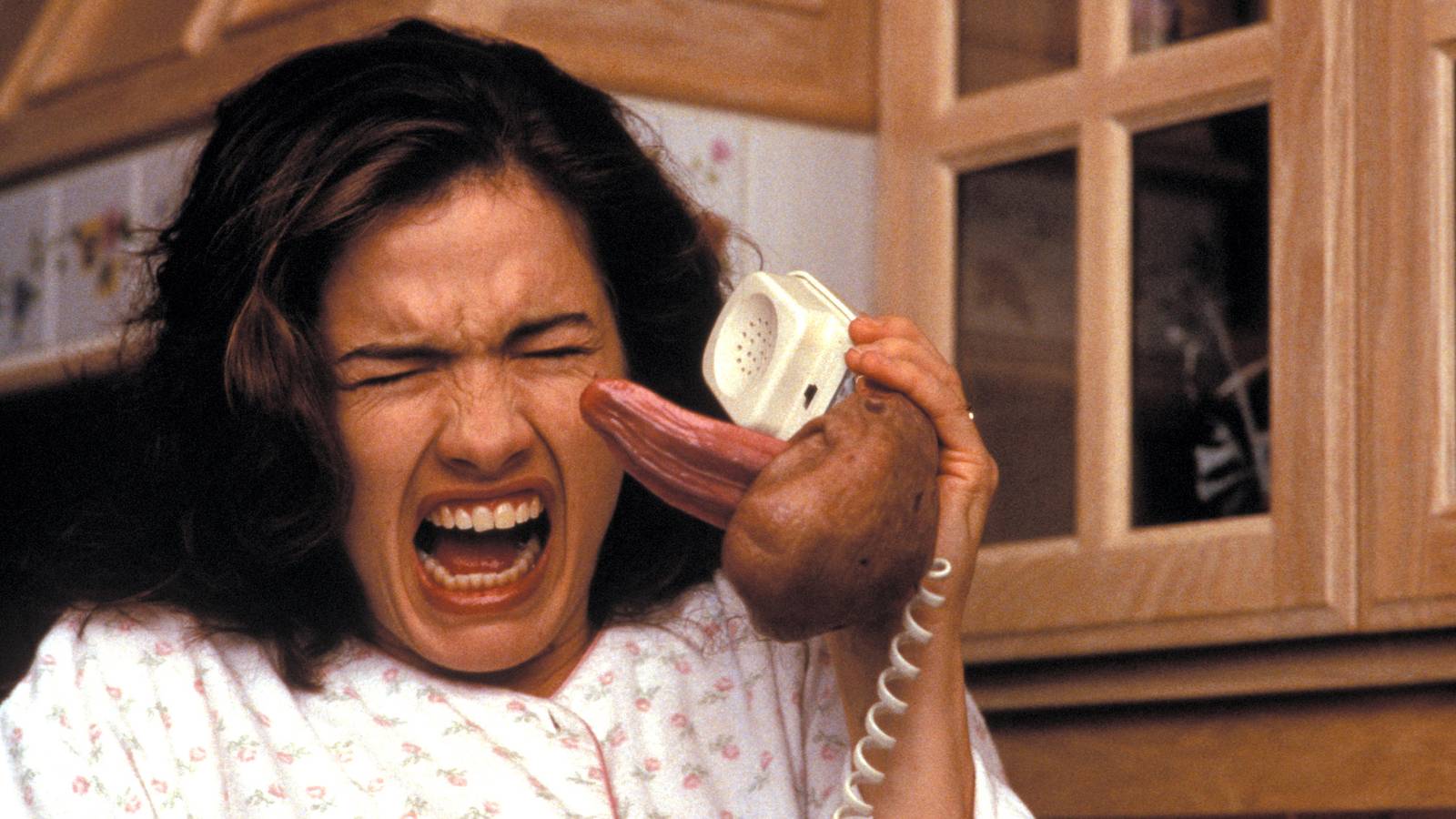
New Nightmare also boasts some of the franchise’s most disturbing visuals. One scene where Freddy calls Heather on the phone and then sticks his tongue through the receiver to lick her face is an all-time classic. And the requisite boiler-room finale is a franchise best; it’s genuinely terrifying, especially when Freddy unhinges his jaw like a snake and attempts to swallow Heather’s son whole.

Image: New Line Cinema/Everett Collection
Craven’s greatest stroke of genius, however, was the choice to bring back familiar faces like Langenkamp, Englund, and even himself, while telling a bold new story. At the time, putting the actors and creators of the franchise onscreen as themselves was both innovative and mind-blowing (and it still is today). Craven’s ability to blend his own franchise lore with reality to create something uncanny and scary all at once shows his total mastery of the slasher genre he helped create. The fact that he also happened to invent the legacy sequel along the way is an added bonus.
Today, it’s one of Hollywood’s most reliable tricks. Bringing back old stars has become a bankable way to revive a franchise, be it Star Wars, Ghostbusters, or Scream. Just remember that Wes Craven was ahead of the pack, and he managed to blaze the trail forward in the weirdest way possible.

![28th Feb: Paul (2011), 1hr 43m [R] – Streaming Again (6.45/10)](https://occ-0-772-999.1.nflxso.net/dnm/api/v6/Qs00mKCpRvrkl3HZAN5KwEL1kpE/AAAABQjL5SsCsMaBXNURLUBUEBHacYS-B_LteEjbt1xXe0CPqtnlrTYfGbqwQGF6n_VxnqdTJVHCBGAZRGoOgYO-mskUe843bbCgR0MG.jpg?r=479 "28th Feb: Paul (2011), 1hr 43m [R] – Streaming Again (6.45/10)")