



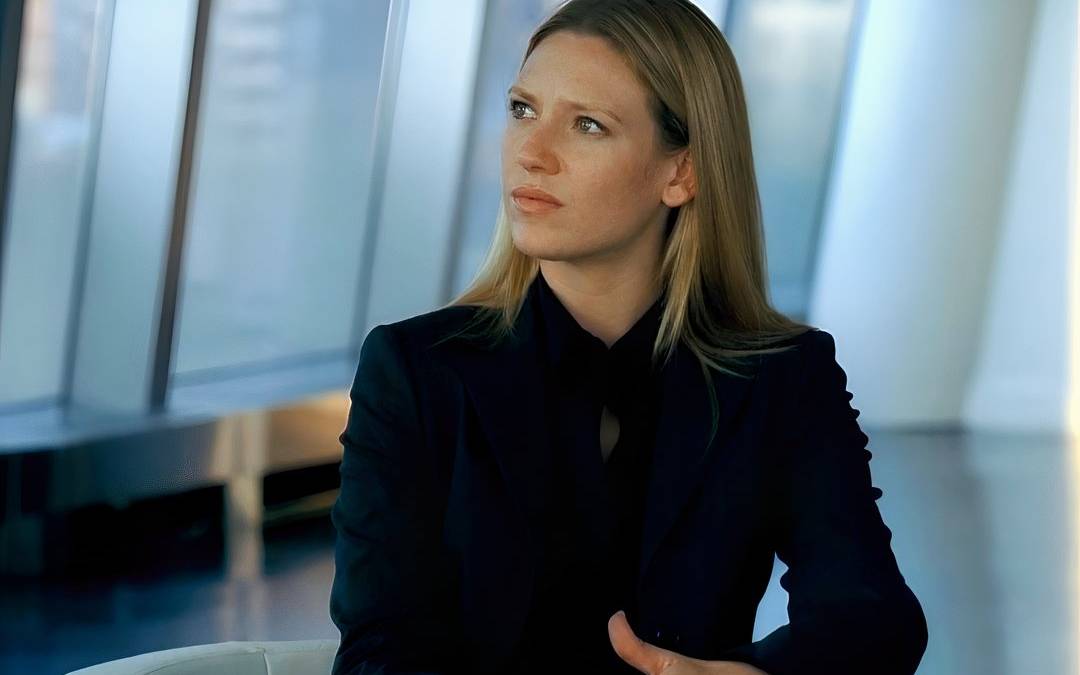




In Brief: Vvivi (Rongrong) Hu explores the current trajectory of the travel industry, discussing the changes in consumer preferences and the industry’s response to these new dynamics.
-
Where the travel industry is heading – Image Credit Unsplash+
Vvivi’s take on the future of travel…
Vvivi Hu, Amadeus’ Chief Strategy Officer, sees travel moving toward a more connected, AI-driven future shaped by rising traveler expectations.
- Traveler expectations are pushing the industry toward journeys that are simpler, more personalized, and more responsive.
- AI is shifting value toward orchestration: the layer that connects systems, data, and decisions across the travel ecosystem.
- For Amadeus, the opportunity is to help orchestrate the ecosystem, not just individual parts of it.
Six months into a new role, perspective starts to form. Not just from meetings and decisions, but from conversations, with customers, partners, and colleagues; often outside the formal agenda.
Since joining Amadeus, those discussions have sharpened my understanding of how profoundly the travel ecosystem is being transformed. Not only through new technologies, but through deeper shifts in how systems are connected and coordinated.
From this vantage point, a clear pattern is emerging. One that helps explain where travel is heading, and why this moment feels fundamentally different from past cycles of change.
Change is being driven by new expectations
The transformation in travel is being driven by changing traveler expectations. Today, many of us are looking for journeys that feel simpler, more personalized, more connected, and more responsive in real time.
Travelers increasingly expect the industry to understand context, anticipate needs, and remove friction across every stage of the journey.
Meeting those expectations is becoming the defining challenge for the sector, and it is this shift in traveler behavior that is now accelerating a deeper AI-driven transformation in how the travel ecosystem is designed, coordinated, and operated.
Reinventing in an AI-driven system
From a professional perspective, it’s a fascinating time to join a business at the center of this evolving ecosystem, with AI reshaping how systems operate.
Most discussions to date have focused on capabilities and use cases within discrete areas of travel technology. But the real shift is in control: who defines how the system operates.
This is not just another wave of technology. Systems are becoming connected, automated, and increasingly capable of acting, no longer just supporting decisions, but executing across boundaries and into the physical world.
The deeper change is in how value is reorganized. As systems become more connected and agent-driven, value moves away from individual components toward the layer that coordinates how everything works together.
Patterns emerging
This same pattern appears across multiple dimensions. Control is shifting from support to orchestration, with advantage sitting with whoever directs how work flows across systems. At the same time, value in transactions moves upstream toward intent, those who understand and convert intent earliest win.
In data, advantage comes from activation, shaping demand and driving revenue. In identity, the shift is from verification to trust as infrastructure, enabling permission and accountability across human and machine actors. Together, these point to a single outcome of value concentrating at orchestration control points.
What does this transformation mean for travel?
Travel is where this convergence is especially clear, and complex. It is live search, combinatorial, regulated, and service-heavy, as well as highly time-sensitive, with strong emotions at stake.
Every journey requires coordination across many players, shaping demand, executing workflows, moving transactions, and validating identity across digital and physical environments.
Most of the experience happens offline, but depends on digital coordination to work. This makes travel not just a digital problem, but a system problem, where value concentrates at the layer that connects and coordinates.
An evolving role for Amadeus
This is why the role of a company like Amadeus is evolving. The opportunity now is to move beyond enabling parts of the system toward orchestrating how it works as a whole:
The question is no longer how to improve each component, but how to position at the control points of the ecosystem.
Ultimately, success will not be measured by the sophistication of the technology itself, but by how seamlessly the industry can meet rising traveler expectations for journeys that feel more connected, intuitive, and responsive.
This is not a departure from our core, but a reinvention.
I was excited about joining Amadeus six months ago, and six months in, I’m more excited than then, where we are at the forefront of making travel better for everyone, everywhere.

Vvivi (Rongrong) Hu Chief Strategy Officer – Amadeus
Source: View the original article at Amadeus.


