



![31st Aug: Flipping Vegas (2014), 5 Seasons [TV-14] (4.95/10)](https://occ-0-273-1001.1.nflxso.net/dnm/api/v6/0Qzqdxw-HG1AiOKLWWPsFOUDA2E/AAAABSRJ2c4fMyfISGqxmpRdFhf_B8ZnQVqwD7qPrJNRVbn0rHJo64DI26moRjr1KLtsJrPe1l3HQ5EVZro5AiTheGZdyf24JLseXLcwQSvQxoQG866pj4cnVEV9XT7ftIxih5JxNaxsicOH2Y2ULv0gynHYm_inkIaWZNwBYeslcHD4VA.jpg?r=336 "31st Aug: Flipping Vegas (2014), 5 Seasons [TV-14] (4.95/10)")


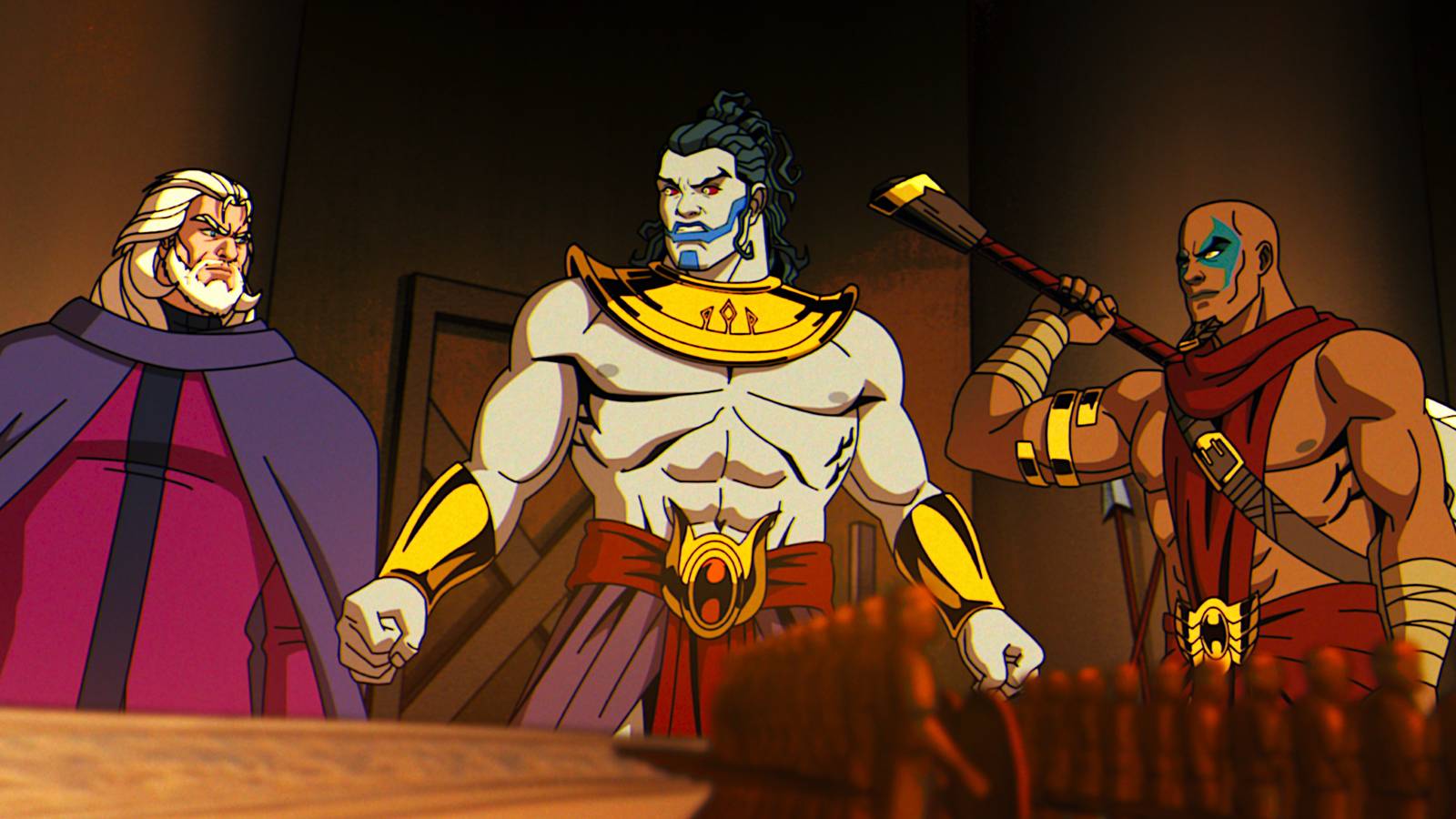
X-Men ‘97 season 2 split the superhero team across time and space. The two-part episode “Rise of Apocalypse” takes place in Ancient Egypt as the X-Men help the first Mutant En Sabah Nur lead a slave rebellion against Pharaoh Rama-Tut. Magneto is hoping he can change the future by guiding Nur to become a hero rather than the genocidal villain Apocalypse, but Rama-Tut has his own world-shaping ambitions.
[Ed. note: This article contains spoilers for X-Men ‘97 season 2 episodes 3 and 4.]
In episode 3, Charles Xavier tries to learn how an Egyptian pharaoh is using futuristic technology by reading the mind of Rama-Tut’s lieutenant, Logos. A trippy sequence reveals that the pharaoh wants to harness a weapon with the power to turn himself into a god. Like most of X-Men ‘97s plots, Rama-Tut’s scheme is based on a comic book arc. Here’s what’s going on.
Who is Pharaoh Rama-Tut?
Created by Stan Lee and Jack Kirby, Rama-Tut first appeared in a 1963 issue of Fantastic Four as a time traveler who took over Ancient Egypt. He was later revealed to be Reed Richards’ half brother Nathaniel Richards. Their dad is a time-traveling warlord from a technologically advanced alternate universe dubbed Other Earth.
Decades later, Terry Kavanagh and James Felder brought back Rama-Tut in the 1996 miniseries The Rise of Apocalypse. Rama-Tut hopes to make En Sabah Nur his successor, but he is defeated by the Fantastic Four and flees back to the future as Nur embraces his destiny as Apocalypse.
X-Men ‘97 cuts the Fantastic Four out of the mix and changes Rama-Tut’s motivation. Apocalypse is the first Mutant, but he becomes nearly unstoppable once he is transformed by exposure to technology on a Celestial spaceship. Rama-Tut – voiced by Star Trek star John de Lancie – time-traveled in hopes of stealing that technology for himself. He tries to persuade Charles Xavier that this would be a good idea, psychically introducing himself through a device similar to Cerebro and explaining that he also goes by Kang, Victor, and Nathaniel. Charles refuses to let him use the Celestial tech for his own goals, though the pharoah tells him that the X-Men never stop Apocalypes. He’s immediately proven right as all of Magneto’s work to change Nur proves pointless. Nur uses the Celestial technology to transform himself into Apocalypse and then kills his would-be mentor.
X-Men ’97 executive producer Larry Houston, who directed every episode of X-Men: The Animated Series teased that there’s more to this story.
“If you know Marvel comics, you know there’s a lot of time travelers, starting from Reed Richards, Doctor Doom, Kang, Immortus, all of that stuff,” he told Polygon. “It’s going to be intertwined, and there will be some fun at the end.”
Where else has Rama-Tut appeared?


While Rama-Tut’s birth name is Nathaniel Richards, the character is best known as Kang the Conqueror. The time-traveler made his Marvel Cinematic Universe debut in Loki played by Jonathan Majors, where he assumed the title of “He Who Remains” and established the Time Variance Authority to keep other variants of himself in check. When he was killed and the Sacred Timelines shattered, it unleashed many versions of Kang, including the one ruling the Quantum Realm as seen in Ant-Man and the Wasp: Quantumania.
The film’s post-credits included Rama-Tut as a member of the Council of Kangs, a group of Kang variants plotting to take over the multiverse. A more mild-mannered version, the inventor Victor Timely, was introduced in Loki season 2. The time-traveler was originally meant to play a much larger role in the MCU, but Avengers: The Kang Dynasty was scrapped after Majors was found guilty of assault and harassment. The film was reimagined as Avengers: Doomsday, which will premiere on Dec. 16.