
![23rd Sep: Lifehack (2025), 1hr 37m [R] (6/10)](https://occ-0-75-1007.1.nflxso.net/dnm/api/v6/0Qzqdxw-HG1AiOKLWWPsFOUDA2E/AAAABQFEinfP8MFo6_mZeFEZdtXSksbCcxH5fMO5VTQhFPX0d9LYD7Y-m0ud2p39dYdtIwP5BvsJqqQSIzmEIXC6SYjAIefSYpoIeDfTDR3T-DmX9EG9DPQyeU-hEGugvEb_ejJZr8fTH4vYz2VXrrpBZjiC7wwHlwrMPfDxcsVJuZTDxQ.jpg?r=7ae "23rd Sep: Lifehack (2025), 1hr 37m [R] (6/10)")






In Brief: Dr. Tong Yin examines the accelerating pace of AI adoption in real-economy industries such as hospitality, emphasizing that while implementation is widespread, many organizations are struggling to realize tangible business value from these investments.
What hospitality leaders should learn from the widening gap between AI experimentation, operational deployment and physical automation
By Dr. Tong Yin, Founder & CEO, InsightBridge Global LLC
Artificial intelligence is spreading faster than any previous enterprise technology, but the headline adoption numbers conceal a two-speed reality. Personal exposure and employee-level use are approaching the mainstream. Organisational workflow redesign, scaled deployment and auditable financial return remain minority achievements. For hospitality, one of the world’s most operationally complex and fragmented industries, this distinction is especially important.
InsightBridge Global examined 15 countries and territories, 12 major industries and more than 300 source references to separate six different layers that are too often grouped under the single word “adoption”: population exposure, enterprise registration, active organisational use, production deployment, measurable value and physical AI. Once those layers are separated, the market looks less like a universal AI boom and more like a difficult transition from convenient software to industrial capability.
|
20.0%
EU-27 enterprises using AI, 2025
|
88%
Organisations reporting regular use in an executive survey
|
23%
Organisations with agentic systems scaled somewhere
|
36%
Respondents reporting improved profitability
|
The first mistake is to treat every adoption number as comparable
Official statistics show that 20.0% of EU enterprises with at least 10 employees used AI in 2025. A major executive survey conducted in the same period reported that 88% of organisations use AI regularly in at least one function. Both figures can be correct because they measure different things. The first comes from a census-style enterprise framework with a defined list of technologies. The second comes from a self-selected executive sample in which adoption ranges from limited experimentation to deeply embedded workflows.
The lesson for boards, operators and investors is simple: never ask only whether an organisation “uses AI.” Ask where it is used, whether it is connected to a live workflow, how many employees rely on it, whether the process has been redesigned around it, and whether the outcome appears in cost, revenue, quality or risk metrics.
Adoption is not scale, and scale is not value
The gap is visible even within a single survey. Although 88% of organisations reported regular AI use, only 23% had scaled agentic systems anywhere in the enterprise. Fully scaled agent use remained in single digits across almost every business function. A separate BCG study of 1,250 companies in 68 countries found that only 5% were “future-built,” while 60% obtained almost no material value despite significant investment.
This does not mean that AI fails. It means that access to a model is not the same as organisational capability. The evidence points repeatedly to the same bottlenecks: fragmented data, weak integration, unclear ownership, insufficient validation, security concerns, limited staff capability and failure to redesign the underlying process. The strongest model cannot compensate for a workflow that has no accountable owner or a data foundation that cannot support production use.
Hospitality is a reality check for the entire AI economy
Hospitality demonstrates why industry structure matters more than technology excitement. A six-country European hotel survey found that 41% of hotels used some form of AI, 16% planned to adopt it soon and 43% used none. Yet the depth of use was shallow: 29% of adopters had implemented AI only within the previous two years, and just 4% had more than three years of experience.
Official enterprise statistics are even more conservative. Accommodation and food services recorded only 4.7% adoption in Singapore and 10% in Brazil, placing the sector near the bottom of their respective industry tables. This is not primarily a lack of interest. The hotel economy is dominated by small and independent properties, legacy systems, thin technology teams, fragmented ownership and operating structures, and investment decisions that must compete with immediate property-level needs.
The practical implication is that hotel AI should be judged by operating outcomes rather than demonstrations. The relevant questions are whether it reduces response time, improves labour allocation, strengthens revenue decisions, lowers energy use, reduces equipment downtime, improves service consistency or creates a verified increase in guest conversion and retention. A chatbot on a website is evidence of tool use. It is not evidence of enterprise transformation.
The next threshold is physical and engineering-led
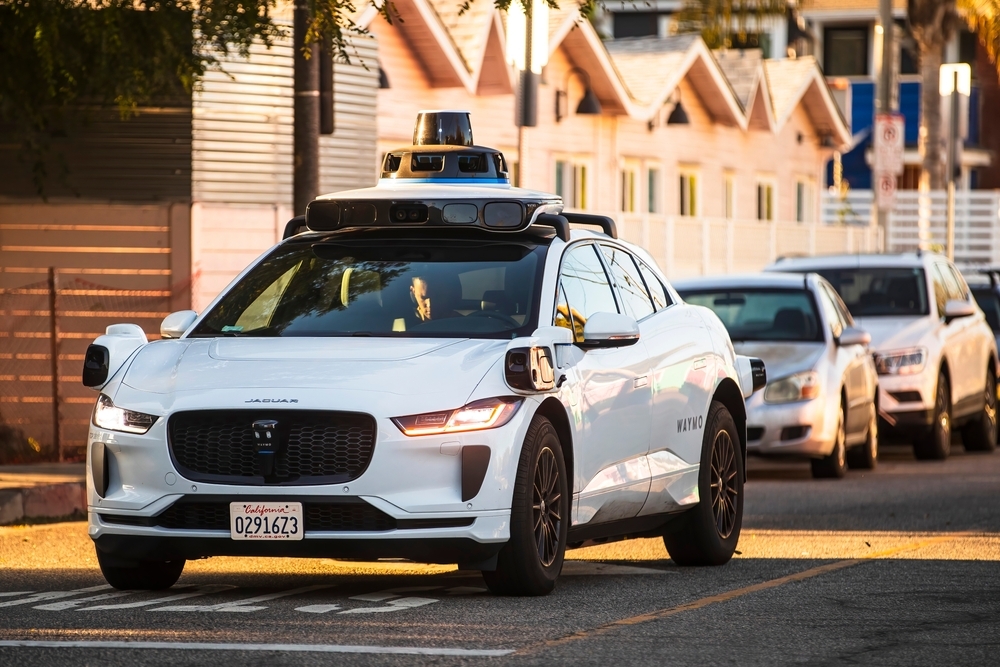
The strategic frontier is moving from software-only applications toward physical AI: systems that connect models with sensors, edge hardware, digital twins, industrial controllers and robots. This shift is already visible in manufacturing, logistics, energy and infrastructure. Global factories installed 542,076 industrial robots in 2024, while major robotics manufacturers are integrating simulation platforms and edge inference into industrial systems.
However, physical AI penetration remains low. Among German enterprises already using AI, only 6% used it for autonomous machine movement. Denmark recorded 2%, and Brazil 7%. The correct conclusion is therefore neither that physical AI is science fiction nor that it is already widespread. It is strategically real, operationally demanding and still at an early stage of enterprise deployment.
For hotels, the physical layer may ultimately matter as much as generative AI. Energy optimisation, predictive maintenance, automated cleaning, inventory movement, kitchen operations, security monitoring and property-level digital twins all connect intelligence to physical assets. In these settings, benchmark leadership matters less than reliability, latency, safety, unit economics, integration and a clear chain of responsibility when a system fails.
Five priorities for hospitality leaders
- Separate the layers: Distinguish employee experimentation from approved use, production deployment and measurable financial value.
- Start with a property-level operating problem: Select use cases tied to labour, energy, maintenance, revenue, service recovery or guest conversion rather than beginning with a general AI mandate.
- Build the data and governance foundation first: Define the source systems, permissions, validation process, accountable owner and performance measure before scaling.
- Evaluate architecture, not only models: A less celebrated model with better integration, speed, cost and reliability can outperform a frontier model in daily operations.
- Measure value in the profit and loss account: Track cost avoided, revenue generated, cycle time reduced, quality improved and risk controlled. Usage volume alone is not a return.
The bottom line
AI has already crossed the threshold from novelty to general-purpose business tool. It has not yet crossed the threshold from broad experimentation to broadly realised enterprise value. The next phase will be decided less by model releases and more by implementation discipline: workflow design, reliable data, governance, integration, staff capability and the movement of intelligence into the physical economy.
Hospitality is not late because it lacks imagination. It is difficult because real service operations combine people, buildings, equipment, guest expectations and financial constraints in one live environment. That difficulty makes the sector an unusually honest test of whether AI can move from adoption hype to industrial value.
About the author
Tong Yin, Ph.D., holds a doctorate in hospitality management from Auburn University and is the founder of InsightBridge Global LLC. His research and consulting work focus on ultra-luxury hotel asset management, organizational behavior, and the evolving business model of international hotel groups.
[email protected] · insightbridge.global