








Five years is a long time in a city like Seoul, where few neighbourhoods ever stay the same for long. Take Seongsu, a former factory plot that has transformed from gritty to glamorous with its endless flow of cool pop-ups, and has since become a staple on any Seoul itinerary. There are other newly exciting neighbourhoods like Mullae and Haebangchon, but one veteran is proving that a strong community core beats trends when it comes to being cool.
RECOMMENDED: Europe’s coolest neighbourhoods in 2026 have been named
Placing third in 2021, Jongno 3(sam)-ga returns to ’s list of the world’s coolest neighbourhoods in 2026 to take the number one spot, this time brimming with pure, open-air energy. Having made Seoul a base for my remote work over the past five years, I found myself constantly returning to Jongno 3-ga for its effortless mix of the familiar and new. This year, the neighbourhood’s buzz has peaked, marked by a revival driven by the younger set.
Seoul’s thriving melting pot
The area surrounding Jongno 3-ga subway station has always featured unlikely neighbours. The older generation weave between the district’s historic alleyways, busying themselves with house errands or gathering in gukbap (rice soup) eateries to gossip. At Ikseon-dong – the neighbourhood’s hanok (traditional Korean house) heart, home to abundant small cafes and boutiques – young couples have their fortunes read and pack into streetside photobooths, while tourists pick up local perfumes and viral sogeum-ppang (salt bread).
This inclusivity and contrast is not incidental. Jongno 3-ga has long been a place where different generations and communities meet, centred around the compact hanok cluster and modest services that grew around it. Developed in the 1920s as affordable housing and later repurposed, the neighbourhood’s unpretentious character endured, giving rise to casual barbecue joints sprouting in the lanes around Exit 6 and informal pochas (street food stalls) along Donhwamun-ro 11-gil in the evenings, ready for the hungry office crowds after work.
The neighbourhood held space for subcultures that did not always fit neatly into Seoul’s mainstream, and discreet LGBTQ+ bars and queer-friendly venues took root in the neighbourhood as early as the ’70s. While several wound up closing during the pandemic after decades of business, longstanding institutions like Bar Friends and My Hunk still offer sanctuary to the rainbow brigade, sitting alongside bright convenience stores, eomeonim (mother)-run eateries and gold jewellery shops.


Safe to say, Jongno 3-ga thrives as a social intersection. It’s the area’s ability to accommodate different communities without friction that has kept it feeling effortlessly vibrant and distinctly its own, resisting gentrification with its grit and character. Today, the younger generation is flocking to the neighbourhood, drawn by its affordable food and relaxed open-air environment.
Following the buzz from Ikseon-dong to Seosulla-gil
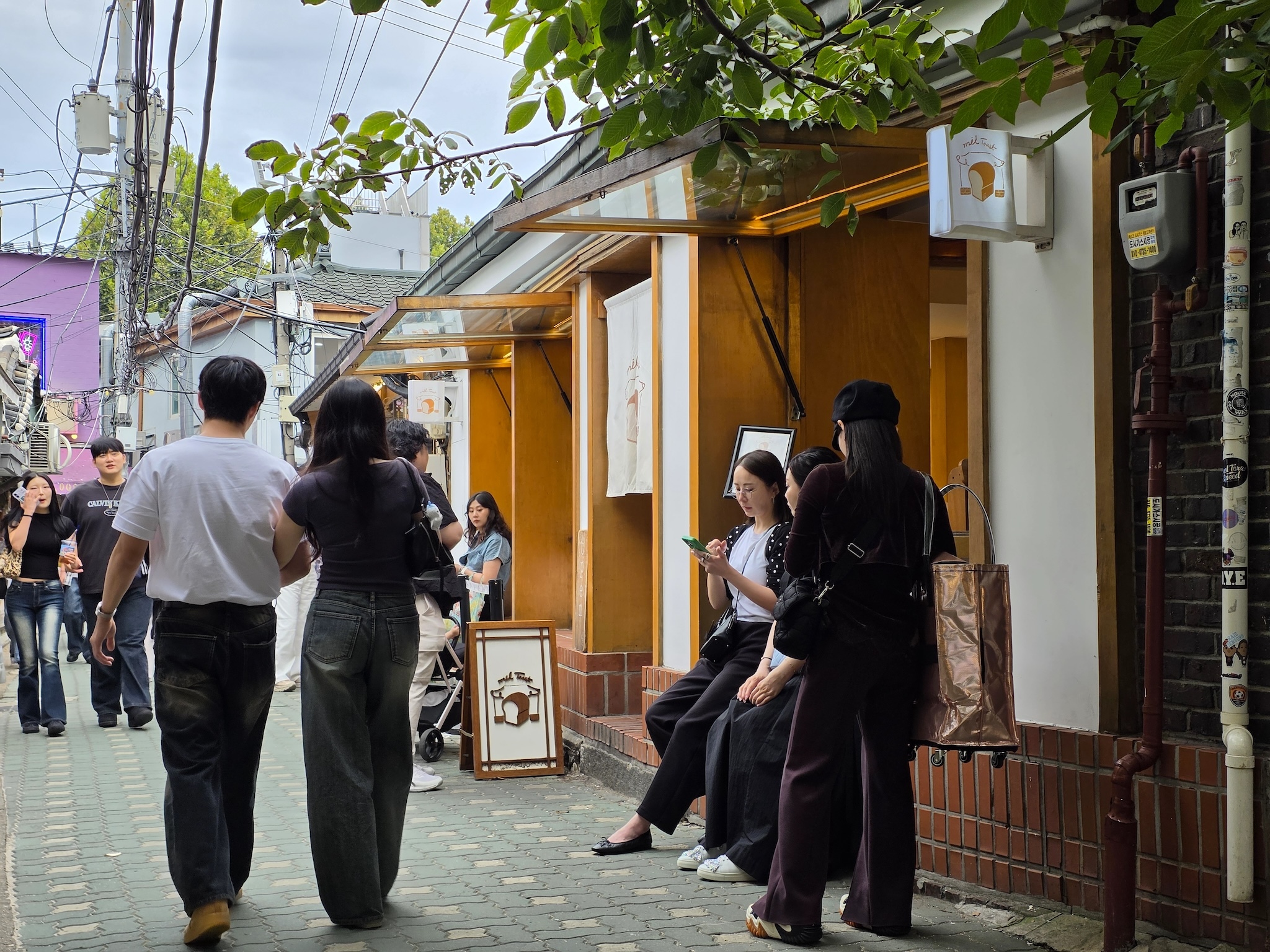
Getting lost in Ikseon-dong’s web of lanes is part of the fun, but I do have some advice on how to plan a great day in the area. I’d start with fluffy steamed bread at Mil Toast, one of the few places open in the morning.
As the shops and boutiques stir awake around 11am, begin wandering. Browse perfume, clothing and eyewear stores, and settle in for Solsot’s popular pot rice, or make a small detour south towards Exit 2 to Aiso for grilled hanwoo (Korean beef) patties. A bonus: the chef is a former tour guide and will happily offer recommendations in perfect English.

Afterwards, satisfy your sweet tooth at Silladang, which specialises in traditional Korean treats including gaeseong juak, a chewy glazed donut made of glutinous rice, and the classic yakgwa (honey confection). For a shot of caffeine, the drip coffee at Seoul Coffee is one of the more satisfying.
Then leave Ikseon-dong’s crowded lanes behind for Seosulla-gil, situated next to the stone walls of UNESCO-listed Jongmyo Shrine built in 1934. One of my first discoveries along this stretch in 2023 was Cafe SaSa, a peaceful cafe housed in a two-storey hanok serving excellent mugwort latte and pastries. Back then, it felt like a tucked-away corner of Jongno; but today, craft workshops, jewellery studios and sophisticated bars spill seats onto the leafy sidewalk, giving the lane a distinctly unbothered buzz. SaSa’s founder, Son Jungwoo, shared that the lane ‘has established itself as a premier destination for yajang (streetside seating)’.

Here, there are boutiques and indie businesses everywhere. Browse nature-inspired fine jewellery at Eever Layer or pick up crystal trinkets at Slow and Lit. For a refreshing tipple, Seoul Gypsy serves craft beer in a setting that feels local and intimate.
By evening, the mood shifts again. Head back towards Donhwamun-ro 11-gil where the neighbourhood’s iconic pocha tables begin filling up, and pull up a red stool. This is perhaps where Jongno 3-ga’s great equalising effect can be best seen, as an eclectic mix of old-timers, young creatives and suited office workers gather, joined most recently by younger diners eager to reconnect with friends over tteokbokki (rice cakes), ramyeon (noodles) and inexpensive drinks. And don’t worry if you had one glass too many – trendy Moxy Seoul Insadong is right next door.
It is a fitting evolution for an area whose culture has always been rooted in socialising. The newer crowd may arrive through growing virality on social media, but the authentic appeal of Jongno 3-ga remains in spending time shoulder to shoulder with locals as the neighbourhood continues to make room for whoever (and whatever) comes next.
Read the full list of the world’s coolest neighbourhoods in 2026.
Stay in the loop: sign up to our free Travel newsletter for all the latest travel news and best stuff happening across the world.


