



![2nd Feb: Friendship Playlist (2026), 2 Seasons [TV-Y7] – Streaming Again (6/10)](https://occ-0-1081-999.1.nflxso.net/dnm/api/v6/Qs00mKCpRvrkl3HZAN5KwEL1kpE/AAAABWh0RyjR1suvN9N7IkSMXc9h_4AMzYOgGbJ57TfQHZky1yCpxrB6Igk6rFwSrxXGTuVlxXeNvfj1yDzd5OhXUGZz50w_vCpwyoYi3Je43lkEf5V5F0ErmpdGbhSjDTO04wrW6uhxvFRhRHoXBZq9CRfmCAy-M8TzDsbwH3QO.jpg?r=69b "2nd Feb: Friendship Playlist (2026), 2 Seasons [TV-Y7] – Streaming Again (6/10)")


One minute, I’m cruising through calm creeks in the Térraba-Sierpe mangroves, peering off the side of the boat, looking for caimans and crocodiles camouflaged along the muddy banks. It’s still, quiet. The only sounds are chattering insects, branches snapping as capuchin monkeys swing from tree to tree, a high-pitched chirp as a fiery-billed aracari goes by in a psychedelic flash. I’m a recently converted twitcher – my trusty bird call identifier app is primed for action on this trip – and I’m chuffed about spotting one of these radiant species of toucan, unique to this part of the world.
Then, before I know it, I have my head between my knees, trying not to throw up. We’ve left the mangrove forest and entered the mouth of the ocean, the same little boat that was just navigating those skinny inlets somehow now managing to clear colossal rolling waves.
Recommended: editors on where you should travel in 2026
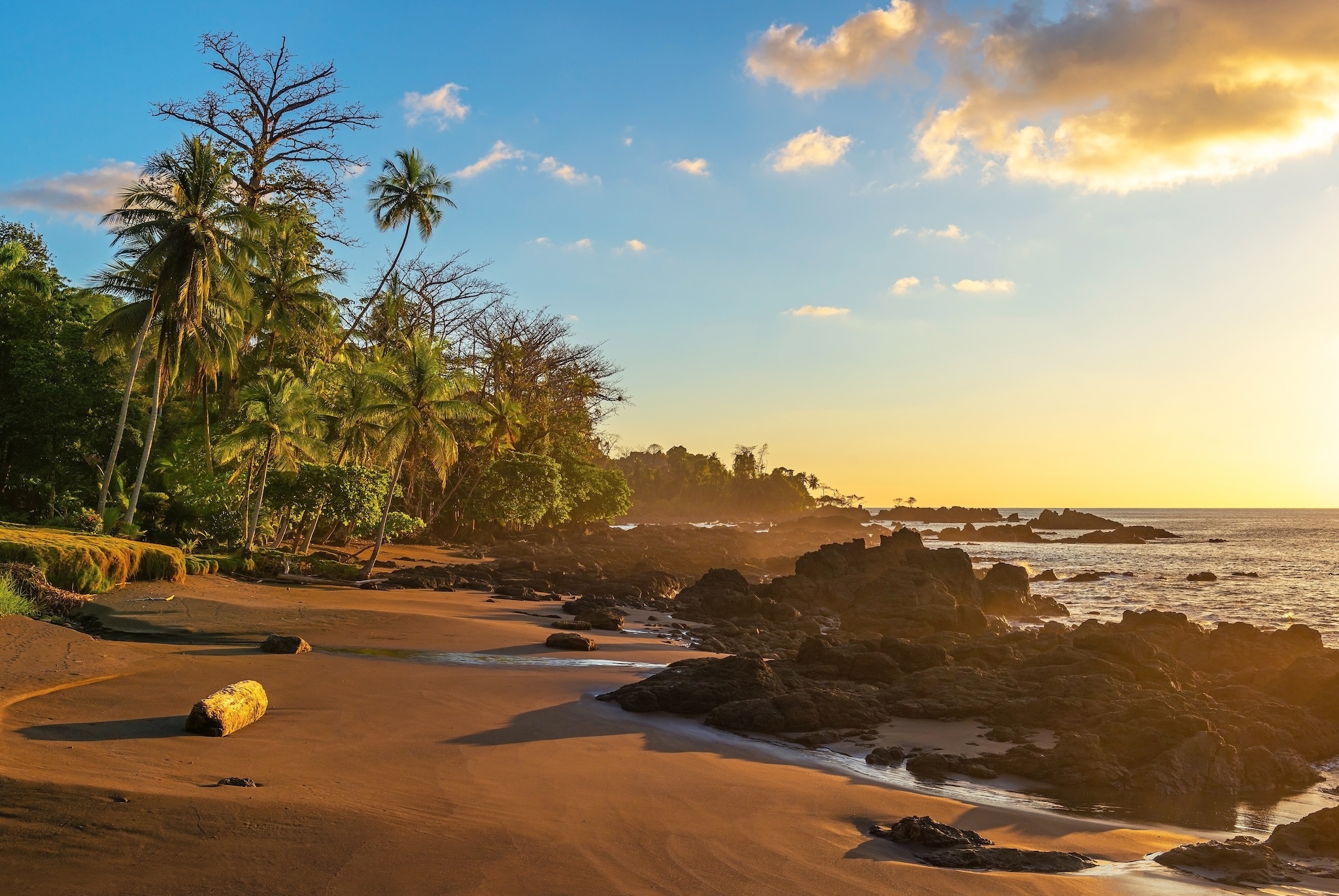
As we round the bend of the peninsula’s western edge, the boat pulls to a stop, and our guide, Tibisay, points out a pair of sea turtles mating on the water. Overlooking the scene are the treetop bungalows we’ll be staying in tonight. ‘Welcome to our office,’ she says.
This is the second – third, if you count a quick car ride – component of our journey to Corcovado Wilderness Lodge, perhaps the most difficult-to-reach hotel I’ve ever stayed at. Before the boat ride, we’d boarded a titchy aeroplane from San Jose, Costa Rica’s capital, to the equally tiny Palma Sur airport, flying over mountainous inland and the famous whale tail beach. Once we’re on land, feet finally in the sand of the secluded San Pedrillo beach, there’s a final mode of transport, the ‘jungle limo’ – a tractor sturdy enough to trundle up the precipitous hills of the reserve – to take us to our lodgings.
Proving the best things in life don’t come easy, Corcovado Wilderness Lodge sits on the border of Corcovado National Park, the most biologically intense place on Earth. This wild, remote region turned 50 in October, having become the country’s third official National Park in 1975. And this year, Corcovado and the Osa Peninsula has been on every 2026 travel list, from the BBC to the Telegraph and the New York Times. The Osa Peninsula has been at the top of ’s list of the world’s most underrated destinations since September.

Despite increased accessibility to the region, with regular direct flights running from San Jose to airstrips on (or near) the peninsula like Puerto Jiménez and Drake Bay, Corcovado National Park maintains a strict limit on visitor numbers to protect the diverse ecosystems that call it home. To enter the park, all visitors are required to be accompanied by a certified guide, and rangers are posted at stations to search bags for plastic, which is strictly forbidden.
Our guide is the brilliant, eagle-eyed Tibisay, who works at the lodge but hails from Limón, a town on the country’s Caribbean coast. On the San Pedrillo trail – a route that takes in both coast and rainforest, directly accessible from Corcovado Wilderness Lodge – she walks us past tangled strangler fig vines and over the gnarled roots of a 250-year-old garlic tree, following the hand-sized, three-pronged footprints of a tapir. Over 200 of these shy, endangered creatures live in the park, and it doesn’t take long before we spot one amid the trees, munching on endemic jobo fruit flung to the forest floor by spider monkeys. We move through the forest, welcomed by scarlet macaws, crocodiles and bands of coatis. The hike ends with Tibisay spotting an elusive sloth hanging from a branch, its coat straggly from the morning thunderstorm.

I’m here in August, one of the region’s peak months for wildlife. While tourists would call it the rainy season (and, to their detriment, avoid visiting), to locals, this time of year is affectionately known as the green season. It’s a season where the sight of humpback whales loptailing and leaping from the water is an everyday occurrence. My first experience of this spectacle, from a boat near the palm-fringed periphery of Isla del Cano, is unfortunately marred by another bout of sea sickness. Thankfully, my second sighting comes only days later, on a sunrise swim in the calm waters of Golfo Dulce; one of Earth’s only tropical fjords, stretching between Osa Peninsula and the mainland.

Though not typically an early riser, I’m down at the beach after a howler monkey wake-up call; one of many wild neighbours in the rainforest surrounds of eco-boutique Kunken Lodge hotel (including, I discover on a night tour, the ultra-venomous and incredibly deadly fer-de-lance viper; a moment of dream-come-true excitement for our wildlife-obsessed tour guide, and pure terror for the rest of us). Conditions are perfect for a dip; the sand is soft and thick, the water warm and shallow. I swim in the direction of a lone heron perched on a post when I see them: two humps, one slightly larger than the other, cutting through the water’s surface, only metres away.
The sight of humpback whales loptailing and leaping from the water is an everyday occurrence
At this time of year, humpback whales deliver their calves and use Golfo Dulce as a nursery. Over a couple of days spent sailing, swimming and snorkelling in the gulf, we spot several more mother-and-calf pairs breaching the water’s still veneer. Golfo Dulce is a world-class marine life destination, with stingrays lurking on the seafloor and bright schools of snapper fish weaving in and out of shipwrecks.

While a handful of resorts line its shores, this vast expanse of water and rainforest is blissfully quiet. Its eastern bank is engulfed by Piedras Blancas National Park, one of the newest and least explored parks in Costa Rica. Sticky from snorkelling, we trudge along an empty beach bordering the park for 20 minutes before reaching Dolphin Quest – not, in fact, a water park or an aquarium, but a quirky eco-homestay, run by brothers Jahza and Reymar and their father Reymundo.
We take gut-cleansing shots of turmeric and kombucha, chased with sugarcane and coconut
Lunch at Dolphin Quest is a spread of plantain, coconut ceviche and colourful salads; everything entirely vegan and sourced from the land. Guided by on-site nutritionist Isabella, we take gut-cleansing shots of turmeric, noni and kombucha, chased with sugarcane, coconut and starfruit dipped in salt. Then we amble around the grounds, chewing on katuk leaves pulled straight from the branch, while Isabella talks to us about the health and beauty benefits of the surrounding flora.
‘Look,’ she says, squeezing the spongy red head of a pinecone-shaped plant, which exudes a ginger liquid. ‘You can use this as shampoo.’

Formerly (and entirely unsurprisingly) an ayahuasca retreat, Dolphin Quest is a mini-utopia of self-sustained, co-operative living. Like many places in this isolated region, its existence relies on a perfect yet difficult-to-achieve equilibrium between tourism and preservation. Piedras Blancas itself became an officially designated park thanks to the efforts of locals, who wanted to protect the park from logging and boost the local economy by attracting visitors. ‘We are pro-economic development, but protecting our resources comes first,’ says Reymar.
It’s a sentiment shared by most of the people – business owners, tourism officials, locals – we meet over the course of the week. When a place suddenly becomes popular, as might happen to the Osa Peninsula following its media attention this year, it can very easily buckle under the weight of large visitor numbers. But, with no direct, nearby link for international arrivals, this region’s saving grace is its isolation.

Over a quarter of Costa Rica is protected land, meaning few trains and little freedom to build infrastructure. Only the most intrepid explorers – with access to a 4X4 – will be able to traverse the steep, bumpy roads that wind inland from Golfo Dulce’s northeastern edge. Our driver in Golfito, a port town on the bay of the same name, expertly navigates the twists and turns of the mountain road leading up to Cielo Lodge, the vehicle rattling over stones and potholes. Occasionally, there’s light relief as we glide over newly tarmacked patches, a sign of the region’s slow but steady effort to ready itself for tourism.

A fairly new property – opened by Californian couple Keith and Nicole Goldstein in early 2021 – Cielo Lodge is a far cry from community-run Dolphin Quest. An ‘eco-luxe’ (emphasis on ‘luxe’) retreat, the hotel has only six private villas, each immersed in rainforest, and a show-stopping infinity pool overlooking the bay.
Next to the pool, guests enjoy intimate and creative three-course dinners, while the upstairs bar serves handcrafted flaming cocktails to sip while watching yellow-throated toucans soaring from tree to tree. Local coffee is delivered to your door each morning, best enjoyed from your hammock while getting eyeballed by squirrel monkeys. It is, quite honestly, the stuff of hotel dreams.

Our final few days in Costa Rica are spent in the genial company of Juan Carlos, who heads up the Coto Brus tourism office, and Henry, who runs the local tour company Surtrips. Together, they take us on a tour of Coto Brus, a little-visited inland region in the country’s deep south, on the border with Panama.
In Juan Carlos and Henry’s SUVs, we brave vertiginous country roads to reach El Escarbadero, a family-run farm and ranch, where farmer Toño Arrieta, his wife and son have recently opened up a host of rural experiences to visitors. On what ends up being the most memorable day of the trip, we ride their herd of horses down steep alleys before, somewhat unexpectedly, scrambling up a waterfall. Back at the ranch, we sit on little plastic stools, grateful for the sustenance of a home-cooked traditional lunch: barbecued meat, sweet bread with guava, and fresh coffee.

The administrative capital of this canton is San Vito, a mountain town founded by Italian immigrants in the 1950s. It’s a curious cultural mash-up: Italian influence is everywhere, from flags hanging over streets to a library of Italian books and maps in the town hall; but locals mostly converse in Spanish, particularly the younger generation. A half-finished Roman arch sits expectantly in the town centre. Juan Carlos, born and raised in the region and now living in San Vito, tells me they’re in the middle of building an Italian boulevard. In fact, he tells me, most of the roads around the town are newly built.
Our visit to San Vito coincides with one of the biggest annual events for this young community: the town fair. There’s bingo, a bucking bronco, stalls selling local crafts and caturra coffee beans from nearby plantations. Juan Carlos’s wife is making pizzas. There’s a palpable excitement in the air. It’s heartwarming, and the sort of place you instinctively want to protect from the effects of mass tourism that have started to blight so many up-and-coming destinations. I ask Juan Carlos, who has witnessed the town’s development for over half of its existence, about his hope for the future of tourism in the region.
‘Our vision is different,’ he says. ‘We are aiming to grow in a way that respects our environment, our communities.’

Still, on a drive the next day to La Amistad National Park, a transboundary protected area managed by both Costa Rica and Panama, he points out houses purchased by Americans and Europeans, and shares some of his worries about rising prices for locals. But, overwhelmingly, he and Henry are incredibly enthusiastic – and rightly proud – to showcase their corner of Costa Rica.
We visit parks and botanical gardens, marvelling at the skill of birdwatcher Jason, who’s able to recreate the call of almost any bird. We visit coffee farms and ranches in the mountains, bakeries and supermarkets in the town. When we leave, via another tiny plane boarded from a small airstrip near San Vito, families come out to watch the plane take off, kids filming on phones.

With a clear-eyed vision for tourism management – a mix of community-based adventures, conservation and environmental education – Coto Brus and the Osa Peninsula seem well-prepped to welcome international visitors. It’s miles – both literally, and in terms of tourism infrastructure – from the well-trodden backpacker route in the country’s north, which loops from San Jose to the Monteverde Cloud Forest, Tamarindo and Manuel Antonio National Park. But those seeking ‘pura vida’, Costa Rica’s national motto meaning ‘pure life’, will find it at its most authentic here, in San Vito, a unique mountain community in the country’s deep south.
Grace Beard travelled to the Osa Peninsula with Visit Costa Rica. Our reviews and recommendations have been editorially independent since 1968. For more, see our editorial guidelines.