![2nd Oct: Doing Life (2026), 1hr 48m [TV-MA] (6/10)](https://occ-0-3521-1239.1.nflxso.net/dnm/api/v6/0Qzqdxw-HG1AiOKLWWPsFOUDA2E/AAAABV1VZ8ieLEyWb8CqciTdFLqUGgBVyoUYSBIqY3sIjsHgbTeEvowUKiHNZZvFXSSI9unhhasVC_cCOiSQjqlEaL9oHTzxYJEFBVM6CB4tZoumaaEiNM_J3JwliHaWXH5I0fsafZmolSR06k1akvuyA6mATEIsGB_ZwBIsHlZQKo9G8A.jpg?r=206 "2nd Oct: Doing Life (2026), 1hr 48m [TV-MA] (6/10)")







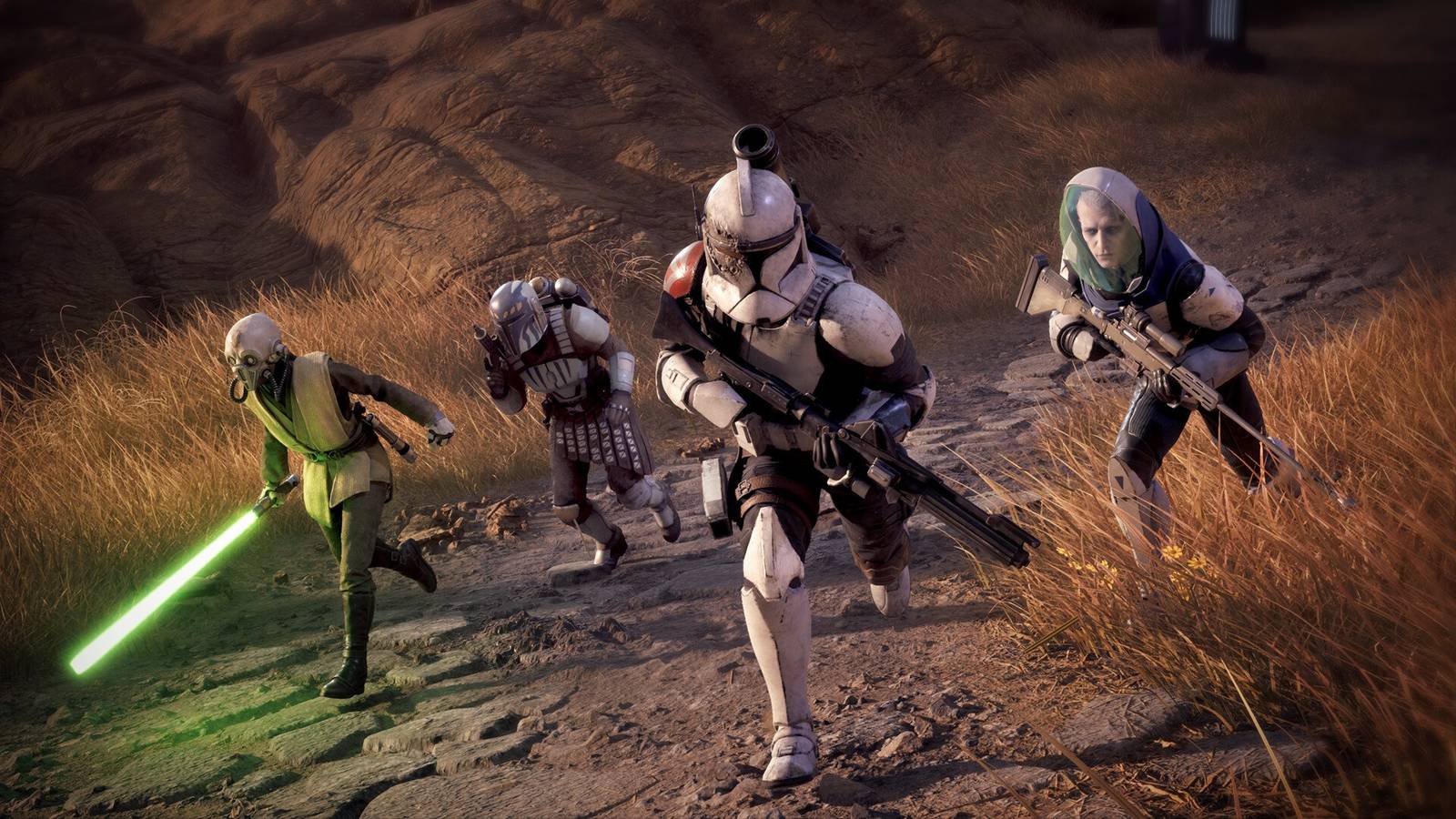
For a universe where war is so important that it’s literally half of the franchise’s name, the lack of a Star Wars tactical game seems like an odd oversight. And it looks like Star Wars Zero Company from Bit Reactor, a studio under EA made up of former Firaxis devs, is set to prove just how much potential there is in such a venture. Polygon recently had the chance to play about 10 hours of a Zero Company preview build. It might be “XCOM with Star Wars,” but it’s shaping up to be the best version of XCOM-style squad-based tactics yet — even if it does repeat some of its predecessors’ more annoying mistakes.
You play as Hawks, leader of a ragtag band called Zero Company. It’s a group of misfits (what other kind of group could there be in a Star Wars story?) that takes on odd jobs across the galaxy for pay. That would be great, except clients aren’t rolling in money amid the Clone Wars, when Zero Company takes place. So Hawks and co. find themselves in a tight spot — which is how they end up covertly working with the Galactic Republic.
There’s a lot going on in Zero Company‘s story. Obscure planets get their time in the spotlight. A weird, bug-worshipping cult takes center stage and makes the chaos of clones versus droids seem like no big deal. It’s all absolutely dripping with the prequel trilogy’s unique blend of analog and hard sci-fi style (and re-unites some Clone Wars actors, too). Despite Disney’s intense brandification of Star Wars over the last decade, Zero Company‘s opening hours play out like a natural extension of that world — closer to an installment in the old Expanded Universe, rather than an exercise in ensuring you Understood That Reference.
Hawks and their team exist on the periphery of the Clone Wars, pushed together by forces outside their control and not always happy about it. The team’s manager, for example, is a diehard Separatist, while Hawks’ closest friend is a decommissioned clone trooper still very loyal to the Republic. There’s a minor noble from a deep-space mining family, a sketchy perfectionist from the Republic military, and Kabbie, Zero Company‘s mandatory annoying Star Wars thing. He’s not bad. He’s actually quite endearing and has an admirable “don’t give a shit” mentality. He just has an unnecessarily irritating way of talking, by combining words to make new words that convey very basic ideas you could’ve gotten across with just one of those words.
Anyway, it’s fruitful ground for character-driven storytelling and the first time I’ve felt interested in Star Wars characters again in a long time. I still know next to nothing about the cast, outside of the public face they present to others and a few teases about their more complicated backgrounds. But it was enough to make sure I never let them die in battle and always checked to see if they had something new to say. Even the recruitable, not-story-important characters fit in well. Bit Reactor opted for a mix of extreme personality traits and backgrounds for these characters, like a medic whose history of violence makes them well-suited to landing critical hits, and they come through strongly in conversations and battle barks alike. No one is normal. Everyone is interesting. Even the banter — something I typically can’t stand for its forced humor and pointless time-wasting — is well-written and delivered pitch-perfect.
Zero Company is set up a lot like XCOM 2 and Marvel’s Midnight Suns. It divides missions between tactical (battle) missions and operations. Between fights, you’re managing your team and base, gathering intel, and deciding which quest to tackle next. These non-story moments are low points. Operations are text-based “missions” where you send squads out to accomplish a task and sometimes make a choice that determines the outcome. Choices have little surprise or risk, thanks to a warning label next to decisions that might potentially harm the squad members you send out. Outcomes will potentially improve your standing in parts of the galaxy, but reputation is just busywork. Accumulate enough points by doing quests in a given sector, you get some rewards, and you do it again and again.
There are so many quests, tactical and operational. Far too many. Non-story missions are less complex and tend to have generic objectives, which is fine in small numbers. But the sheer amount of optional tactical missions makes the gap between their quality and that of critical missions stand out. They aren’t necessarily bad. It’s more that you can only do the same kind of mission, built roughly in the same way despite aesthetic differences, so many times before you really want to stop doing that kind of mission. What’s more, a lot of quests, including prerequisite scouting to unlock character quests and new missions, have intel costs. That means you quickly end up in a loop that mandates doing several optional fluff tactical missions just to get enough intel for the other missions. With no real reward for doing it or meaningful effect on how things play out, it carries a sense of tedious obligation and bloat, rather than strategic satisfaction.
Like XCOM 2 and Marvel’s Midnight Suns, Zero Company has quite a lot of squad and base management that requires your attention. This all takes place in more than half a dozen different menus, none of which you can access without trotting over to the corresponding terminal. Initially, it seems like no big deal, but you will eventually do quite a bit of management between missions. By the end of my 10 hours, I was desperate for an option to just flip through menus. One of the irritating things about this process, aside from how unnecessarily time-consuming it is, is that convoluted base management and too many unrewarding side tasks are the same complaints critics and consumers levied against Marvel’s Midnight Suns, which several Bit Reactor leads also worked on.
Just when the irritation started piling up, though, I’d embark on a character quest or main mission and start enjoying myself again. If you’ve played squad-based tactics games before, you have a solid idea of what to expect from Zero Company already. A team of characters with different abilities work together in turn-based combat, moving across contained-but-complex fighting zones and using cover as they pick off enemies. Zero Company differentiates itself with its classes and array of skills.

Classes have role perks, which act as passive abilities. The scout, for example, will mark any enemy they hit and make them easier for others to hit as well, while scoundrels can ignore enemy defenses without requiring special buffs. Each has a special skill or two. Skill enhancements alone are rather underwhelming and basic alone, standard things like minor increases in power, but they add up over time and work in tandem with weapon mods to help you tailor a build. Sharpshooters can fire a shot that always hits, for instance. It’s low-powered at first, but you can use upgrades and mods to bump up its critical hit chance so it’s a guaranteed finisher. That’s just one potential build path, and it doesn’t take into account additional passive modifiers you can tack onto characters as their relationships with each other start to improve.
Then there’s the astromech droid, a support unit with extra item slots who can give more action points to allies, among other things. Sure, you’re giving up an extra damage character on your squad just for these little-not-guys. But on the upside, you can create scenarios where the droid hurls multiple grenades and lets your best teammates act multiple times in a single turn, so that balances out quite nicely.
Zero Company‘s flexibility is one of its best features, and even in just the first five missions or so, I was able to piece together some fantastically broken combos. All special skills require advantage to use, a shared resource the party accumulates during battle, and some have limited uses during each battle. Balancing these aspects adds a welcome extra layer of strategy and keeps things from being too overwhelmingly in your favor. If you don’t balance well, you’re in for trouble rather quickly. Most story-critical missions and the few character quests I did had multiple phases, some of which played out after major changes happened to the battlefield and rebuke you for hastily playing your best cards first. Ultimately, I came away from the demo excited to spend more time with the endearing weirdos of Zero Company — even if part of me is dreading all the “optional” fluff a little bit.
Bit Reactor and EA will release Star Wars Zero Company on Aug. 27 for PlayStation 5, Windows PC, and Xbox Series X.

![2nd Oct: The Ramparts of Ice (2026), 2 Seasons [TV-14] – New Episodes (6/10)](https://occ-0-748-1001.1.nflxso.net/dnm/api/v6/0Qzqdxw-HG1AiOKLWWPsFOUDA2E/AAAABX4DrgRD26A6j5N1BpXa3Gn3I3mUeU5LcdhdIVpG_0IP_Ls4M-P0eEAaYEBkqZEzz3tD6ii6gfFRXvMBIWw2YCEivKQ3hNJ1mPLpxw9dc-poSOaW9zd5BPZru0AwnUhZs0zsqvpxSISKPFrrYa3q4UqwTIH0RpxbJAuUWEIS.jpg?r=f88 "2nd Oct: The Ramparts of Ice (2026), 2 Seasons [TV-14] – New Episodes (6/10)")