![3rd Apr: Mrithyunjay (2026), 1hr 59m [TV-MA] (6/10)](https://occ-0-8167-92.1.nflxso.net/dnm/api/v6/0Qzqdxw-HG1AiOKLWWPsFOUDA2E/AAAABeH594YCZmTURzd_94-1dDGEDvNH9g2SMmMnSba41MyvWLLexOoYMoacT68jnGwIkv8kA71K01EZP-JBANCY4Wu-WFlJ3K1l79T_gDygLS1QD_Bh-khHD13maxBnkQo8X8Pjv2wBjo_ngufIUvIhThfeoU2o4ICXtwYDFCXX6uonCw.jpg?r=320 "3rd Apr: Mrithyunjay (2026), 1hr 59m [TV-MA] (6/10)")



![3rd Apr: Sampradayani Suppini Sudhapoosani (2026), 2hr 24m [TV-14] (6/10)](https://occ-0-858-92.1.nflxso.net/dnm/api/v6/0Qzqdxw-HG1AiOKLWWPsFOUDA2E/AAAABUkloexpnDgSlcIC7bdaJ9RDAjdlOuHW4PAPMzwvElhG-EcxuK0FK_fm09-GW0aQjq505ObK3qnQev7c7DBjvO19zPV4-kSegg0GC1A3YmDVpmJ5OSEnuHeY-askyQRC0CNNoQ7LZfsgfLkoxrQcwshOIbtkkUZqqwJF1WUXfMRVOg.jpg?r=295 "3rd Apr: Sampradayani Suppini Sudhapoosani (2026), 2hr 24m [TV-14] (6/10)")




Growing up, I was morbidly fascinated with witch stories — from Roald Dahl’s The Witches to Arthur Miller’s The Crucible (inspired by the all-too-real history of the Salem Witch Trials). It was unfathomable to me that women were arbitrarily burned at the stake, shunned and reviled by their communities. Jen Silverman’s Witch, a contemporary adaptation of the 1621 play The Witch of Edmonton, presents a darkly comedic version of one such tale.
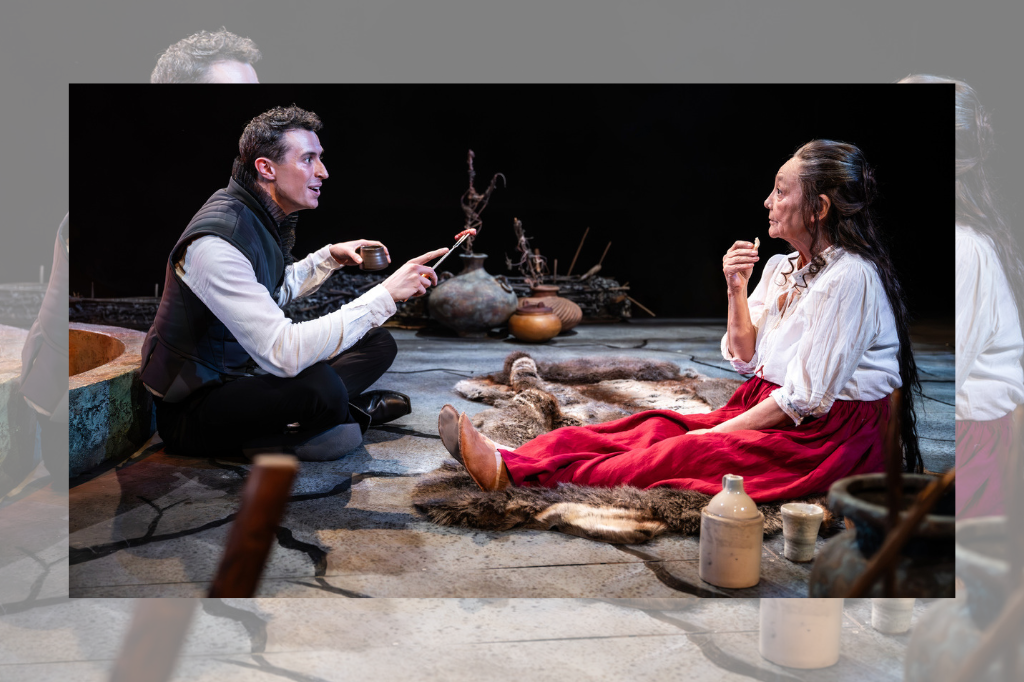
Set in Jacobean Edmonton (in North London, England — not Alberta!), Witch alternates between two loosely interlaced storylines. The A-plot follows Elizabeth Sawyer (Tantoo Cardinal), a shrewd, elderly woman living on the outskirts of town after being ostracized and labelled a witch. It’s made clear, though, that rather than being supernatural, Sawyer is merely a scapegoat for calamities that befall the townspeople, accused of transgressions like “[dancing] with the devil in the pale moonlight” (a reference to Jack Nicholson’s famous 1989 quote from Batman, though neither I nor the majority of my fellow audience members seemed to pick up on it).
When Scratch, an incarnation of the devil (Nicholas Eddie), accosts Sawyer, his quest to steal her soul catalyzes a series of existential and, eventually, passionate rendezvous as they reflect on life and love. Their conversations pose philosophical queries about the value of one’s soul, the pervasiveness of misogyny, and the merit of razing the world to begin anew. Although Sawyer is human and Scratch an immortal, their lack of visual or aural differentiation and physical intimacy suggests that the distinction ultimately matters less than the universal impulses that connect them.
Conversely, Cuddy Banks (Thomas Mitchell Barnet), the vivacious son of Sir Arthur (Oliver Dennis), wants nothing more than to become a professional Morris dancer. Although Cuddy is generally unconcerned with the minutiae of noble life, his father’s preoccupation with Frank Thorny (Shawn Ahmed), an opportunistic farmer vying to replace him as heir, provokes him incessantly. Cuddy and Frank’s mutual, sexually charged resentment makes it all too easy for Scratch to pit them against each other in a bid to claim their souls.
Silverman’s writing boldly merges the 17th-century setting with anachronism, incorporating phrases like “son-of-a-bitch” and “on the DL” (the latter prompting raucous laughter on opening night). Although the play’s moody, comedic premise holds potential, its execution ultimately falls flat — the script’s frequent jokes elicited not much else from me than the occasional smirk. Despite standout performances from Cardinal, Eddie, Dennis, and Heeyun Park 박희윤 (playing Winnifred, Sir Arthur’s attendant), Courtney Ch’ng Lancaster’s direction doesn’t afford many of the quips in the show’s first half enough time to land; the rapid pacing makes the dialogue verge on seeming over-rehearsed.
Without much in the way of humour to entice me, I found myself focusing on finer details. Witch’s costuming, wigs, and lighting (by Ting-Huan 挺歡 Christine Urquhart, Jacqueline Robertson-Cull, and Jareth Li, respectively) are some of the production’s most notable elements. Urquhart’s intricate designs feature period-appropriate ruffles, pleats, and puffed sleeves, beguilingly illuminated by Li’s hazy red and blue spotlights. Each character’s hair reveals considerable information about their dispositions, from Thorny’s gelled coiffure, representing his desire for control, to Sawyer’s impossibly long, loose strands, symbolizing the amount of time she’s spent sequestered away on the edge of town.
Nick Blais’ set design, featuring thorny tree trunks, lush furs, and a shallow well at centre stage suits the Jacobean setting, although the show notably doesn’t take full advantage of its traverse staging. The two plotlines are largely divided on either side of the theatre, neglecting the opportunity for greater amalgamation or a more general sense of playfulness (for example, all characters being on stage simultaneously, which happens only once).
Lancaster interprets the play’s anachronisms in ways that are ambitious but don’t always mesh. One example is the rock-‘n’-roll synth that transitions the actors from scene to scene (sound design by Olivia Wheeler). While this is initially rousing, its frequency ultimately becomes grating. The interludes are also some of the show’s only sound cues, making Soulpepper’s Michael Young Theatre almost too quiet for the duration of the 95-minute running time. The lack of ambient noise naturally makes the performances come into sharp focus, but aside from the quiet, intimate moments between Cardinal and Eddie, the actors occasionally struggle to generate the emotional momentum and specificity required to carry the weight of the silence.
All in, Silverman’s play aspires to communicate something substantive about the human condition — touching on loneliness, ostracization, misogyny, ageism, yearning, and ego — yet it never quite settles on a cohesive or definitive thesis. Lancaster’s production commits to heady visuals and clever idiosyncrasies to fill the gap, with mixed results.
Witch runs at Soulpepper Theatre until March 1. More information is available here.
Abi Akinlade wrote this review as part of Page Turn, a professional development network for emerging arts writers, funded by the Canada Council for the Arts and administered by Neworld Theatre.
Intermission reviews are independent and unrelated to Intermission’s partnered content. Learn more about Intermission’s partnership model here.

WRITTEN BY
Abi Akinlade
Abi is a Nigerian-Canadian multidisciplinary artist based in Toronto. She holds a Bachelor of Arts degree in English Literature and Drama from the University of Toronto. Represented by AMI Talent Agency, she has performed in both film and theatre productions. She is currently a cohort member of the inaugural theatre criticism program Page Turn, as well as a journalism fellow at Inkspire. Driven by a strong passion for theatre, literature, and film, she aims to use storytelling as a means to uncover a deeper sense of identity and foster meaningful connection.
LEARN MORE