








Switchboard is Polygon’s weekly newsletter for all things Nintendo, sent on Thursdays and published on the site on Saturdays. You can subscribe here.
Tezuka isn’t as famous a name as his contemporary Shigeru Miyamoto. But he was Miyamoto’s right-hand man through the epochal creation of Super Mario Bros. and The Legend of Zelda in the 1980s. And he remained a vital collaborator for Miyamoto and an active, hands-on producer across a huge range of Nintendo games throughout his entire career. His fingerprints are all over innumerable classic games, especially in the Mario, Zelda, and Pikmin series, right up until 2023’s Super Mario Bros. Wonder and Pikmin 4.
In truth, it’s barely possible to tease Miyamoto and Tezuka’s massively influential and innovative bodies of work apart. Miyamoto was the senior partner, has more credits, and is the originator of all the most famous Nintendo characters. (Tezuka co-created Yoshi.) But through the 1980s and the 1990s, the pair worked in lockstep, exploring and expanding the possibilities of the new medium in seminal title after seminal title as a producer-director duo.
Tezuka was a graphic designer with scant knowledge of video games when he joined Nintendo in 1984. It’s fair to say he was a fast learner. He started out making sprites for Punch-Out!!, but was soon assisting Miyamoto on the design of his first console game, Devil World. Less than a year later, the pair shipped Super Mario Bros., on which Tezuka is credited as a co-designer with Miyamoto. Super Mario Bros. tore up virtually every convention of game design that existed in the early 1980s and rewrote the history of the medium. I guess you don’t have to unlearn what you don’t know in the first place.
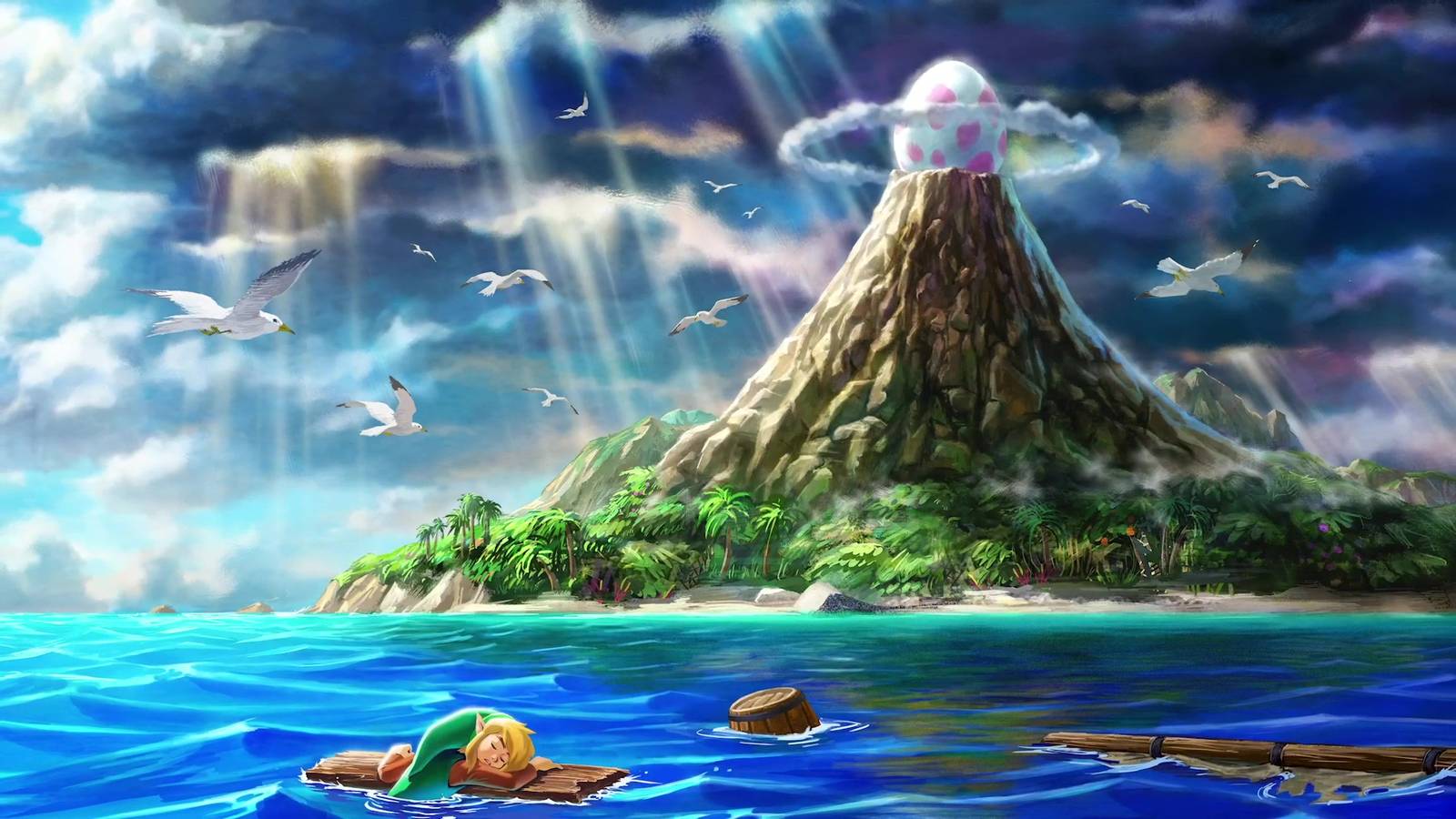
The apex of Miyamoto and Tezuka’s partnership was probably the early days of the Super Nintendo, when they served as producer and director respectively of the masterpieces Super Mario World and The Legend of Zelda: A Link to the Past. But the full flowering of Tezuka’s unassuming, quietly oddball personality in his art came with The Legend of Zelda: Link’s Awakening on Game Boy in 1993.
Tezuka led that project, the first handheld Zelda game. Reminiscing with colleagues in an edition of Iwata Asks, Tezuka revealed that it was his impetus to strip away all the accoutrements of the still-young series — the Triforce, Hyrule, Princess Zelda herself — and make “almost a parody” of a Zelda game. He was inspired by David Lynch’s then-popular TV show Twin Peaks to narrow the focus on a cast of characters behaving in suspicious, off-kilter ways, and showed an impudent, post-modern streak in the way he sneaked characters and elements from Mario and Kirby into the oddball adventure. Link’s Awakening deconstructed Zelda’s traditional fantasy tropes and reoriented the whole series, introducing a mildly satirical and sinister undertone that has stayed with it ever since.
It was a different time, when the foundational precepts of the video game medium were still malleable. It’s no longer possible for an outside mind like Tezuka’s to enter gaming and reshape it. More’s the pity. But Nintendo’s greatest strength as a developer is its ability to absorb the unique thought patterns of its finest minds and inculcate them in successive new generations of talent.
You can call this strong company culture, or sound succession planning; you can also call it teaching and mentorship. In this climate, Tezuka’s gradual (and never total) shift into more supervisory roles only deepened the roots of his influence. He will be missed. But he’s still there in everything Nintendo makes now, and everything it will make in the future.
eShop game of the week: TetherGeist

TetherGeist is a demanding precision platformer in the mold of Celeste, with an interesting mechanic whereby the protagonist can leave her body for short periods of time, which is exploited for both puzzles and skill challenges. It has reviewed really well: “Filled with fresh ideas,” according to Nintendo Life’s 8/10 review.
Nintendo Music track of the week: “Opening Theme” from Star Fox (2026)
As a teaser for the upcoming Star Fox 64 remake for the Switch 2, Nintendo has uploaded 10 tracks from its soundtrack to Nintendo Music. They’re epic, full-orchestral, John Williams-style arrangements of the original tunes, and they sound fantastic.
Nintendo Classics game of the week: Star Fox 2
Now the soundtrack has got you in the mood, satisfying your Star Fox cravings (and your curiosity) with one of the true treasures of Nintendo Classics — the never-released follow-up to the original SNES game, and the only full sequel it’s had in over 30 years.
This week’s most interesting releases
Sektori
- Out now
- Switch 2
- Geometry Wars-style twin-stick blaster with tricksy sector mechanic
Perfect Tides: Station to Station
- Out now
- Switch
- If Mixtape didn’t sate your thirst for nostalgic Millennial cringe, this is the game for you
Farming Simulator 26: Nintendo Switch Edition
- May 19
- Switch
- Tractors etc.
R-Type Dimensions 3
- May 19
- Switch and Switch 2
- Old-school shmup action
