

![28th Aug: Mousetrap (2026), Limited Series [TV-MA] (6.9/10)](https://occ-0-8772-590.1.nflxso.net/dnm/api/v6/0Qzqdxw-HG1AiOKLWWPsFOUDA2E/AAAABYNZVnt0SKqVfyzDBs-RIOlahQc6Y2DXZEjUak_vb2mD2oKSKMF3eqjbfeLJyldhymt3doWSqWDUdXQx4m_NBmjc3qarrHX9bWscWSs6ZOOqK-B-Yk-sTllt7_hGOUoU_Zm15VsOMPdD7hexTtsvddeQDv39uMyMV_uMLNt2GkhzKQ.jpg?r=2a5 "28th Aug: Mousetrap (2026), Limited Series [TV-MA] (6.9/10)")



![28th Aug: Newton's 3rd Law (2026), 2hr 15m [TV-MA] (6/10)](https://occ-0-8166-1007.1.nflxso.net/dnm/api/v6/0Qzqdxw-HG1AiOKLWWPsFOUDA2E/AAAABbPdN8IMd4U1gU8aS9lzq7nJCrjHzpcxiNA0i4CgUfqlECBPWRdGqg9BQb45mfru1HXSFPG8AZapd0uAw2aFPokfsYGlmyfX1W2sPN75DX4WTmb7fiW46pm2yTWR9w5j-7hRDMRk-P4ISmRxPzc7PQs4yDXg5nKyyi2pZ461gLZB2A.jpg?r=349 "28th Aug: Newton's 3rd Law (2026), 2hr 15m [TV-MA] (6/10)")




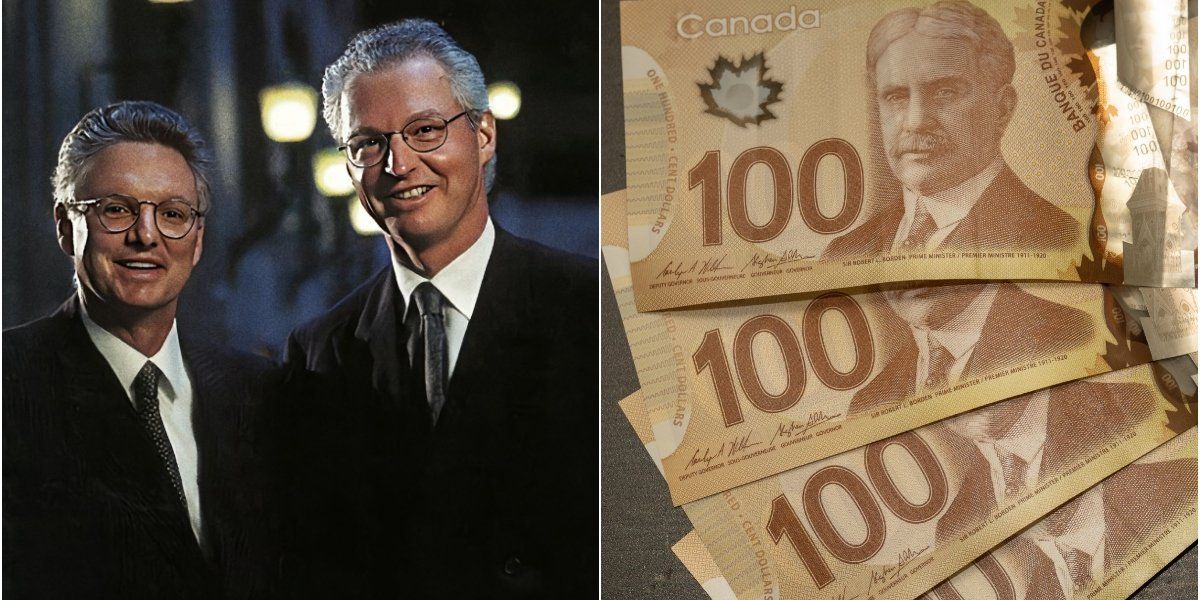
Quebec has produced plenty of wealthy families over the years, but one stands in a category of its own.
The Desmarais family — the power behind Power Corporation of Canada — is the richest family in the province and the tenth wealthiest in the entire country, according to Maclean’s 2025 Rich List.
Their combined fortune is estimated at $12.7 billion. To put that in perspective: divided equally among every person living in Quebec, all nine million residents would walk away with roughly $1,411 each.
How the empire was built
It started in Sudbury, Ontario, where Paul Desmarais Sr. rescued his family’s near-bankrupt bus company (originally founded in 1925) in the early 1950s and used it as a springboard for one of the most ambitious acquisition runs in Canadian business history. By 1968, he had taken control of Power Corporation of Canada, a Montreal-based holding company that would eventually grow into one of the country’s most influential financial conglomerates (with major stakes in Great-West Lifeco and IGM Financial).
At the time of his death in 2013, Paul Sr was ranked by Forbes as the fourth-wealthiest person in Canada (US$4.5 billion).
The empire didn’t stop there, though. By the mid 2010s, his sons Paul Jr. and André had already been running the company for nearly two decades, and Power Corp. has kept growing under their watch.
Paul and André Desmarais.Acadie Nouvelle
Now the third generation is writing the next chapter. André’s son, Olivier Desmarais has been Senior Vice-President of Power Corporation since 2017. He also chairs Power Sustainable, the family’s climate-focused asset management arm, which recently launched a $330-million fund targeting mid-sized businesses working to cut carbon emissions.
His cousin Paul Desmarais III leads Sagard, the venture capital and private equity arm through which Power Corp. holds a $2.7-billion stake in Wealthsimple, one of Canada’s fastest-growing fintech companies.
What $12.7 billion actually looks like
The $1,411-per-person figure is striking enough on its own. But consider this: the family could hand every Quebecer a flat $1,000 — enough to cover a month’s groceries, a utility bill, or a chunk of rent — and still have roughly $3.7 billion left between them.
They’re not giving it away anytime soon, obviously. But as a way of understanding just how much generational wealth can accumulate across seven decades of deal-making, the math speaks for itself.