





Jacob Elordi, Josh Brolin, Margaret Qualley and Guy Pearce discuss their latest film
Article content
We independently select everything we recommend. Buying through us may earn us a commission, which supports our work.
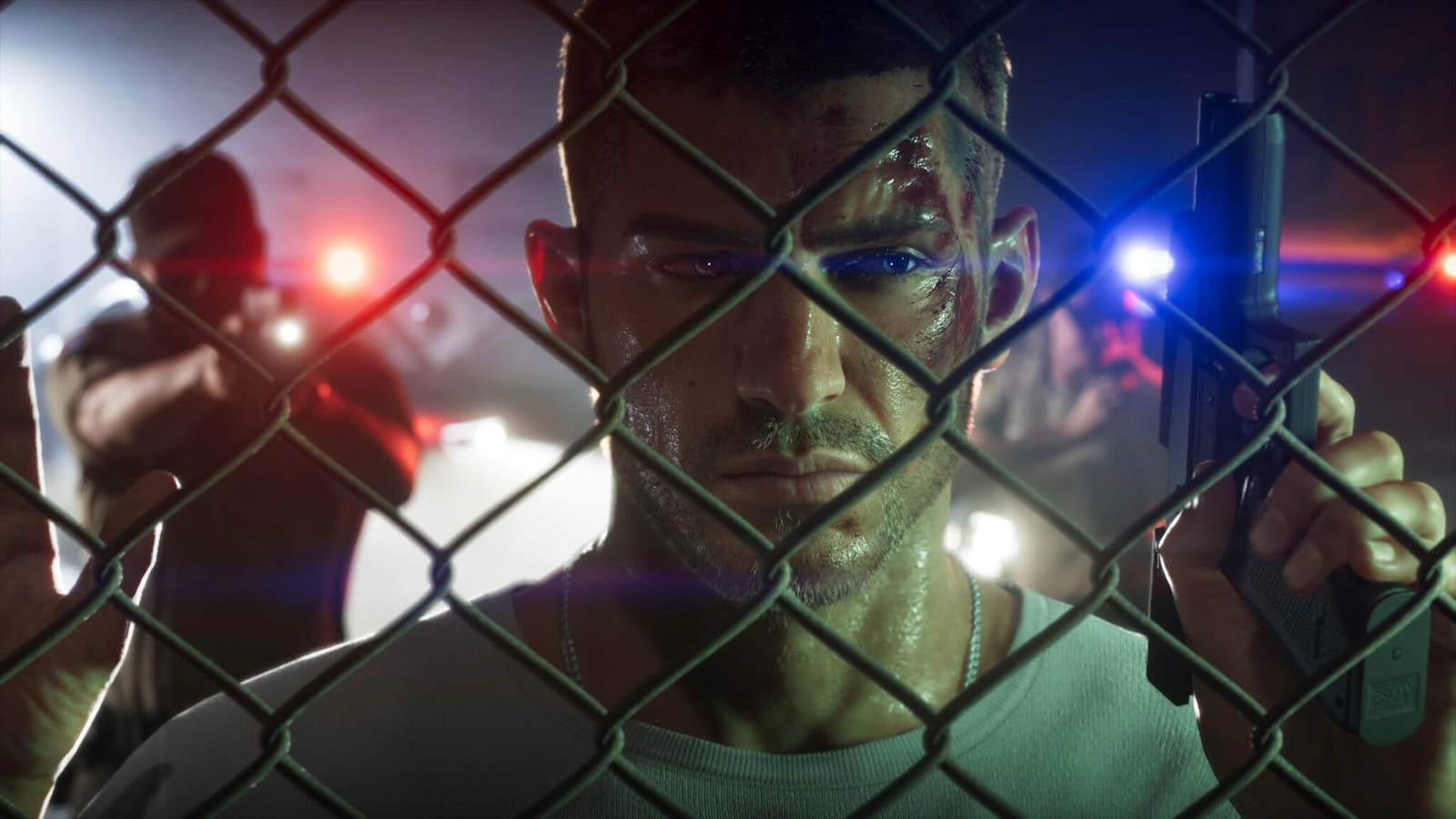
In an era saturated with digitized spectacles and green-screen landscapes, Ridley Scott’s adaptation of Peter Heller’s novel The Dog Stars pivots toward something strikingly raw: the fragile, enduring pulse of human connection amid devastation. The film, which is in theatres on Aug. 28, 2026, strips away cinematic safety nets to explore a post-pandemic world that feels unsettlingly proximate, trading artificial bombast for sweeping physical sets, devastating quietude and the stark reality of survival. For Scott, returning to such visceral storytelling was instinctive reaction to an exceptional script about societal collapse and the fight for human connection.
Advertisement 2
Article content
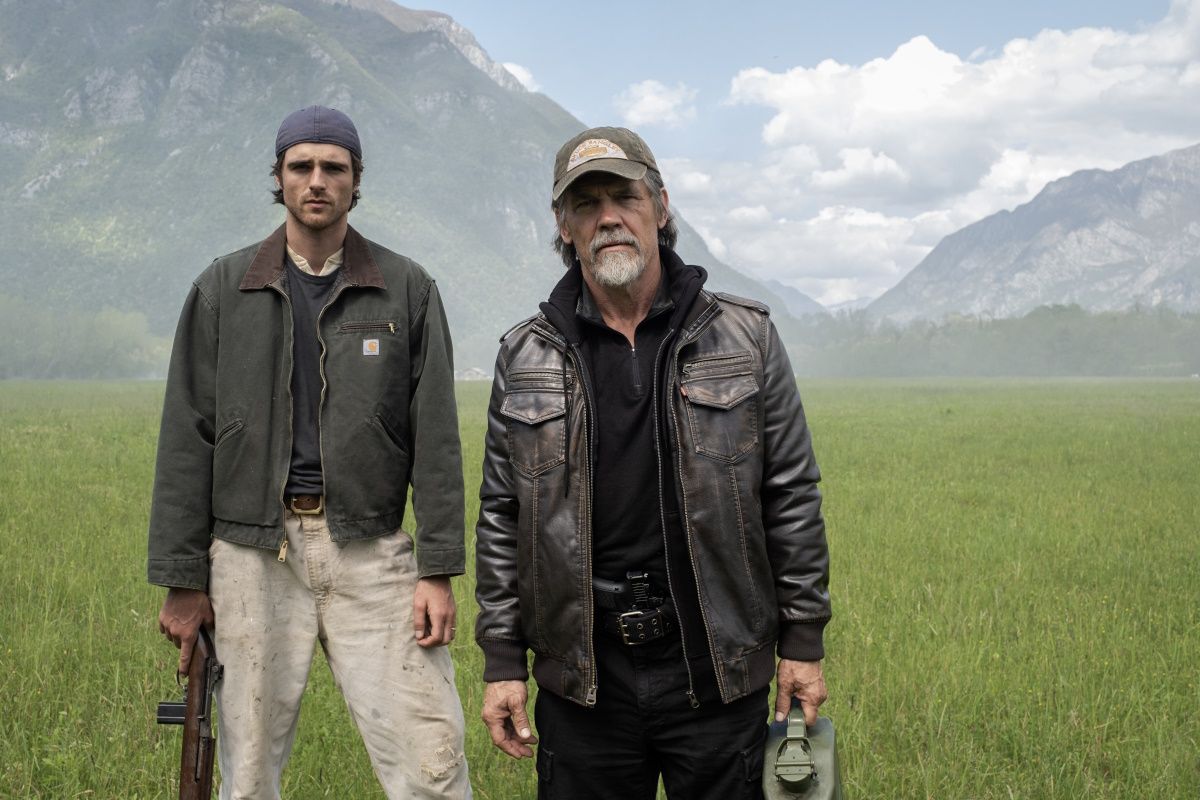
Bringing that desolation to life required an ensemble cast willing to abandon their traditional comforts. Leading the charge as Hig, Jacob Elordi anchors the story’s sense of grief and longing for humanity. Elordi carries the film with grace and delivers Hig’s internal battle with little to no dialogue. Beside him, Josh Brolin brings his signature on-screen charisma in Scott’s multi-camera, single-take style, showing both a hardened exterior as an army man, but also a soft vulnerability that cracks through.
Article content
Article content
Rounding out the world are Margaret Qualley, whose character radiates a relentless search for light in the dark, and Scott regular Guy Pearce, who navigate the director’s famously brisk pacing with ease. Behind the grit and the high stakes, The Dog Stars reflects on the fundamental lifelines we take for granted (especially post-pandemic), the families we cling to, the communities built on film sets and the art that anchors us when everything else is stripped away.
Advertisement 3
Article content
Sitting down in London ahead of the world premiere, I spoke with Ridley Scott, Jacob Elordi, Josh Brolin, Margaret Qualley and Guy Pearce about the beauty of filmmaking, the chaos of finding truth in the first take and the essential anchors that keep our sanity intact when the world falls apart.
After the high-spectacle epics that you’ve done, you jumped into this, which is a beautiful film about human connection and finding [your purpose]. What continues to give you meaning with your films?
Ridley: It’s all in the writing. If you got it on paper, the book is great, but then the adaptation was also excellent, and it was sent to me. I wasn’t developing it. It was sent by Fox, who I’ve been with for a number of years now, and I read the script, called up and said, “This is fantastic.” What I read is intuition and gut, and I’m frequently reading so fast when it’s so good.
I can go into the political answer saying all of this stuff is just around the corner, and it’s happening right now, way south in Africa and areas around there, and we are lucky to be living where we are because you could be living in anarchy as many are today right now in various parts of the world. I don’t want to go political, but we know it’s right there in your face.

Shopping Essentials
Article content
Advertisement 4
Article content
Jacob, I love how Hig carries grief and it’s so intense, so emotional. What did you love about those quiet, subtle moments with very little dialogue?
Jacob: I was given the time to reflect on a not too-distant future or a future that we’re already living in. With Ridley, there were no green screens. There was no faking it. He would build these towns that were completely decimated, and I was alone there. I think seeing the world on the set that way, you can’t help but think about your own reality and the things that that you would miss and the things that that you could lose so easily and the things that you take for granted while they’re there. The nature of the design of the set being so real helped me as the character, and it’s so current. The film is now, you know, or a little bit after now, so I think it just gave me the opportunity to really see what it could be like.
It’s very different to if we were in a studio and there were green screens everywhere, and I was walking around in the apocalypse with this gun and fabricating how I’d feel. You know, the beauty of working with Ridley is that action means go, and everything is real, and that’s all there is. You just have to react.
Advertisement 5
Article content
This movie really highlights the things we take for granted. What do you truly value about making movies that you will never take for granted no matter how many movies you’ve done or who you work with?
Jacob: You know, there was a moment during COVID, and I didn’t have as much work before COVID as I do now, and I was still sort of chomping at the bit to to be in movies. COVID got longer and longer and longer, and the phone got quieter and quieter, and the emails quieter. And there was a moment where I thought, “Wow, we might not do movies anymore,” or we might not do them the way that I dreamt of doing them. And then when it ended, and they came to me in full force, and I was able to make film after film after film, I [came to] that realization. I don’t think I’ll ever be able to take the filmmaking process for granted. It’s so special to me, and it’s something that we’re not guaranteed. And we do take for granted that we have entertainment like this. I think for me, it’s very easy not to forget how important it is, especially after that moment in time.
Advertisement 6
Article content
Josh: I just think in my life in general, I’m very grateful. I have been writing for 12-and-a-half years now. I write a gratitude list every day, and it allows me to see kind of objectively where I’m at. Because movies are becoming such a thing again, I think where I started to get a little negative was that movies were on their way out, and we were just into streaming, and we were going to all be home alone watching films. You know, the Ridleys are coming back, not that he’s ever gone away, but this sense of challenging yourself and challenging society, that’s becoming more of a thing again. I really like being a part of that.
Margaret: I’m always amazed and super humbled by a crew, by all the people that it takes to to make a movie. If I’m in the middle of a scene and I’m feeling kind of lost, the first thing I do is kind of look around and be like, “Okay, there’s the boom operator, there’s that PA, there’s that sound,” and take in that everyone’s there and everyone has their own life and they’re all here working super hard and you’re in it together. You’ve got this kind of community and I think film crews are such special groups of people because it’s such a hard job. The hours are crazy, there’s no stability. They’re moving from one place to another.
Advertisement 7
Article content
Guy: They don’t get the sort of the attention that we get as actors. They’re working hard behind the scenes.
Ridley: I came through before TV, and there was only radio, and there was BBC, and then it got there was the posh BBC Four, which only plays classical music. Then one day there was the beginning of TV, and we had the first television set on our street, I remember coming home from school, and there it is. There’s the ash above the chimney, and we sat that night and watched The Barretts of Wimpole Street on a black and white TV.
And from there, it’s weird because I was born in ’37, so we’ve seen an evolution of social conditions change so dramatically. Because I was in Germany post-war, I was 11 years old, and I went to school in a barracks of the German fleet of the U-boats. I walked past 200 U-boats every morning because I was in military school, my father’s acting brigadier general helping rebuild Germany on the Marshall Plan. So they went me to send me away to school, and I’m one of those kids. I just loved getting away from my mother. So I said, “School, fantastic! Of course, I love boarding school.” So you know, when you’re that on your own, you evolve yourself. Survival. I was a good survivor.
Advertisement 8
Article content
Josh, one of the reasons I loved your character is because beneath the tough exterior you see the vulnerability. I was wondering if you came up with a backstory for him that helped you think about those things.
Josh: Yes, Ridley and I talked about it. Jacob and I talked about it. Just because it was so uncertain when we started, because Ridley has this thing where he wants to keep things kind of elusive, and he doesn’t want you to rely on anything specific. I think you get caught into that. When you do other films there’s a comfort zone that you find, and he doesn’t want comfort. In the beginning, you first start doing that, and it’s really unnerving, and you don’t really know what to do with it. It became such an addictive thing to me, because you’re discovering the relationship as you’re going back and forth. I think it was less about the backstory of what Bangley is based on than the relationship that I had with Jacob, which turned out to be the relationship that I had with Hig.
Advertisement 9
Article content
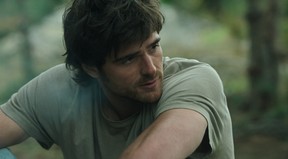
Did it feel like it was pushing you out of your own comfort zone?
Josh: It was totally pushing me out of my own comfort zone. I mean, Ridley would come up. We did one take. We hadn’t even rehearsed, and I push for rehearsal. But Ridley is like, “Okay, are you good? Can we go on now?” Because he just wants to get to it because he wants those happy accidents. They can be horrible accidents too, and just be really bad acting. But then you have to create the space for something to be able to enter that magic to be able to be a possibility.
But yeah, I was far out of my comfort zone in the beginning, but then when Ridley would come in and he was like, “That speech, do you like that speech?” And I go, “Ah, not really.” And he goes, “Okay, cut it,” and I go, “Okay, if we cut that speech, then we have to cut the first three lines of what he says, but we have to replace it with something.” So we’re literally rewriting from take to take, and you’re re-editing in your head, and then you’re having to do this. You know what I mean? It’s chaotic.
Advertisement 10
Article content
Guy, you’ve worked with Ridley Scott before. How would you describe reuniting with him and his unique style of directing?
Guy: Well, he’s legendary, Ridley’s got great energy. He’s really inspiring, and yes, I have worked with him before, so I was sort of aware of the process of multiple cameras and knowing that you don’t spend too long on a scene. It still can be a bit of a jolt sometimes, where you sort of think, “Right, okay, so we’ve done the wide shot. Now we’re going to probably come in and do a two shot. No, no, we’ve already got that. We’re moving on to a different scene altogether? Okay, did we get it? Is it good?”
So it can be slightly nerve-wracking at times but then of course he shows you some stuff in in the van, and yeah, all looks pretty good.
Margaret: I feel like so much of my job in life is reckoning with the fact that I don’t have control, and the word surrender sounds maybe ridiculous, but it can be a mantra to help. I think this movie really encapsulates that, in the sense that you really don’t have control and you really have to just surrender.
Advertisement 11
Article content
What was important to you with your characters, especially when you have a book, you have the script, and you have an iconic director?
Guy: It’s just always going, okay, how do I play this character? You know, just getting that right and understanding the tone of the film and it was great to have the book obviously, to get a sense of the world through Peter’s original vision.
Margaret: Yeah, I think that [Cima] had so much hope, and that was the quality I was really attracted to in her. That she was always looking to find the light and to try to bring other people with her. So I found her really courageous and admired her spirit.
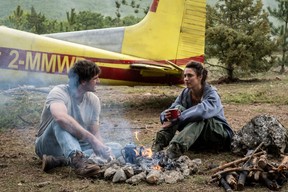
Hig has coffee, he has his music. What is your absolute necessity for your own sanity in the post-apocalyptic world?
Jacob: My family and the people I love. Without them, there’s no apocalypse for me.
Ridley: Well, of course, my great wife and my kids. I still communicate with my kids. My eldest kid is 60. Next one is 58. My daughter’s 47. I talk to them every day, and always have done. So there’s a communion there, and that’s important.
Advertisement 12
Article content
Josh: My kids are my essential, and my coffee is my essential.
Margaret: I’m choosing music. Dance is so important to me.
Guy: Thinking about music, I often travel with a guitar. I’m not a great guitar player, but to sort of have that to go to because it’s kind of therapeutic and something you can obviously just really do on your own. So that would be something that I would want to make sure I had.
Is there a movie you’d watch on repeat?
Ridley: I’d watch Kubrick’s 2001: [A Space Odyssey].
Josh: God, yeah, but it’s super depressing. I’ve seen The Warriors 66 times. I’ve seen 21 Grams probably 35 times, but then I’ve seen Get Shorty probably 30 times. So it’s all over the place. It depends on what my mood is. I’ve seen Dog Day Afternoon probably 30 times. They’re kind of depressing movies, but I like them.
The Dog Stars is now playing in theatres.
Read More
-

‘Spa Weekend’ cast dishes on female friendship and bizarre beauty trends
-

Inside the $15,000 Emmys gift bag — plus budget dupes
Why trust us: We research, test and vet so you don’t have to. Learn more about our methodology or subscribe to our newsletter for the best of Canoe delivered to your inbox.
Article content
![28th Aug: The Magnificent Seven (2016), 2hr 13m [PG-13] (6.45/10)](https://occ-0-8167-92.1.nflxso.net/dnm/api/v6/0Qzqdxw-HG1AiOKLWWPsFOUDA2E/AAAABW592zPL08DdD4-nos7WhSpUxXxfOuG8jW0iXIXFEchniOZSJcEt3zJatE9F2bE1FOPOcbzfwFA_zEm9j6C9N0TVljL2oQrBE4nGthKQJf50J-5NpXhDMMn1kcTSBKxdDkfuOqajX7KMP6K38Gz6m2qyzTkFPTtTCzqZC_MOVfXjXQ.jpg?r=feb "28th Aug: The Magnificent Seven (2016), 2hr 13m [PG-13] (6.45/10)")