

![31st Jul: Rao Bahadur (2026), 2hr 46m [TV-14] (6/10)](https://occ-0-1081-999.1.nflxso.net/dnm/api/v6/0Qzqdxw-HG1AiOKLWWPsFOUDA2E/AAAABZBGFvNWQeXoJ182Ns7UAWkOOhTCjF6PpcfHOecoc8McpdTu9-4NudVnulyqPw3SiaCJCx2b3aTPM0UqIqDvr65hTNFfAlQLpeRUfbeMQu-TQ1yzstgs1NEMcy8iGaZQItp44hwOBFdyzdjRmAJTjX_tTmUX8i1-dnpxXcrXUQnPlQ.jpg?r=b63 "31st Jul: Rao Bahadur (2026), 2hr 46m [TV-14] (6/10)")



![31st Jul: Max (2015), 1hr 51m [PG] (6.3/10)](https://occ-0-953-999.1.nflxso.net/dnm/api/v6/0Qzqdxw-HG1AiOKLWWPsFOUDA2E/AAAABYss_wIHGKl4KhyYvJQrc2EqM4hzoHAbeyvUZ_a3VjTiZje5gim29yHoGL0cVnq0nvaGKNjj3YVp1w05jGgAbmngGLx5LpJAEhhfTfsupAkyjnpVnBwJoZAFMKAvR9SgbHjKHH6vgfn7eMyFnNdwLopJvse-Wf_0ofl2-OEg-wEkVw.jpg?r=023 "31st Jul: Max (2015), 1hr 51m [PG] (6.3/10)")


Expectations are high for Ravenloft: The Horrors Within. The book is the main release of Dungeons & Dragons’ Season of Horror, marking the first product to come out under the TTRPG’s new seasonal model. It’s also the first D&D book published by Wizards of the Coast in 2026 (outside of digital-only products), midway through what has been a very quiet year for the world’s most famous role-playing game. Behind the scenes, the brand’s leadership structure has changed radically, with new creatives joining the team to fill the roles left by Chris Perkins and Jeremy Crawford’s departure in 2025.
By all accounts, Ravenloft: The Horrors Within is the first step into D&D’s future, but it’s also a weird one: Rather than open with brand-new content, the first season of D&D 5.5e launches with a remake of one of the best 5th edition products, 2021’s Van Richten’s Guide to Ravenloft, reusing a lot of that same material. The result is a worthy companion book, with some great additions but also some unfortunate drawbacks, and some sections suffering from the comparison with its excellent predecessor.
Released on June 2 for D&D Beyond Master Tier subscribers (ahead of the general release on June 16), Ravenloft: The Horrors Within is a campaign setting focused around several Domains of Dread in D&D’s signature horror setting. It updates Van Richten’s Guide to Ravenloft to the current 5.5 edition rules and design philosophy, while adding new domains, darklords, and layer options. With 16 Domains of Dread, 17 darklords, seven subclasses, four species, four backgrounds, 11 feats, 68 monsters, and 47 maps, no one could say that Ravenloft: The Horrors Within lacks bang for your buck. The Ultimate Bundle also comes with a DM screen, a tarokka deck, plus digital and physical versions of the map pack.
The book begins with an introduction to the Domains of Dread that quickly outlines the main features of the Ravenloft setting, including the omnipresent Mists that separate the Domains and trap their inhabitants. Chapter 1 then lists all the character options. Most of these had already been shared in the form of the Horror Subclasses that first appeared in Unearthed Arcana, so players won’t find big surprises here. There is a new species, however: the lupin. These humanoids with cursed wolflike physiology cannot fully transform as werewolves do, but gain some boost to their abilities, like a slashing unarmed attack, a powerful bonus action howl that can grant disadvantage to enemies, and proficiency in Perception, Stealth, or Survival.
Dark Gifts also return in the form of alternate origin feats. The list is the same as in Van Richten’s Guide to Ravenloft, but unfortunately a lot of the flavor has been removed from their description to focus on the practical application of the rules — a common, if unfortunate, trend in the book. For example, Symbiotic Agenda is a fun Dark Gift that makes the player character share their body with a sinister entity. In the previous version, the creature could try to take control if the player’s action went against its agenda. In the new version, called Symbiotic Being, this attempt triggers every time a player rolls a 1 on a d20. That makes the mechanic easier to handle, especially for new players and DMs, but also less interesting.
It’s worth noting that Ravenloft: The Horrors Within also adds Haunted Bastions, expanding the bastion rules found in the Dungeon Master’s Guide with new options for players to create a base in Ravenloft.

Chapter 2 lists 16 Domains of Dread, each with its map, darklord (except for Darkon), list of locations, history, adventure hooks, a sample campaign arc, and one or more of the mini-adventures that are now a common feature in 5.5e products.
The tarokka deck now plays a significant role in connection with the Domains and their darklords. Each Domain now has an aligned tarokka card that can guide travelers in the Mist to that location if the card is pulled from the deck. Every Domain also has an opposing card that reveals a truth about its darklord. If that card is pulled during a tarokka reading in that Domain, the dreadlord is immediately alerted and can take possession of the reader to intimidate the party. It’s a cool new feature that makes the tarokka more significant as one of the few things that tie the Domains together.
Some of the Domains in Van Richten’s Guide to Ravenloft have been moved to the “other Domains” section (where they only get a name and a brief description): Bluetspur, the Carnival, I’Cath, and Richemulot. The new Domains that appear in full are Innsmouth, the Shadowlands, and Sithicus. Of these new additions, the Lovecraft-themed Innsmouth is, perhaps unsurprisingly, the least successful.

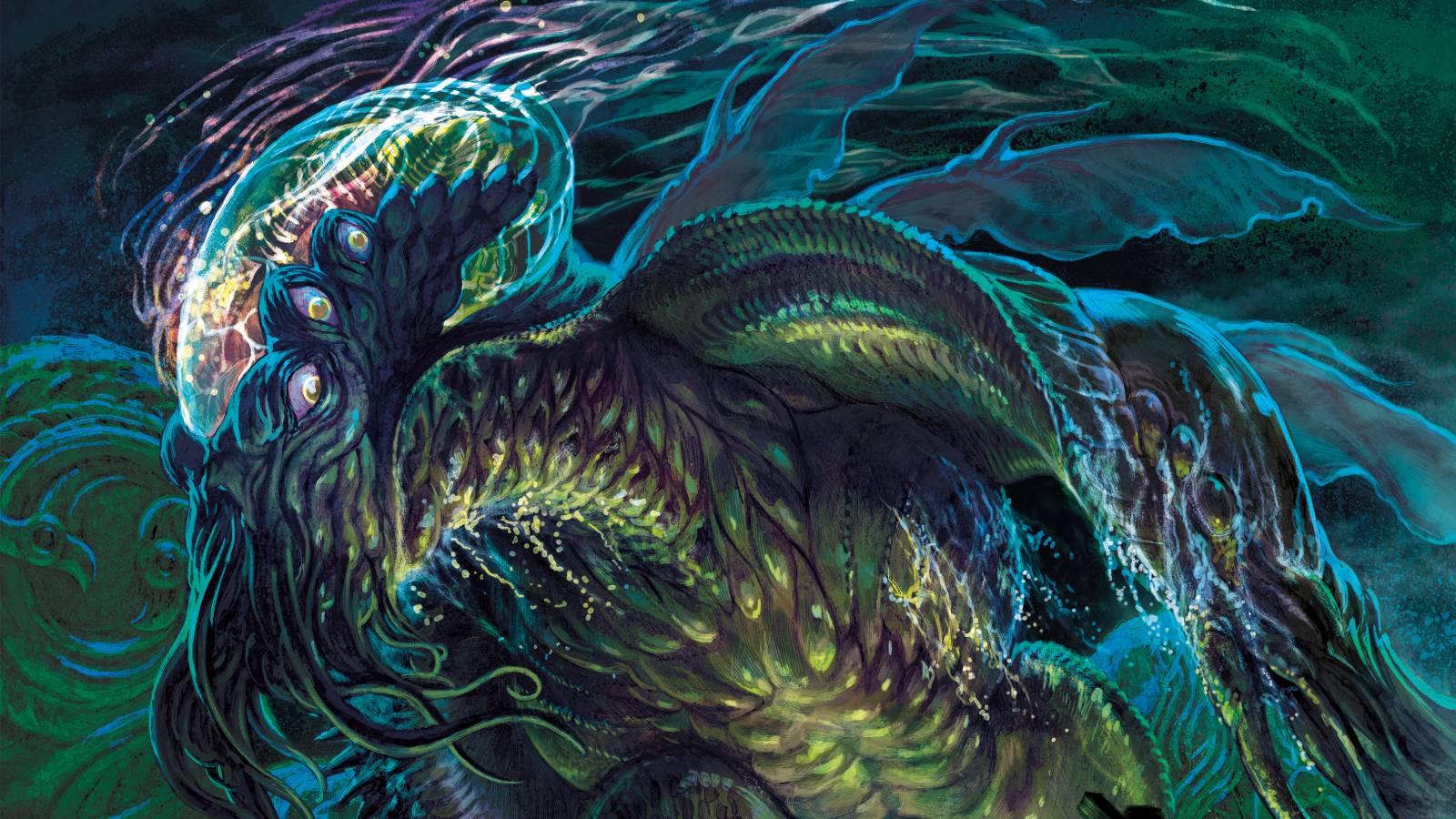
Simply put, Cthulhu (who acts as the darklord of Innsmouth) is not a good fit for D&D. Cosmic horror is not meant to be fought by spell or sword. Turning these creatures into “regular” monsters destroys their charm. The four cults vying for power on the broken island at the center of the domain do make for a cool adventure setting, but Cthulhu itself shouldn’t be there. He’s an odd fit for a darklord: usually, these evil individuals are trapped and tormented by their Domain, which twists their ambitions and obsessions in cruel ways. This is one of the best aspects of the Ravenloft setting, but Cthulhu, instead, is just physically trapped there, making this feel like an awkward way to fit a popular IP inside D&D.
On the other hand, the Shadowlands Domain is really cool, with its Arthurian, dark fairy tale vibes. It also reintroduces a vintage darklord in the form of Ebonbane, a cursed sentient sword that first appeared in D&D 2nd edition. Cursed knights doomed to fight immortal monsters in an enchanted forest make for my kind of vibe, and I can’t wait to use this Domain in an adventure.

Another treat for old-school fans comes in the form of an extended Darkon, which now focuses on the story and legacy of its disappeared darklord, the lich Azalin Rex, who was the main villain in the classic Grand Conjunction Ravenloft adventure series for D&D 2e. Players can now explore Azalin’s lair, the fearsome Castle Avernus, an exploding fortress frozen in time.
Chapter 3, “Ravenloft Adventures,” is where the book suffers most from the comparison with Van Richten’s Guide to Ravenloft. This chapter contains a lot of useful guidelines for DMs to create and run campaigns in this setting. Unfortunately, the toolbox provided is reduced. The “horror toolkit” section from Van Richten’s is gone, and it’s a shame, because it contained excellent material like guidelines for curses and the rules for fear and stress. These options really helped DMs expand their worlds in simple ways that let the horror themes come through organically. Here I see the manifestation of a common trend with 5.5e products: they provide more instructions, but fewer tools to play with.
Chapter 4 of Ravenloft: The Horrors Within brings back the guidelines on how DMs can create their own Domain of Dread, and the genres of horror that can be used as a starting point. This chapter made me realize that some of the content of this book is taken almost verbatim from Van Richten’s Guide to Ravenloft, just with a different layout, sections reorganized, and sentences slightly reworded. Of course, this is not a problem unless you already own the previous book, but some players might not like the prospect of paying again for the same content. I do believe that the new Domains of Dread justify the price, but some might disagree.

Chapter 5 is where you get most of the new content, with a bunch of new monsters ready to terrorize players. Ravenloft: The Horrors Within introduces over 30 new monsters, from the pure nightmare fuel of the Gug (seriously, what’s wrong with this guy’s face?) to the versatile Death’s Head Tree, which was also featured in an episode of Dungeon Masters. Monsters that appear in Van Richten’s Guide have been fully reworked to fit 5.5e rules, whether you like it or not.
Ravenloft: The Horrors Within is a great entry point for new players, especially those who got their start with 5.5e. It provides plenty of options for running horror-themed campaigns and exploring Ravenloft. For DMs, however, I think this book is best used as a companion or update to Van Richten’s Guide to Ravenloft. My impression is that many of the components of the latter have been “gamified” to make them easier to use, but that came at the cost of some of the flavor that made that book so good. This seems to be part of the 5.5e design philosophy, which is unfortunate.
The artwork deserves a mention because I’ve rarely seen a D&D product with such consistently great art. The massive team of talented artists employed did a great job in capturing the different vibes of each Domain and its denizens.
The biggest issue with the latest Ravenloft book is that it stands in direct competition with one of the best products of the 5e era, to the point that it repurposes a lot of the same content. It’s an odd choice to inaugurate the new phase of Dungeons & Dragons (and it’s even odder that Season of Horror did not come out in October), but this remains a valuable addition to DMs and players libraries, even more so if you don’t already own a copy of Van Richten’s Guide to Ravenloft.

D&D’s 2026 roadmap brings Ravenloft, Thay, and a bold new seasonal model
Strahd’s grand return kicks off the back half of 2026 for D&D