![12th Sep: The Killing of a Sacred Deer (2017), 2hr 1m [R] – Streaming Again (6.5/10)](https://occ-0-748-1001.1.nflxso.net/dnm/api/v6/0Qzqdxw-HG1AiOKLWWPsFOUDA2E/AAAABdKXY4yeyQAdCXAwrGKdjQqnpzgGovyFNAn6K1DbycxESqlTMiYn8wCIWoGwCGVdpr4DrES5Q1JaLKKMaPPMO_6HHghO0uXN6CtY.jpg?r=17f "12th Sep: The Killing of a Sacred Deer (2017), 2hr 1m [R] – Streaming Again (6.5/10)")





I had never stumped a translator in an interview until I sat down to chat with the team behind Ace Combat 8: Wings of Theve. When the word “cumulonimbus” came up in a question, an interpreter from Bandai Namco had to, understandably, stop to pull up a Google search on his phone. Over his shoulder, I could see him showing Ace Combat brand director Kazutoki Kono a hand-drawn diagram of cloud formations to properly communicate my question.
That’s the kind of hyper-specific conversation you’re bound to get into when talking about Ace Combat. The long-running flight simulation series is so meticulous that every little detail is approached scientifically. Wings of Theve is set to continue that tradition come Oct. 2, and take it to new heights. If you want proof of that, just look to the clouds. No, really.
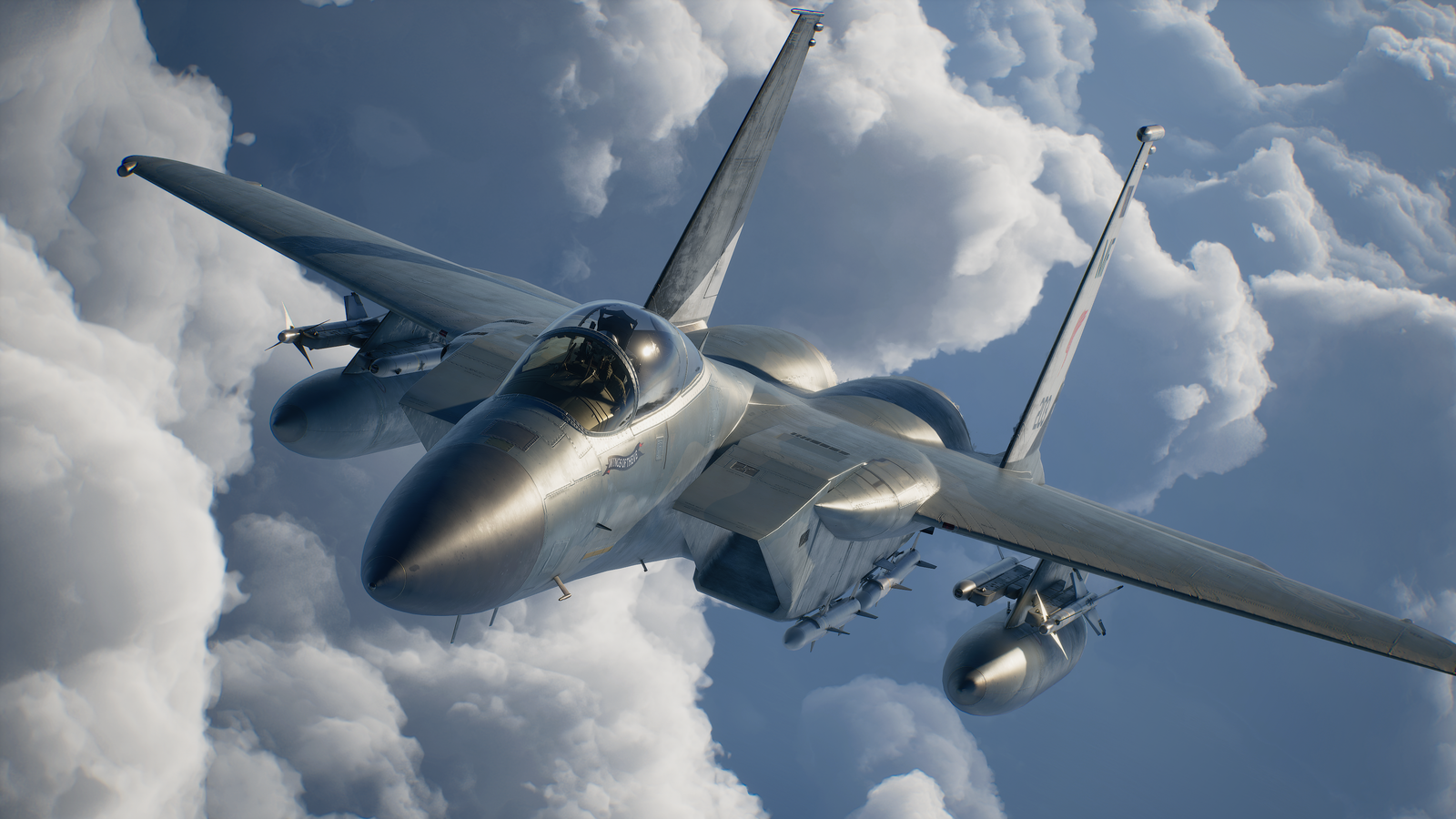
Ahead of Wings of Theve’s launch, Kono and producer Manabu Shimomoto gave me some flying lessons, walking me through the game’s first and fourth missions. There was a lot to rave about from that session: The jets fly with precision, the sound design is top-notch, and the story, about a country’s fake propaganda hero having to become an actual ace, is an unexpected riot. But it’s the team’s commitment to realism that caught my attention as I soared through puffy cloud formations, moisture streaking across my canopy.
You might not think much about what goes into making clouds in a video game, but it’s of the utmost importance for the Ace Combat team. A game like this could be brutally boring without them.
“This is a game that takes place in the sky,” Kono told Polygon. “When you think about it, the sky is an empty box. It’s this giant space that doesn’t have any level design, so to speak. So in order to create ‘maps’ within the sky, we need clouds. And clouds are actually very convenient for our purposes because they offer cover. You can use them for hide and seek, but they don’t have collision.”
Two things happened at the start of development that were instrumental to the team cracking cloud tech. The first was the creation of Bandai Namco Aces in 2022. The team was established as a “central command” for the Ace Combat franchise, with developers fully committed to the series. That was a big change, from Kono’s perspective. Previously, the team behind an Ace Combat game would scatter to work on other projects once work on the game was complete.
“That doesn’t leave a lot of the know-how in one place,” Kono said. “Aces is intended to be a repository of that, where all the experience can be retained, and there’s a much more long-term growth strategy for how we pass that information on to new team members.” (When I said that it sounded like Kono had put together his own team of wingmen, he cracked a joke using Wings of Theve’s crew command controls: “I press the D-Pad, but no one listens to what I have to say!”)

Establishing a dedicated team would help Bandai Namco focus on developing new tech for the series. And one of the fruits of that decision was Cloudly, a proprietary middleware engine that’s layered on top of the proper game engine. That’s the magical tech that allows the team to render realistic-looking clouds. That was a significant change from the series’ last installment, 2019’s Ace Combat 7: Skies Unknown.
“In Ace Combat 7, we used a tool called Truesky,” Shimomoto told Polygon. “We took it and added a lot of modifications to it, which is how we were able to render the clouds. We thought about using Truesky again, but in order to push the visual expression to the level that we wanted to, we needed more levers to pull and customization.”

The clouds do look extraordinary in Wings of Theve, for the record. They’re astonishingly realistic, and they practically beg you to fly into them just to see what happens. In the campaign’s first mission, I cruised towards an enormous cloud formation with my crew. The DualSense rumbled as I dipped into the cloud carefully, giving me the sensory feedback of air resistance. The deeper I dove in, the more condensation built up on my canopy. It was sublime.
There are a lot more ways to play the game because of the clouds.
Do you really need so much dedicated tech just to make some cool clouds, though? The team believes so, because it’s not just a matter of visual fidelity. Shimomoto noted that getting clouds just right is crucial, because it helps players determine their altitude. Cloudly opened the door for a lot of nuanced details that ultimately expanded the gameplay. After all, clouds are one of the few things your fighter jet truly interacts with in an Ace Combat game.
“You can see shadows cast on clouds now,” Shimomoto said. “If you’re situationally aware enough, you can determine if the enemy is either above or below you if you can recognize the position of the shadows. Likewise, among the clouds, if you see a little flicker, that could be the sun reflecting off of the canopy of an enemy, which is also very useful information. There are a lot more ways to play the game because of the clouds.”
As you can imagine, there’s a lot of science powering an engine like this. Kono notes that the clouds came from a “collaborative effort between two geniuses” on the Aces team: one person who approached it from an academic angle, with their nose buried in research papers, and an engineer who took all of those findings and figured out how to execute them in a game.
Get Polygon’s Wishlister newsletter
A weekly cheat sheet to what you’ll eventually love to play. No buying, no
commitment — just saving for later.
Sign up free
Free. Unsubscribe anytime.
That’s where the word cumulonimbus entered the conversation. I asked Kono and Shimomoto if there were any cloud groups that were particularly challenging to recreate in-game. Soon enough, Kono was looking at cartoon diagrams showing the difference between cirrus and stratus formations. Turns out, there wasn’t a particular formation that tripped the team up, but Shimomoto had an even nerdier answer ready to go about cloud volume.
“It was so important for us to lighten the processing load,” Shimomoto said. “We knew the game had to be fixed at 60 frames per second, so every frame is running at about 16 milliseconds. So all the calculations have to fit within that constraint. When we were first developing Cloudly, we wanted the arenas to be in a 100 square kilometer space. When we placed all the clouds, we weren’t even close to 16 milliseconds in terms of being able to render them. Our engineer was able to get the rendering speed down to a factor of 1/100th of what it initially was.”

For the record, it is not always easy to get answers like this from developers during a press tour. Many times when I ask a developer a very technical question, they tend to skim over the science to avoid getting too in the weeds. That’s absolutely not the case for Shimomoto, who seemed ecstatic to break down the tech down to the millisecond. When I asked him what other technical feats he’s excited about pulling off in Wings of Theve, he gave me an in-depth answer about the game’s sound, which was done in 7.1.4 channels — the same environment you’d hear in a movie theater.
“[The sound designers] actually went to different stages and worked with professionals to record gunpowder,” Shimomoto said. “They would blow it up and sample it at various distances. They took that sample and put it into that 7.1.4 mechanism… Our sound designers are just crazy. They’re obsessed with this.”
It’s probably safe to assume that the Ace Combat team, as a whole, is obsessed with what it does. Kono and Shimomoto certainly are. You don’t put that much effort into building the perfect clouds if you don’t believe in the mission.