
![24th Jul: Heartstopper: Ending on a Hi (2026), 36m [TV-14] (6/10)](https://occ-0-7328-999.1.nflxso.net/dnm/api/v6/0Qzqdxw-HG1AiOKLWWPsFOUDA2E/AAAABcMtvlt-DvfVJ5c6lfjB60KrULQLULGBsTnnDHzku7ft77t0wu5SrwHefSE-IjM6AicXe6B20Qwl5TIBsN1BRBpWtMmVFFGbpzbzzSgAfyprXnsoU8MH4Ahkef1D2SovQUnblWMMqmiA54RKXDdH7iMxkrI3k8vM4zkOF31Hkh3dIA.jpg?r=ac7 "24th Jul: Heartstopper: Ending on a Hi (2026), 36m [TV-14] (6/10)")




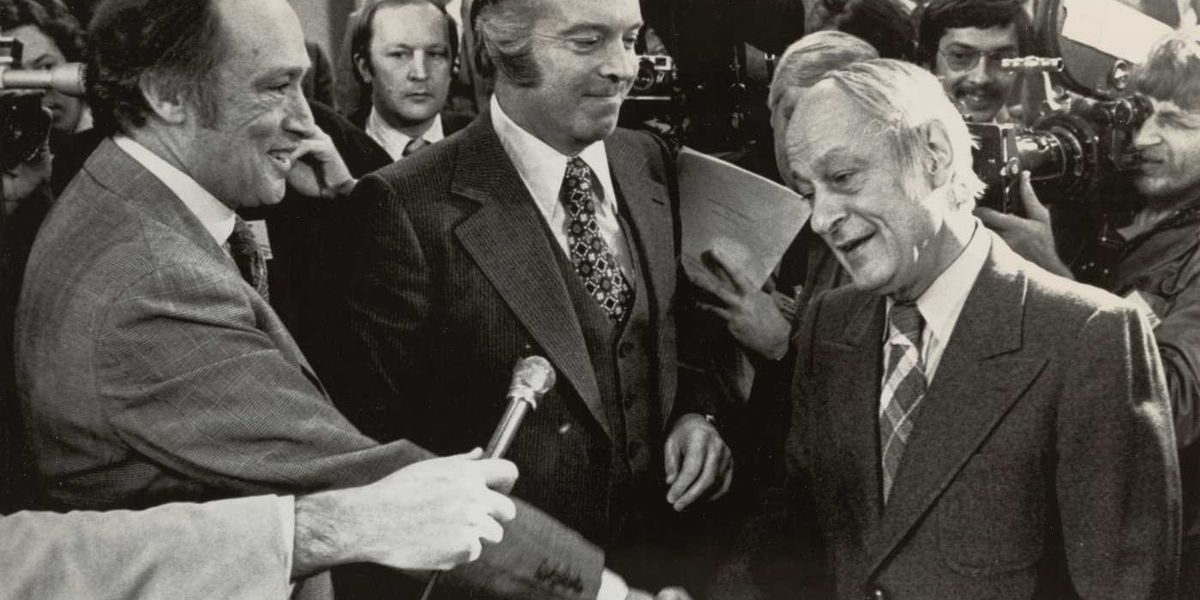
Claude Morin, architect of the Quiet Revolution who helped shape modern Quebec but whose political career unravelled in controversy, has died at 96.
A former Parti Québécois minister, Morin played a central role in Quebec’s transformation during the 1960s, helping engineer the PQ’s historic 1976 election victory and shaping the party’s referendum strategy on sovereignty.
His reputation, however, was overshadowed by revelations that he had maintained ties to the Royal Canadian Mounted Police as a paid informant, a scandal that made him a political outcast in Quebec nationalist circles.
Quebec Premier Christine Fréchette paid tribute to him on Tuesday, describing him on social media as “an intellectual force” that marked Quebec during the Quiet Revolution, a defining period in the province’s history, and someone who was behind major reforms that helped build a modern society.
Born May 16, 1929, in Montmorency, Que., now a neighbourhood in Quebec City, Morin was the eldest of seven children. He earned a master’s degree in economics from Université Laval in 1954 and a master’s in social welfare from Columbia University in New York two years later.
He joined Université Laval’s faculty of social sciences, which became a hub of ideas that fuelled Quebec’s transformation at the end of the 1950s and early 1960s. His academic work soon attracted the attention of Quebec’s Liberal government, and although he didn’t enter politics directly, he wrote speeches for Liberal Premier Jean Lesage.
In 1963, Morin entered public service as deputy minister of the Department of Intergovernmental Affairs. There, he helped shape Quebec’s external relations, particularly with France. In this role, he drew the fierce resentment of federal politicians like former prime minister Pierre Trudeau, who, in Morin’s view, wanted to put Quebec in its place.
He served successive Quebec premiers — l’Union Nationale’s Daniel Johnson Sr. and Jean-Jacques Bertrand, and the Liberals’ Robert Bourassa — becoming a central figure in federal-provincial negotiations during a turbulent constitutional era, when Quebec’s place in Canada was hotly debated.
After leaving government in 1971, Morin joined Quebec’s national school of public administration and published essays that marked his ideological shift toward Quebec sovereignty. He joined René Lévesque’s Parti Québécois in 1972, lending the fledgling movement establishment credibility. Though he narrowly lost his first electoral bid in 1973, he easily won a national assembly seat in 1976 as the PQ swept to power.
Morin is widely credited with persuading Lévesque and much of the PQ to adopt a step-by-step approach to sovereignty, a strategy he believed would gradually garner the public’s support. That strategy helped broaden the Parti Québécois’ appeal and paved the way for its 1976 election victory, but it also exposed divisions within the sovereigntist movement.
As intergovernmental affairs minister, he became a principal strategist for the 1980 sovereignty referendum, which ended in defeat for the “yes” side.
He then led Quebec’s constitutional negotiations during Trudeau’s patriation of the Constitution. Despite assembling an alliance of provinces opposed to Ottawa’s plan, Morin watched it collapse during the November 1981 negotiations known in Quebec as the “Night of the Long Knives.” The English-speaking provinces turned against Quebec and reached an agreement with the federal government.
Since then, no Quebec government has signed the agreement.
He left politics in early 1982.
At the beginning of the 1990s, journalist Normand Lester revealed that Morin had secretly provided information to the RCMP beginning in 1975, including while serving as a PQ minister. Morin insisted he had co-operated with the federal police only to gather evidence of RCMP surveillance and dirty tricks against the sovereigntist movement, and denied disclosing anything of consequence.
The explanation, however, failed to restore his standing. Once considered one of Quebec’s sharpest political minds, Morin became a pariah within the Parti Québécois.
He spent his later years teaching and writing extensively about Quebec politics, diplomacy, and constitutional history, publishing books defending his record and reflecting on sovereignty, public life, and religion.
This report by The Canadian Press was first published May 6, 2026.
Copyright 2026, The Canadian Press. All rights reserved.