


I’m curious about whether the Black Hollywood establishment has rejected your vision. They are centered on a particular way of moving forward, and that is what Hollywood’s money and vision is is tiny.
Bridgett M. Davis: Yes.
Where do you go from there? Where you’re both at a crossroads artistically, how do you keep moving forward?
Bridgett M. Davis: For me, after, everyone wants to do a breakfast meeting. Because Naked Acts did get a really strong Variety review. That gave it some attention. I did all these meetings and they went nowhere. It was really something, with a lot of Black execs, too. One in particular who had been producing other filmmakers’ work, I met with her and nothing came of that. It was odd. It was as though the fact that I’d managed to make a whole feature film that was resonating wasn’t enough.
Was it a threat to the Black executive positioning?
Bridgett M. Davis: Maybe. When I look back now, perhaps, but it was perplexing. On the other hand, I’ve just made this film, brought all these people along with me. I believe in it passionately. It’s taken over my life for years. I just started practicing a mantra: I will go where I get my love. When the late, great Pearl Bowser, invited me to an African film festival in Brazil, right after Sundance had rejected the film, it was the best medicine ever. It was incredibly gratifying and validating. It put me on a path.
That festival led to the next African film festival in another place in the world. Before I knew it, I had been on this incredible circuit that’s not underground, it’s just that the establishment is oblivious to it. Yet it was rich and it did everything for me.
One of my most beautiful experiences was seeing Naked Acts at an open-air theater at the Paris Cinematheque as part of the FESPACO Film Festival, and telling myself, “Remember this. Look up at those stars in the sky and at all these people, some of whom don’t speak English, who can’t take their eyes off of these images of Black people. Remember this moment when you start doubting what you’ve done here or its value.” Thank goodness for that.
Wendell, what about you? Do you feel your filmmaking was a threat to Black Hollywood establishment?
Wendell B. Harris: I feel like I’m the male version of Bridgett. Everything that you expressed, I’ve encountered. There are still several Black people in Hollywood in positions of authority, but my impression was that they didn’t have an ounce of power. That was my ultimate impression in dealing with all these Blacks in Hollywood. They were extremely circumscribed.
What do you think these execs’ promise was to themselves and their community? What do you think that they felt their task was?
Wendell B. Harris: To keep their job.
Bridgett M. Davis: Yes, it’s hard to remember this now, but there was a trend back in the day, back in the ’90s, around films—we call them hood films now. Basically, I felt that, too. It wasn’t being said. I often say to people, “You want to know a classic art-house film? It’s Chameleon Street.” People acted like Black folks couldn’t do art house. That was driving me crazy, as I was a few years behind you, trying to get this film out where people couldn’t categorize it. I could tell that’s what was upsetting them, really. It was so frustrating. It was like, “It’s not historical. It’s not about our struggles historically. It’s not a straight-up comedy, and it’s not a hood film. What is it?”
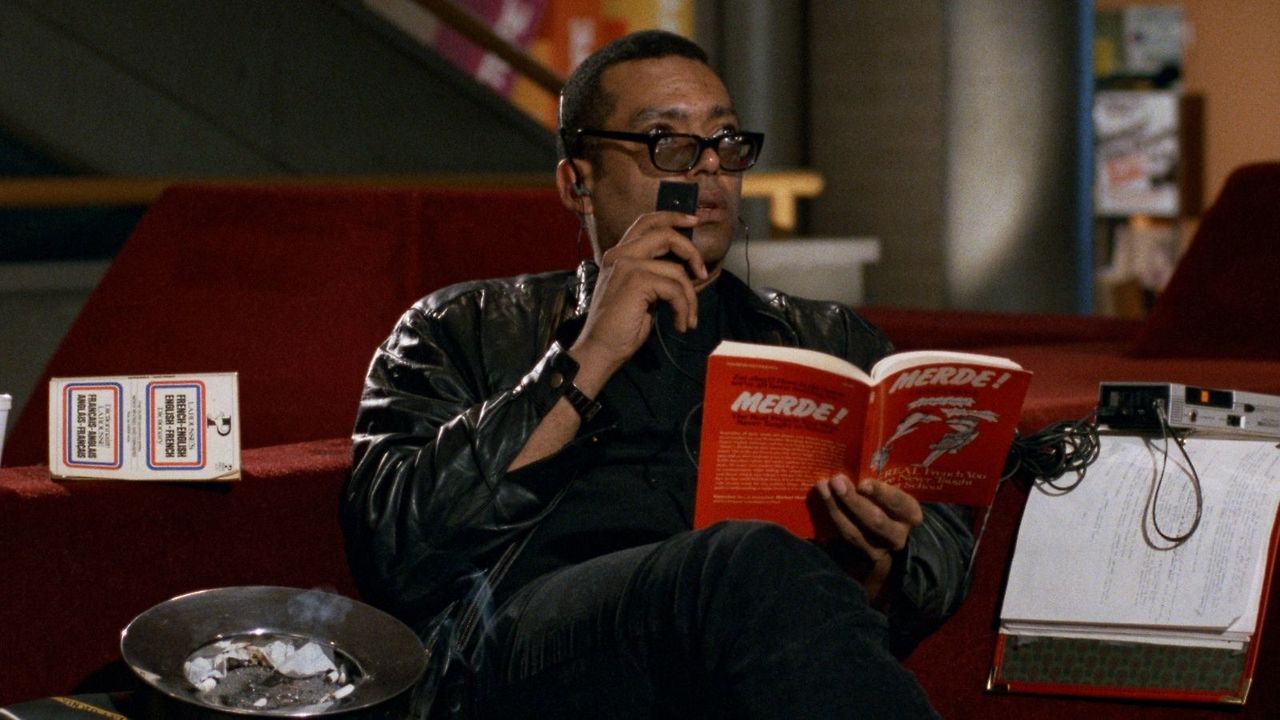
Wendell B. Harris: All these reasons that they give you, they pull them from the ether. “We don’t know how to distribute it” or “We’re confused.” Bridgett, I want you to know, you said that your first review was Variety. The very first review Chameleon Street ever got was from Variety. I haven’t read it since it came out. I don’t know what kind of review it was because the guy kept saying, “This is like a Spike Lee movie with educated Negroes.”
All my life, I had been looking forward to being reviewed in Variety. When that came out, and that was the very first review, I said, “Is this the way it’s going to be?” That turned out to be more of an anomaly, but that was what I was thinking of that you said that you had gone through. You achieved something that Chameleon Street never got: a good review from Variety.
Bridgett M. Davis: Yes, but it’s almost as though that fact was ignored by the industry. No “almost” to it. It didn’t carry the weight that it absolutely ought to have.