





Picture Credits: Netflix / Getty Images
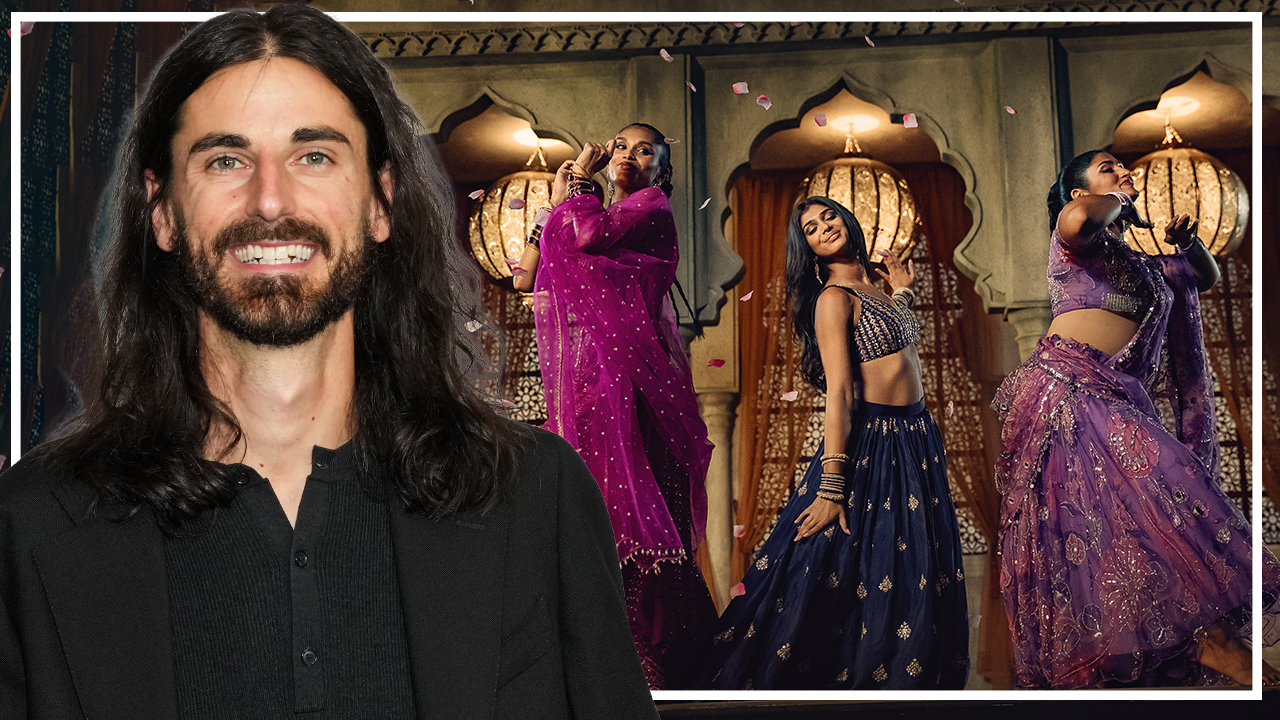
Cinematographer Adam Carboni and filmmaker Leena Khan were focused on the Best of the Best dances from day one. For three weeks of prep and shot-listing, one of those weeks was all about dancing. The dances are intense, and so is prepping them.
“Everyone talks about them being dances,” Carboni told What’s On Netflix. “They are more akin to action sequences than just straight dance numbers. A lot of times we would actually have something that couldn’t be our main actor because it was a stunt. And so, that requires body doubles, shooting from angles where you can’t tell it’s not them. So that is why I always say it’s like these actually are more action sequences than just like, ‘Oh, we filmed some cool dance.’”
Recently, the cinematographer took us behind the scenes of shooting the character- and story-driven dance numbers.
You and Leena shot the big final dance number in a day and a half. With all the moving pieces, it’s amazing you got it done in that time. So, how did you all pull that off?
There was something really special in this movie where the dancers brought so much energy to every single one of the dance numbers that the crew had to also bring that level of energy. There were days on these dance numbers where we ended up having a very truncated production schedule just due to the rehearsals that needed to happen, the costuming, and the hair and makeup that needed to be done.
All of these things were eating into our filming time. So when it came time to film, it was really crunch time. We had a good plan, but a lot of it was being open to discovering things within the dance. We didn’t want it to feel too static or stale or planned.
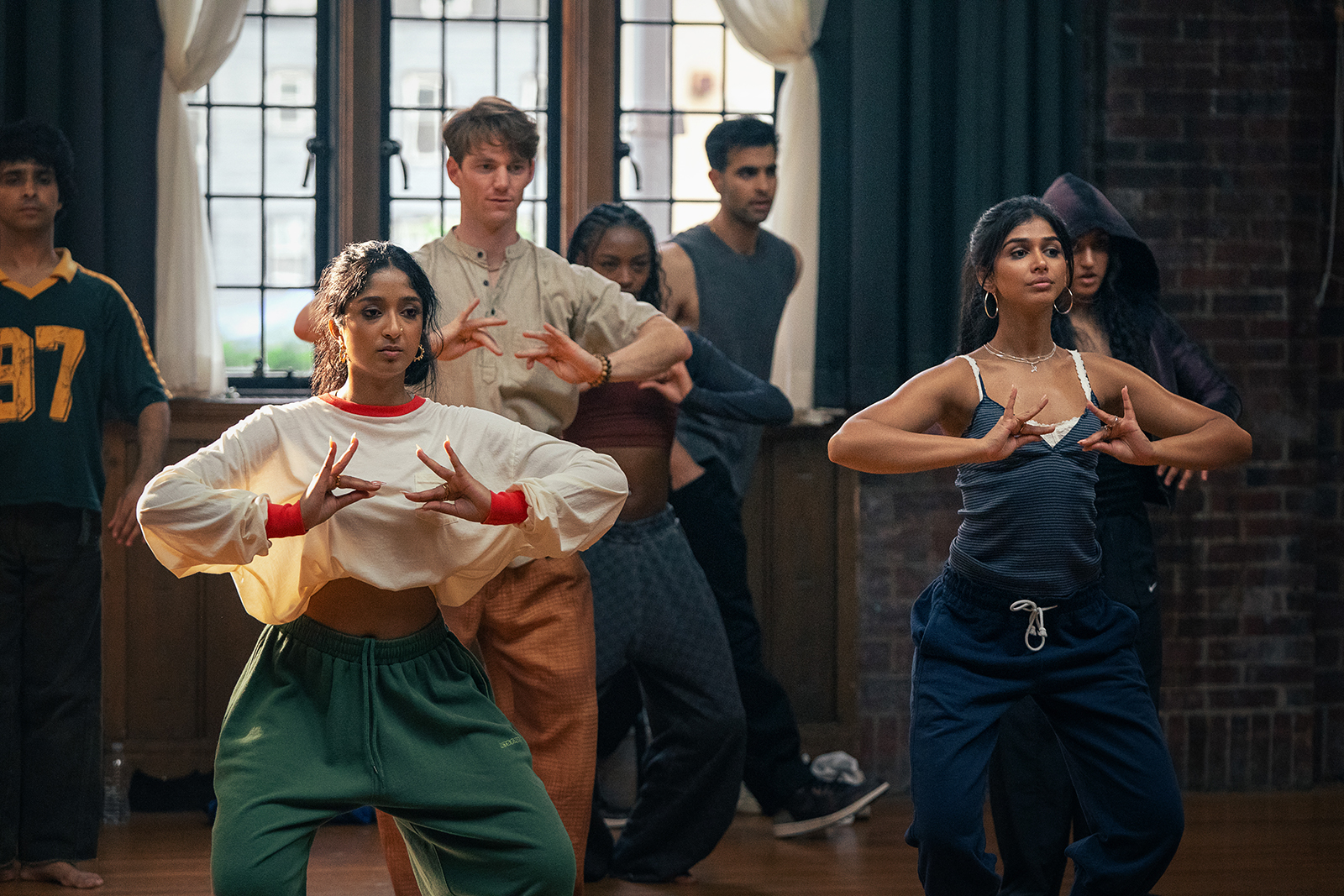
Best of the Best. (L to R) Maitreyi Ramakrishnan as Maya, Nico Greetham as Harry, Ankur Rathee as Ronak, Priyanka Kedia as Anjali, Amryn Khurana as Sumi in Best of the Best. Cr. Emily V. Aragones/Netflix © 2026
How’d you want the camera to move with the dance?
We wanted the camera to be roaming. We wanted to be able to find certain moments, but it’s tricky because I always kept saying, “We need to infiltrate the dance. We need to get the camera inside the formations.”
A lot of my early references were Grammy performances where they actually come to the camera and the camera moves with them through set pieces. Maybe one performer will pass it off to another performer. We could have approached it, okay, we’ve got three cameras all on long lenses, and we’re just going to find the little moments. But instead, we really wanted to immerse people in the dance.
When you do that, you disrupt the actual dance itself because now the Steadicam is taking up space where other dancers would be. So just by the nature of breaking up the formation and putting the camera in, we were also creating unexpected problems that we were having to solve on the fly.
And that’s where [co-choreographers] Phillip & MaKenzie were literally shoulder-to-shoulder with me and Leena every dance. It was like, okay, right, so if we need to do this to see this, that means now we can no longer do that. But what if we just have Nathan flip in the background? Is that okay?
It was constantly talking to all the dancers and changing slight things to accommodate the camera. Then in my brain, in the background of all that, was the lighting because when the angle would change, the lighting would need to shift a little bit. Mike Baldassari was our theatrical lighting designer, and then Jason Velez was my gaffer. Those two guys were constantly on intercoms changing things with dimmer board operators.
I’ll just tell you a side story.
Please do.
I was interviewing gaffers, and I interviewed a gaffer who had worked on the NBC show Smash. It was a great series about Broadway. I talked to him and I was like, “Listen, all your experience on Smash, you’d be a great fit for this movie because we’re going to be coming in and out of theaters. We’re going to do a lot of theatrical stuff.”
He said, “Adam, do you know the schedule? How many weeks are you going to have to do the dances?” I said, “Well, we’ve got to get all the dancing done in a span of about two and a half weeks.” And he said, “Wait, how many numbers is it?” I said, “I think it’s about nine or 10.”
And he was like, “Adam, on Smash, we would do one dance number a week. We would load it in, we would prep it, we would light it, we would rehearse it while we were filming everything. And then on days six and seven is when we would go do the dances, and then we would turn around and have another week in between.” And that was just one number, sometimes with maybe five dancers, maybe 20. He was like, “Your timetable does not accommodate as many dances as you are trying to do.”
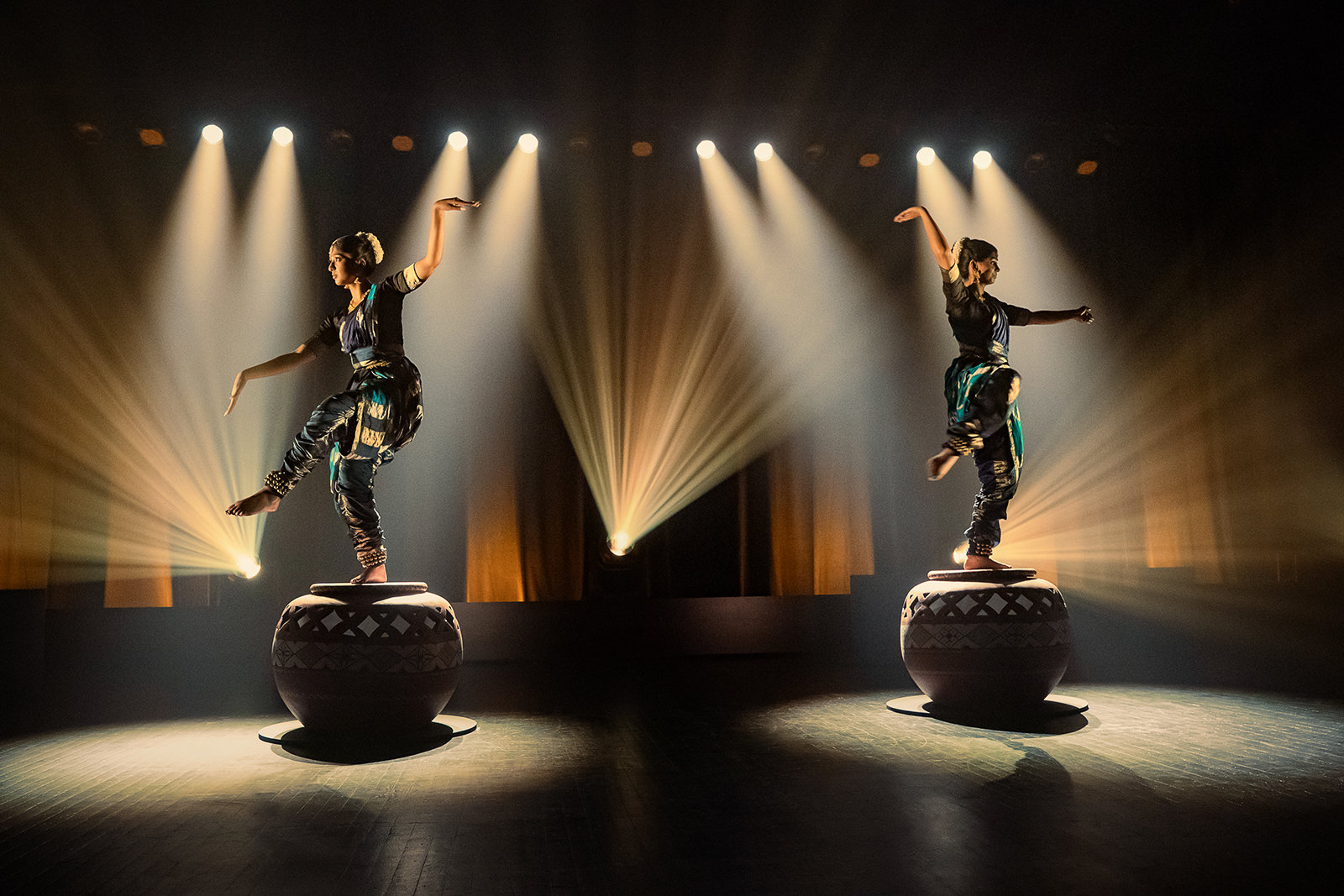
Best of the Best. (L to R) Maitreyi Ramakrishnan as Maya, Priyanka Kedia as Anjali in Best of the Best. Cr. Emily V. Aragones/Netflix © 2026
Never enough time, right?
It’s a testament to the full team, to be honest, because all of it had to be done the moment we stepped into the theater. We were basically hitting the ground running. All the decisions we made in prep, spending so much time on the dances, really paid off.
Did you get to spend a lot of time watching the choreographers work on the dances to know, OK, this is how we best light these dances?
For sure. Phillip & MaKenzie, who were the lead choreographers, and then Joya [Kazi], who’s the co-choreographer and definitely a Bollywood specialist, and then they had another set of choreographers like Billy and Tam. So, that was the choreography team. By and large, Phillip and MaKenzie were with the main rehearsals. Phillip was constantly recording the dance and sending me videos. Before we started shooting, we were all going to visit the rehearsal spaces.
But really, the main bible for how the dances were designed was what Phillip was doing with his camera in the rehearsals. Phillip was filming with a DJI Osmo, and they would rehearse it, rehearse it, rehearse it. He’d film it, and then he would basically do a final pass and really film the hero angles that he was designing to.
Where would you go from there?
Phillip and I would have a lot of meetings about, okay, well, this is how the stage is going to be, and this is how the lighting is going to be. So, this angle you’re planning this for, what if we could do it but skew it this way? What if they came out the left side instead of the right side?
There were a lot of things that we were tweaking based on the technical stuff, but the main design of the dances was done to camera based on what Phillip was doing in those rehearsals. We never wanted the dances to be a full proscenium thing that we could only film from the outside.
That was something that Leena and Phillip and I really wanted to push: let’s make these specific and have these little moments so that it does feel slightly more narrative and slightly more designed instead of just like, “Oh, we filmed a Broadway dance.”
It doesn’t play that way at all.
That’s where Phillip’s strength in designing to camera was really paramount to making these feel elevated. It would do him a disservice to not say that he was always designing to the camera, and that’s a great skill he has.
I would take those and say, “Okay, this is great. You’ve filmed this entire eight-count from this angle, but we know we’re going to need an extra moment.” Because I’m keeping up with the story as well, I’m like, “Okay, this is what Phillip’s designing for the dance, but I know that in the story I need to catch Anjali’s reaction to Maya.” I need to connect Anjali and Maya.
I’m doing more of the planning of how do we make sure we tell the story and have cutaways? And Phillip is basically saying, “Okay, this is how the dance is designed to be filmed at its strongest angle.”
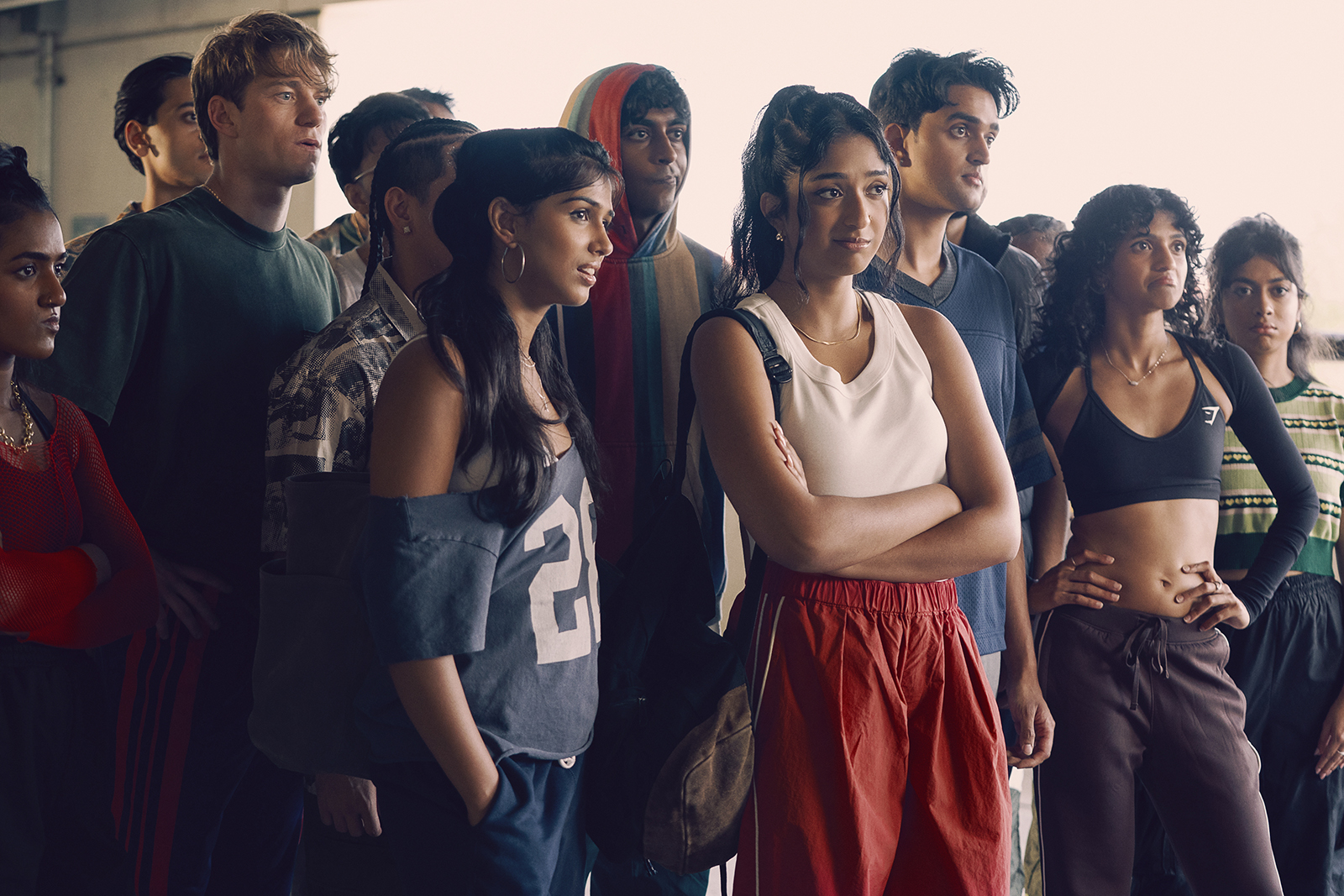
Best of the Best. (L to R) Nico Greetham as Harry, Priyanka Kedia as Anjali, Nihar Duvvuri as Nirbhay, Maitreyi Ramakrishnan as Maya in Best of the Best. Cr. Emily V. Aragones/Netflix © 2026
A lot of stories to tell. They are like action sequences.
They are. It was one of the most challenging things for me, taking the script. I would just write it on my whiteboard in my office and break every dance down. I held the script in one hand and my marker in the other hand, and said, “Maya is annoyed at Anjali getting all the attention,” or whatever it might be. By the time I would finish each dance, there would be a list of 40 to 50 to 60 things [written down].
We would start to distill, okay, how can we block it so that we’re catching multiple reactions in one shot? How can we truncate what’s actually not important? And then sometimes we would loop in Prashanth, who was constantly in the office in prep, and say, “From a writer’s perspective, Prashanth, how important is this thing going on?” And he’d be like, “Well, we don’t really need to see that.” Then we’re not going to do a shot for that because every single beat in the script becomes a shot if you’re not careful.
What about what’s achievable with the dancers on the day, and how many takes can or can’t be done?
It’s very difficult for them to bring the same energy by doing it in chunks. So, it was very hard for me to be like, oh, actually, we missed that reaction, so let’s just run that reaction real quick. Because then it’s like, where are we starting the music? Where are we counting in from? Where was the lighting at that cue? What are we backing up to?
It was very complicated to skip sections and only pick up certain sections because everyone has to get on the same page about where we’re starting from. Oftentimes, if we needed to pick up another reaction, we would have to run the whole dance again.
We had to be very efficient and economical about what we were trying to cover because it was very tiring for the dancers. The professional dancers surrounding Maitreyi and Priyanka are doing flips. They’re sliding on their heads. They’re doing really complicated upper-body work, or they’re doing doubles stuff where they’re flipping each other. Sometimes the ADs would come and say, “Nathan really feels like he can only give you one more of those flips.”
And I’d say, “Okay, that’s important. We’re abandoning this. We’re going to go Steadicam, wide-angle on Nathan for this big hero flip because he’s only got one more, and we’re cutting this other shot that we really wanted to get.” One of the things we were always keeping our finger on the pulse about was safety. How many times can they do this? They’re not just Energizer Bunnies. Our shots had to also be tailored for the sake of our dancers.