









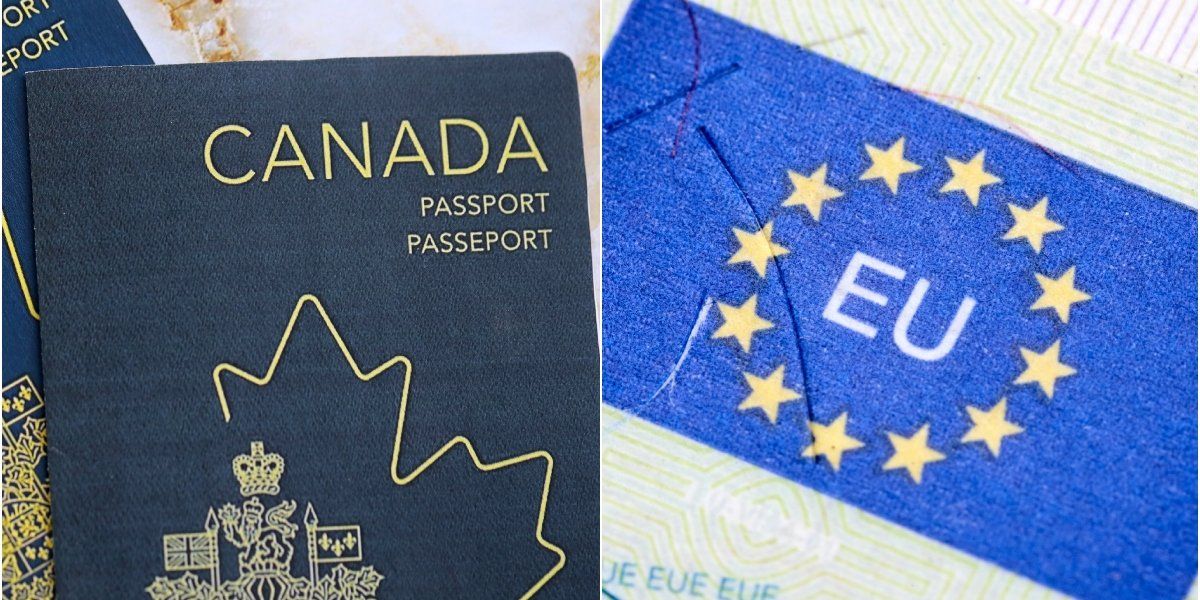
If a European getaway is on your travel radar for later this year or next, there’s a new step worth including into your planning, and it comes with a price tag attached.
According to the Government of Canada’s updated travel guidance, the European Union is preparing to launch its European Travel Information and Authorisation System, or ETIAS, sometime in the last quarter of 2026. Once it’s live, Canadians will need to apply for and receive an ETIAS authorization before travelling to any of the 30 participating European countries, including popular destinations like France, Italy, Spain, Portugal, and Greece, for stays of up to 90 days in any 180-day period.
While it sounds like a visa, it’s not exactly. It’s closer to what Americans already deal with through the US ESTA program, a quick online pre-screening you complete before you fly. But unlike a lot of pre-clearance systems, this one won’t be free.
How much will it cost?
ETIAS was originally expected to cost €7. That’s no longer the number. The European Commission confirmed in July 2025 that the fee is being raised to €20 (roughly $30 CAD) instead, citing inflation, expanded system costs, and a desire to bring the price in line with similar programs used by other countries. Travellers under 18 or over 70 won’t have to pay the fee, though they’ll still need to apply for the authorization itself.
Once approved, an ETIAS authorization is tied to your passport and valid for three years, or until that passport expires, whichever comes first.
When exactly does this start?
That part’s still a bit fuzzy. The EU hasn’t locked in an exact launch date, only that it’s targeting the last quarter of 2026, and it says it’ll announce the specific date a few months ahead of time. Once ETIAS does go live, there will be a transitional period of at least six months, followed by a grace period, before the system becomes strictly mandatory.
In the meantime, the EU is urging people not to apply anywhere except the official ETIAS website once it exists. Fraudulent sites already claiming to sell ETIAS authorizations have started popping up, so if you see one now, before the system has even launched, that’s an immediate red flag.
A different system is already in effect
ETIAS shouldn’t be confused with another system that’s already up and running: the Entry/Exit System, or EES. That one’s fully operational across the Schengen area, which includes nearly 30 countries, right now, and it works by digitally recording your entries and exits, along with biometric data like fingerprints and a facial photo, replacing the old manual passport stamp. It doesn’t cost anything, and it isn’t something you apply for ahead of time. It just happens automatically at the border.
ETIAS, once it launches, will essentially sit on top of that system as a pre-travel approval step.
What if you have dual citizenship?
Canadians with citizenship in an EU country or Ireland won’t be able to apply for one using their Canadian passport once ETIAS launches.
They’ll be expected to travel on their European passport instead, which also means it needs to be valid and unexpired well before their trip. And regardless of which passport gets you into Europe, you’ll still need a valid Canadian passport to fly home.
For now, a Canadian passport remains all you need to visit the Schengen area, provided it’s valid for at least three months past your planned departure date.
AI tools may have been used to support the creation or distribution of this content; however, it has been carefully edited and fact-checked by a member of MTL Blog’s Editorial team. For more information on our use of AI, please visit our Editorial Standards page.