








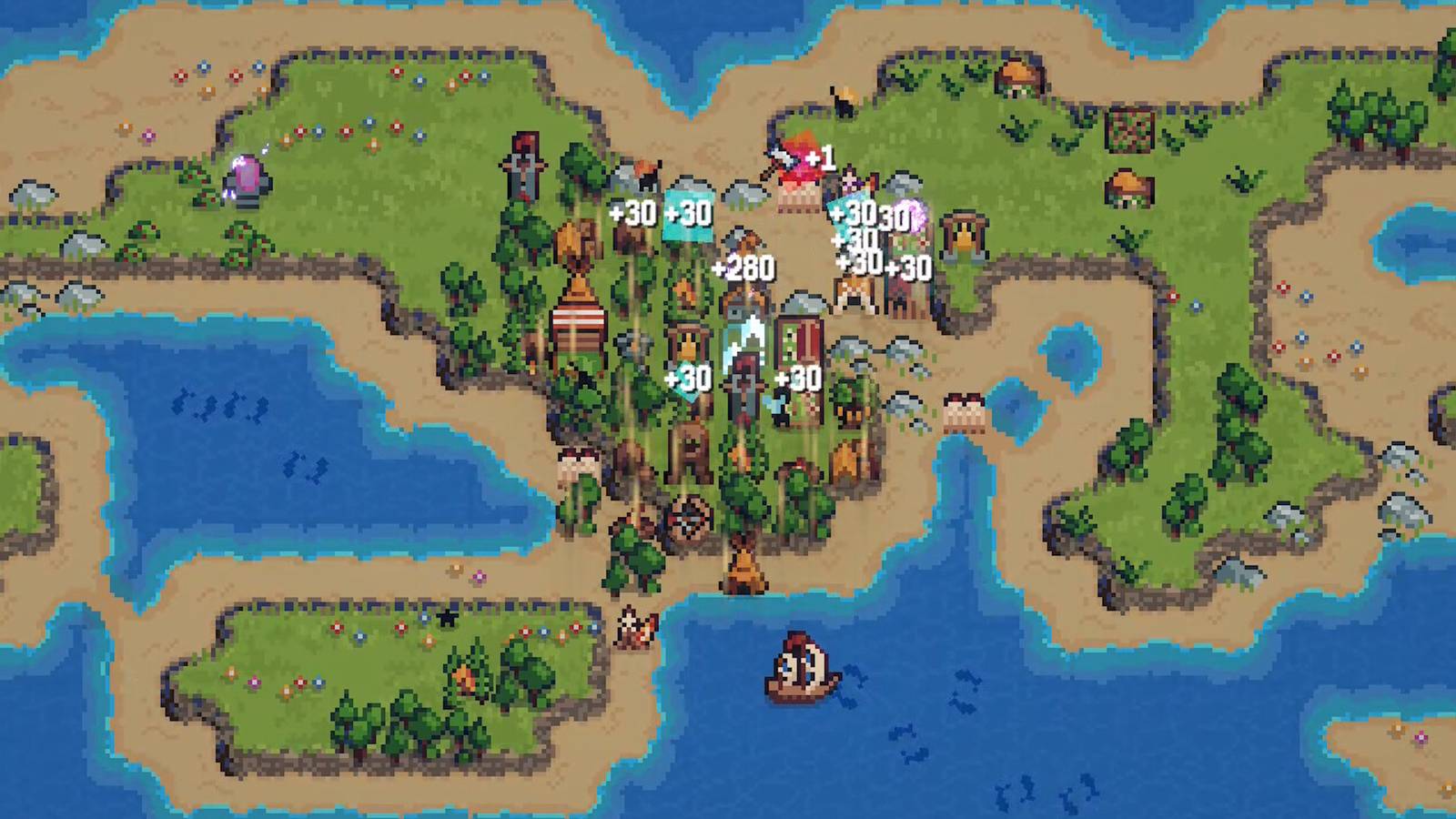
We’ve seen quite a few developers try to recreate LocalThunk’s phenomenal success with the roguelike poker game Balatro. Some tend to overlook what makes Balatro enjoyable. Others are just flat-out unethical. Combolands: Roguelike Citybuilder from developer Crux Games isn’t either of those. It takes the best parts of Balatro‘s roguelike nature and combo chains and mashes them with the kind of strategic placement you need to succeed in Cities: Skylines to make something that, if the demo is any indication, is wholly absorbing and uniquely satisfying.
Combolands turns adjacency bonuses into captivating combo chains
Most city builders reward you for thinking strategically about adjacency bonuses. Civilization 7 pushes you to stack production and food bonuses so your metropoles are the biggest, richest, fastest-growing ones around. Cities: Skylines and its sequel determine how happy and ignorant your populace is based on their access to things like libraries and parks, and you can balloon the population with porridge in Anno 117 (among other things). In Combolands, adjacency bonuses are everything. Literally.
Here’s how it works. You start with an island, procedurally generated at the beginning of a new run, so its structure and resource layouts are never the same. You have eight weeks to reach a new population milestone, a handful of actions available, plus a limited number of action rerolls, and each action takes one week. Your initial pool of actions is foundational, like in most city builders. You’re establishing the economic backbone of your city by placing hunter’s huts in forests or apiary networks near flowers. The more resource nodes your building has access to, the more your population increases every time that building’s effect pops. Yes, that’s not how it works in real life or serious simulators. You don’t make honey and suddenly add 100 new people to your town every week. But this is video games, so we roll with it.
That’s the basic idea, but complexity increases quickly. New building options show up as you reach higher population tiers that require a change in strategy. Some grant multipliers to specific productions or shorten the time it takes for a building’s effect to trigger. Others benefit from proximity to a broader category, like “nature” tiles (which is anything not human-made), which seems great. So much nature! But these are more challenging to work into combo chains, and combo chains are where things really get serious.
Like with Balatro, the threshold you have to meet to clear each round gets increasingly higher, and the only way to clear it is by carefully planning your layout. The wanton way you placed huts and berry-picking stations where it seemed like they might rack up the most points worked great the first few rounds. Suddenly it becomes a burden when you need to add multipliers like walls (their multipliers only activate if the tiles are fully enclosed) or railroads. You might’ve been overzealous by clearing the woodland tiles early with your forestry camps and now ran out of goods for your hunter’s huts to capitalize on — but the dependence on luck works both ways. Maybe you cleared the woods and end up with a run of turns blessed by buildings that benefit from cleared ground. You have a limited number of re-rolls to shuffle a week’s hand, plus a few chances to demolish buildings and, once per run, the opportunity to take three additional turns to reach your goal.
Even with all that, you will lose, a lot. But it’s okay, as that’s when new opportunities open up. In the demo at least, Combolands is rather more generous than Balatro, rewarding you with new buildings and more progress between runs with fewer dry spells. When you start a run after the initial failure, you get to pick your guilds. Or you will be able to; the demo only has two. Anyhow, guilds determine the types of buildings that may or may not pop up on each turn, like how the agricultural guild leans heavily toward farm and farm-adjacent buildings, as you’d expect. Crux Games promises seven guilds at launch, which leaves a lot of room for potential combinations.
Other features unlock as you progress, too, like the (also Balatro-inspired) in-game shop you can throw gold at between rounds to pick up new modifiers, along with chances to get chests that may have modifiers or free rerolls inside. Some of those modifiers are genuine game changers, like one that gives all your buildings a free multiplier during the last week of a round, and picking the right (or wrong) one often makes the difference between a successful run.
The level of strategy the demo demanded was just enough to satisfy without feeling overwhelming, and the brisk pacing keeps it from feeling like too much of a time sink. I can’t wait for more. Happily, there’s not much time left until Combolands‘ full version launches on Aug. 24 for Windows PC via Steam.