







Crafting a quality survival horror game in the vein of Resident Evil isn’t easy. There have been just as many great Resident Evil, Silent Hill, and Dead Space games as there have been misfires and commercial bombs. One of the best examples of the mysterious alchemy of weaving a solid survival horror tale is Ubisoft’s 2005 game Cold Fear, a frigid seafaring adventure that was full of great ideas and uneven execution.
But even if it was a whiff at the time — Cold Fear earned above-average reviews but reportedly sold a meager 70,000 copies in its first year — players have since warmed to the game’s charms. The game boasts a positive reception on Steam (where it is no longer available for purchase) and on GOG.com (where you can still buy it). But the best may be yet to come for fans of Cold Fear — and for the developers who tried to shake up the survival horror formula back in the early aughts.
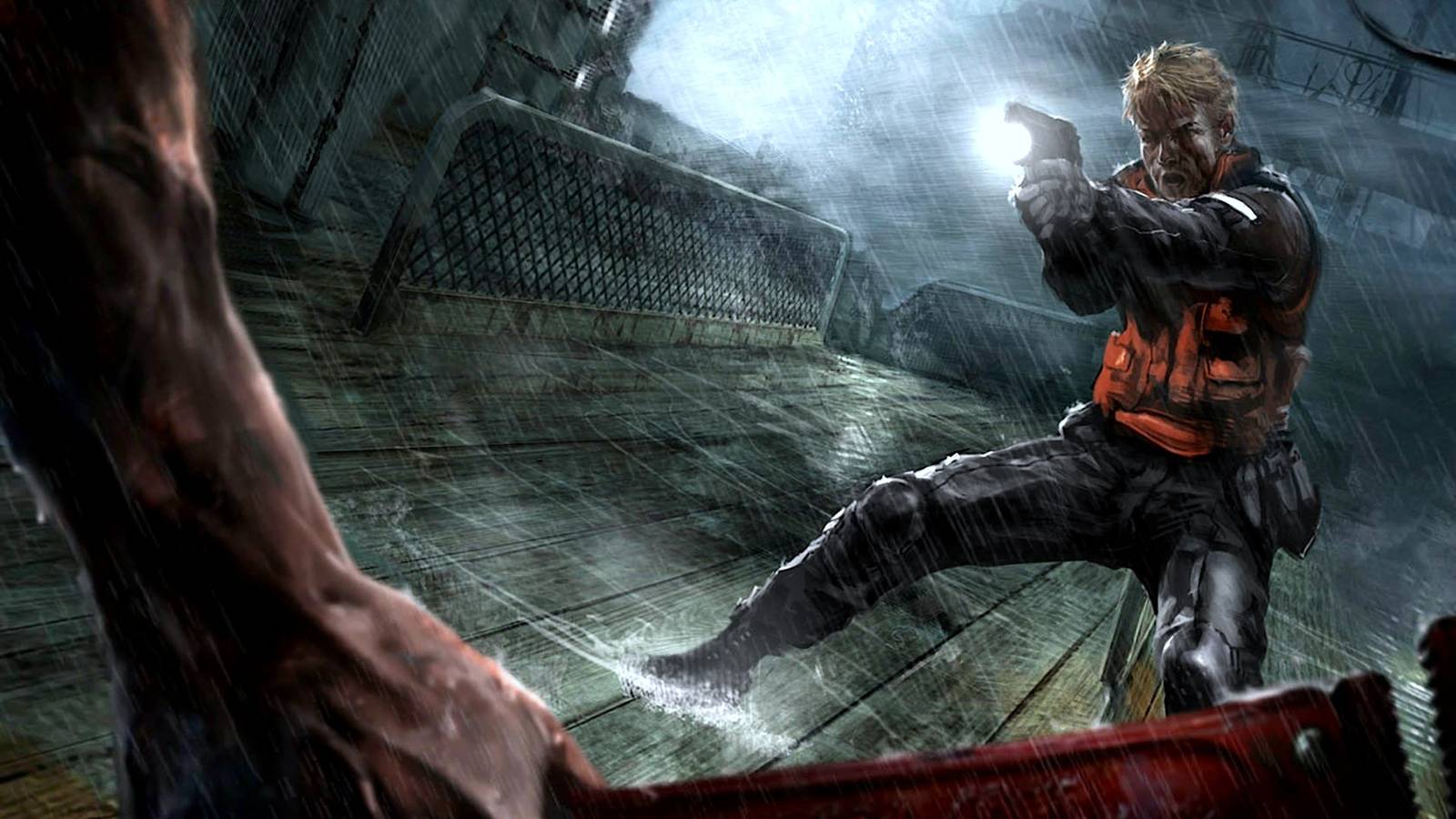
Cold Fear was developed by now-defunct Darkworks, which also created the horror game Alone in the Dark: The New Nightmare and post-apocalyptic survival game I Am Alive. Set on a Russian whaling ship adrift in the Bering Sea and “in the teeth of a winter storm,” according to the game’s manual, Cold Fear’s biggest gimmick is its main environment: a ship rocked by wind, violent waves, and frigid rains. Developers boasted ahead of the game’s release that custom-built tech called the “Darkwave editor” would make Cold Fear unique among its survival horror peers.
“When out at sea, a ship moves both on a vertical axis (roll) and a horizontal one (pitch),” said lead programmer Claude Levastre in a 2004 developer diary. “Our Darkwave editor allows us to separately generate the pitch and roll following two different curves, and it is the combination of both that creates a realistic movement.”
According to Levastre, the “Darkwave system allows us to control everything that happens, just as if we were directing a movie like Titanic or The Perfect Storm.”
Aside from the ship’s movement, much of Cold Fear follows rote video game design ideas of the time. As U.S. coast guardsman Tom Hansen, players could arm themselves with a variety of guns and blow up exploding barrels as they killed hordes of infected mutants. The game borrowed ideas from Resident Evil, presenting both fixed camera and over-the-shoulder views of the action.
What helped Cold Fear stand out was its setting. A good portion of the game takes place on the whaling ship, trapping players on a vessel that threatens to capsize or throw the player overboard. And for better or worse, there’s no in-game map — though there is one in the manual! — to help players orient themselves. The game relies on context clues and players’ memories of the ship’s layout to get around. As convenient as it is to have an in-game map to pop up at any time in a Resident Evil game, I’ve always loved the idea of having to contend with the reality of exploring the unfamiliar maze that is Cold Fear’s ship.
Cold Fear landed with a pretty big “meh” at the time of its release on PlayStation 2, Windows PC, and Xbox. In its review, Edge magazine said “there is a fair helping of survival horror entertainment to be had [in Cold Fear], it’s just that you have to dig through several layers of frustration to get at it.” GameSpot called it “a tidy action game, with some interesting gameplay elements, [that] suffers from being generic.”
Fans of the six-out-of-ten video game have since disagreed with Cold Fear’s frosty reception, praising Darkworks’ flawed-but-inspired take on survival horror and noting how well the 2005 game still holds up. Or as one appreciator of Cold Fear notes on Steam, there’s so-bad-it’s-good DNA at the heart of the game: “This game is like that obscure Nic Cage movie that is panned by all the uptight movie critics, but you love it because it’s short and full of him going balls out insane.”
The good news for Cold Fear fans is that we may someday get an even better version of the game. While the recent GOG.com release is full of fixes and modernizations, there’s still clearly room to improve upon Cold Fear. Excitingly, Atari recently purchased the rights to Cold Fear (and Darkworks’ I Am Alive) from Ubisoft, and may have plans to reintroduce players to its take on survival horror with a proper remake.

Atari said last summer that it plans to re-release titles like Cold Fear under its publishing label and potentially bring them to new platforms with new content. “We’re excited to reintroduce these titles while also exploring ways to expand and evolve these franchises,” Wade Rosen, chairman and CEO of Atari, said at the time, leading to speculation that remaster house Nightdive Studios could take Cold Fear out of cold storage.
So bundle up. And maybe stock up on some Dramamine for Cold Fear’s long-awaited and much-needed return.

