







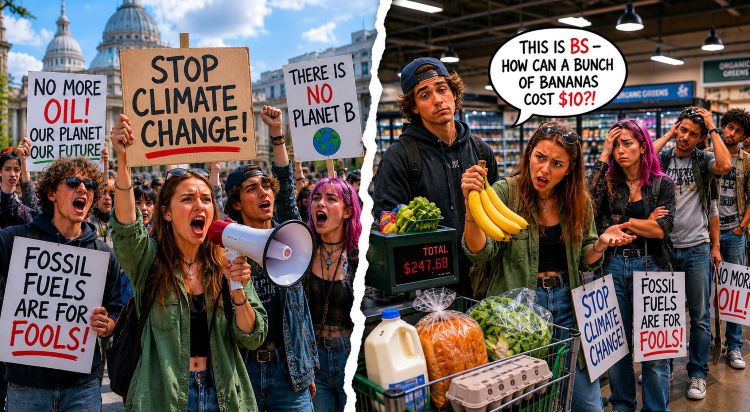
Generation Z (born 1997-2012) connects energy production and consumption with climate responsibility and their own values. Many see the energy transition as an opportunity for new technologies and greater global stability. For Gen Z, energy is more than just an industrial resource. However – and we are obviously generalizing – a desire for faster progress makes them susceptible to believing in technically or economically infeasible approaches.
Many Gen Zs know that energy is central to today’s economy. But, for them, energy means more than just supply, demand, and cost. To understand their perspective, we need to look at how they see energy’s economic, environmental, and social dimensions.
Consider these concepts to improve communication with Gen Zers and avoid misunderstandings and conflict.
Climate imperative and decarbonization
A key part of Gen Z’s perspective is the strong connection between energy and climate change. They grew up during a time of global focus on emissions, shaped by the work of the Intergovernmental Panel on Climate Change (IPCC) and the Paris Agreement’s goals.
Gen Z sees burning fossil fuels and other energy production as the main sources of greenhouse gas (GHG) emissions. As a result, they focus heavily on decarbonization. They often expect renewable energy sources such as solar, wind, and hydro to become the dominant electricity sources in the future.
By prioritizing emissions over economics, Gen Z judges industries by their emissions. Companies with large carbon footprints risk damaging their reputations, while those investing in clean energy appear more forward-thinking. For Gen Z, energy choices are closely tied to environmental values.
To address Gen Z’s priority on responding to climate change and help them recognize it will not be fast or easy, we can invite them to:
-
- Reduce their energy consumption
- Encourage the businesses they frequent to do likewise
- Lobby governments to reduce their environmental footprint
- Consider that some widely publicized claims about the impact of climate change are overblown
It is also important to note that moving too quickly to new energy sources could be extremely costly due to stranded assets and, if pushed too far, might cause significant job losses and even economic collapse. Since fossil fuels provide about 80% of today’s energy, phasing them out will take many years.
Energy as an economic backbone
Many Gen Zers understand that energy is the foundation of all economic activity, but some seem oblivious to this relationship. Fossil fuels, often used to make electricity, are key to:
-
- Powering digital infrastructure
- Fueling transportation networks
- Underpinning delivery of services
- Enabling the manufacturing of goods
- Heating/cooling homes and buildings
Unlike earlier generations, Gen Z grew up in a digital world in which energy use is less visible. Services such as cloud computing, streaming, and artificial intelligence hide how much energy they actually use, compared to traditional manufacturing.
To build Gen Z awareness of energy as an economic backbone, we can point out that:
-
- All the products around us were produced using energy
- Sometimes the products we routinely use, such as plastics and asphalt, consist largely of fossil fuel molecules
- The services we consume, including transportation and garbage pickup, consume significant energy
BIG Media highlighted one popular misconception in this article – My war against really nice people – Part 2.
It is possible to shift most industrial activities – e.g., mining, refining, and manufacturing – to use less energy and produce fewer emissions. However, implementing newer technologies for various industries often costs more, raising concerns about affordability.
Energy as a domain of innovation
Gen Z sees energy production as ripe for technological innovation. They believe advances in battery storage, smart grids, hydrogen fuel, and carbon capture are key to an economic transformation that uses fewer resources and creates less pollution. Major examples:
- Moving steel production from coal to electric arc
- Revising cement production from high energy consumption and significant CO2 emissions to lower clinker content, more calcined clay and less alternative fuels
- Augmenting centralized electricity generation with decentralized energy systems such as wind turbines and rooftop solar panels
- Integrating digital technologies, such as AI-driven electricity grid management or IIoT (industrial internet of things)-enabled energy efficiency, to improve electricity utilization
Similarly, Gen Z views energy consumption as another opportunity for technological innovation. Examples where Gen Z expects both economic and environmental returns:
-
- Replacing internal combustion engine (ICE) vehicles with electric and hybrid vehicles for individuals and public transit
- Transitioning from diesel to hydrogen in truck and rail transportation
- Reducing building energy consumption through better glass, insulation, and heat pumps
- Implementing better energy management tools for buildings and homes
Startups and established companies working in clean energy are seen as the ones most likely to create solutions that lower emissions and boost efficiency.
These advances fit with Gen Z’s general belief that technology can solve big problems.
To address Gen Z’s impatience with the slow pace of emission cuts, we can explain that energy innovation will accelerate as new technologies mature and costs decrease. Nonetheless, widespread implementation will take decades.
Geopolitics and energy security
Although climate issues are most important to them, Gen Zers also care about global energy politics. Events like energy disruptions and large price swings have shown them why energy security matters. However, their response differs from traditional resource nationalism and storage expansion.
Gen Z prefers energy diversification and localization. They also view:
-
- Renewable energy as a mechanism to reduce dependence on geopolitically sensitive fossil fuel supply chains
- Distributed generation – such as rooftop solar with batteries, and microgrids for distribution – as a way to enhance energy resilience at both the household and national levels
This Gen Z perspective reframes energy independence from maximizing domestic fossil fuel availability to building resilient, low-carbon energy systems that are less exposed to global shocks.
We can support Gen Z in this energy resilience goal while noting that greater resilience increases overall energy costs through higher infrastructure costs.
We can point out that:
-
- Rapid widespread adoption of solar and wind electricity generation will not improve energy security due to their intermittency, despite many claims to the contrary
- Adding batteries to renewable electricity generation improves effective capacity utilization and availability at a higher cost
- Nuclear electricity generation can greatly improve energy security, despite greatly exaggerated claims about risks
- Hydroelectricity generation can reduce energy costs, despite concerns about the land required
Social equity and energy access
Gen Z also emphasizes equity. Energy is not just about the economy – it also affects people’s lives. Gen Zers care about issues such as energy poverty, affordability, and access when evaluating energy systems.
There is strong Gen Z support for policies that ensure a “just transition”, in which the transition to clean energy does not disproportionately disadvantage certain communities or workers. This support includes reskilling programs for workers in legacy energy sectors and investment in distribution infrastructure for underserved regions.
Gen Z also looks at energy prices with fairness in mind. They see high energy costs as unfair to lower-income families. As a result, they often support rules and policies that try to balance market efficiency with social fairness.
Gen Z’s goals of fairness and energy access are admirable. Still, it is worth noting that efforts to reach these goals through market interventions can have unexpected side effects, such as:
-
- Reducing the focus on energy efficiency
- Undermining energy security goals
- Helping those who do not need help but are happy to consume lower-cost energy
- High administration costs
- Turning electricity from a service into an entitlement
Consumer behaviour and corporate accountability
Gen Z is using its buying power and job choices to show what matters to them. A supplier’s carbon footprint or use of renewable energy can affect what they buy and which brands they choose to support.
Being transparent is important to Gen Z. They pay close attention to environmental, social, and governance (ESG) measures. Companies that seem to be “greenwashing” face skepticism, which creates pressure to back up ESG claims with verifiable results.
Gen Z workers tend to choose employers whose values align with their own, especially when it comes to sustainable energy use.
We can help Gen Z achieve their ESG goals, but it is important to note that thet may face steep inflation and general affordability issues that come with increased product and service costs.
Conclusion
For Gen Z, energy is tied to the economy, the environment, and social values. They know energy is essential for economic activity, but they also demand that energy systems meet climate goals, drive innovation, ensure security, and support fairness. This view is changing how energy is produced, consumed, and governed.
Gen Z does not like to hear that their goals, while admirable, come with costs, take time to achieve, and may adversely affect their standard of living. However, they are important messages to deliver.
(Yogi Schulz – BIG Media Ltd., 2026)
![24th Jul: Naked Gun 33 1/3: The Final Insult (1994), 1hr 23m [PG-13] – Streaming Again (6.25/10)](https://occ-0-1081-999.1.nflxso.net/dnm/api/v6/0Qzqdxw-HG1AiOKLWWPsFOUDA2E/AAAABfp4_0QiEqCuYbAz753YaV1PWoe6S7MRYPLi6j3M64H5mG3fAm1OuezhXw4wJN6Tofh59r9ShQzC8UODvEMUy0OACKBVHHxWb0mq.jpg?r=364 "24th Jul: Naked Gun 33 1/3: The Final Insult (1994), 1hr 23m [PG-13] – Streaming Again (6.25/10)")