









Cecilie Flatval stands tall in Eidsvoll square, her gaze steady, her bare chest revealing the absence of her right breast. Flatval was only 42 years old, a mother of three young children, when she was given the shattering diagnosis of an incurable breast cancer. She died in April, 2023.
Her story has now been immortalized in the form of a bronze statue located in central Oslo, Norway – the first statue in the world of a woman living with incurable cancer. “In her courage, there is hope,” Hakon Anton Fageras, the sculptor who created the statue, said about the project.
Norwegian Breast Cancer Society/Supplied
Although this statue is located across the globe, the story behind it is closer than we might realize. In Canada, two in five of us will face a cancer diagnosis in our lifetime. Of those people, an estimated 14 to 25 per cent will be parents of children under 18. This number is expected to increase, driven by the well-established rise in cancer incidence in young adults, delayed parental age and improved diagnostic approaches.
As a practicing oncologist, I care deeply for every patient I treat – every diagnosis carries its own weight, its own fear, its own family bracing for what comes next. But there has been a disquieting shift I have come to recognize in my clinical practice: what was once seen as a disease of the elderly has transitioned to an epidemic among the load-bearing members of society. This has reshaped the face of oncologic care in Canada.
Norwegian Breast Cancer Society/Supplied
Sadly, younger patients are more likely to present with advanced disease, because their age renders them ineligible for screening that facilitates earlier-stage diagnoses. Screening guidelines for both breast and colorectal cancer – the two primary culprits – have improved significantly in recent years, including a lower age of eligibility in many provinces for mammograms and at-home fecal immunochemical tests.
Yet, Canada still lags behind global standards. And screening is only one piece of the puzzle: it must be paired with astute clinical judgment to be truly effective.
Despite the tragic nature of this situation, younger cancer patients are often the least seen people in the room. Researchers have documented a sense of “invisibility” felt by this population. Most cancer stories and campaigns celebrate survivors. What about those in the other boat? The statue of Flatval represents the individuals that many narratives leave out.
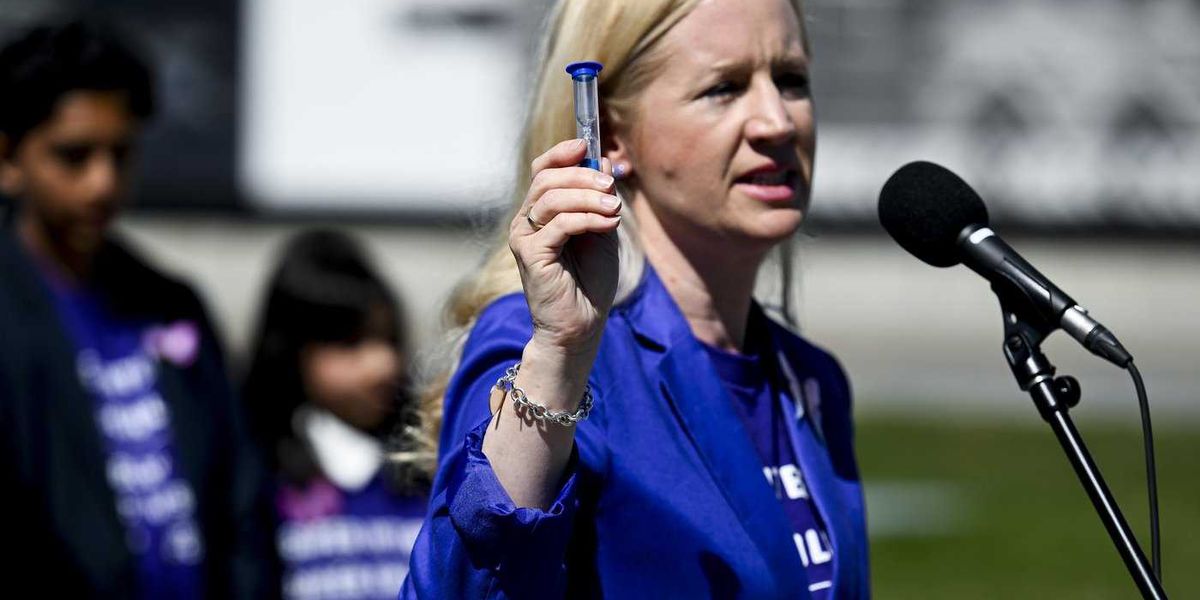
Within this subset is a group of women quietly and resolutely mothering against the clock. One story that has stuck with me comes from a mother sharing the experience of teaching her daughter to play a tune on the violin, knowing that one day her daughter would play the familiar music and feel surrounded by her memory.
Norwegian Breast Cancer Society/Supplied
This is not denial. It is defiance. It is the understanding that a memorial does not need to be cast in bronze. A legacy can live on in a song, an article of clothing or in the kitchen on a Tuesday night. Grand or humble, true love finds a way to stay. If you are one of these mothers, reading this because someone who loves you put it in your hands, please know this: The ferocity with which you keep loving, keep teaching and keep showing up is not going unnoticed. You are, in every way that matters, irreplaceable.
Dr. Nafisha Lalani is a practicing radiation oncologist at Southlake Health and an assistant professor at the University of Toronto. She completed medical school and residency at the University of Toronto and holds a Master of Public Health from Harvard University.
![8th Sep: Little Women: Atlanta (2021), 6 Seasons [TV-14] (5.75/10)](https://occ-0-748-1001.1.nflxso.net/dnm/api/v6/0Qzqdxw-HG1AiOKLWWPsFOUDA2E/AAAABYvLOuBlgVXJWxBSxyna5Q-Ld6vSfmb0Pg-up1Yh4PDJEmIFnghP_LmXHGCsUp2UCd69swMkEWIrDmxgKQ-XyPpKalJYGVWsnL-WMQLwfoMu9sVhY-jxSuQ5qgne3jBWLY5TaD8HC7v3NBuuJbiV5V8n9pCBoA8EdRecdck70FYGKg.jpg?r=66f "8th Sep: Little Women: Atlanta (2021), 6 Seasons [TV-14] (5.75/10)")