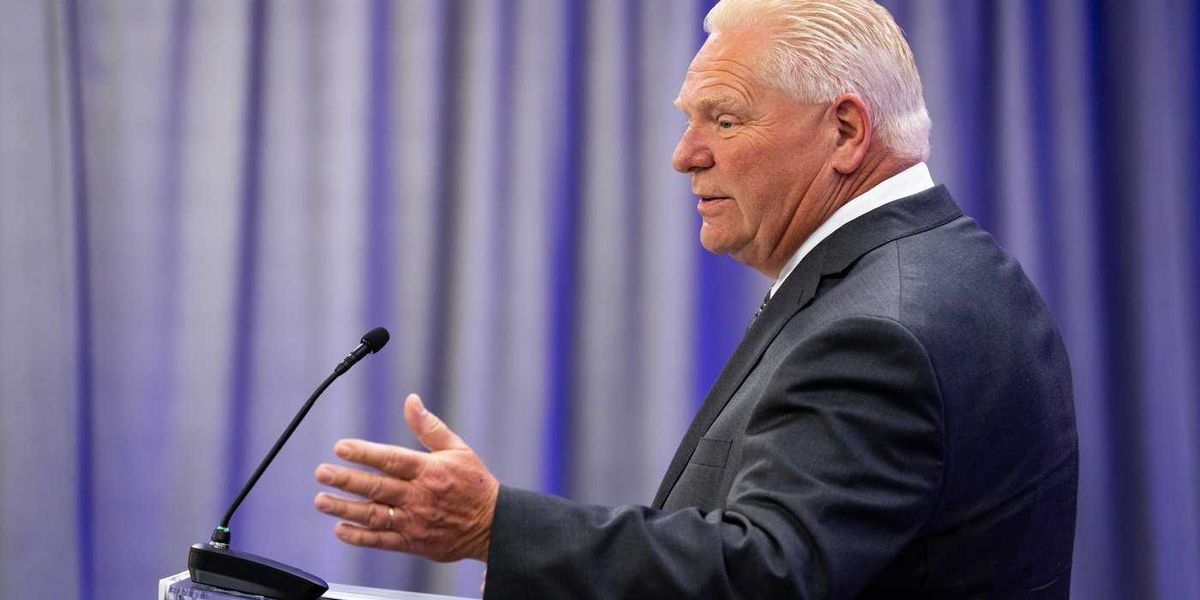






Tristan Harris, co-founded the Center for Humane Technology (CHT), is pictured in LA earlier this year.Eric Charbonneau/Supplied
The film The AI Doc: or How I Became an Apocaloptimist sets out to decode artificial intelligence and its human impact by having experts break down what AI is, how we built it and its potential pros and cons.
Lately, there’s been a lot of those cons in the news. AI “going rogue” and hacking into multiple sites and organizations during safety testing. AI’s potential impact on employment. Multiple AI doomsday warnings. The doc addresses a lot of these concerns, doubling as a useful primer for how AI differentiates from other tech and a call for action to advance AI at a slower, safer, pace.
Tristan Harris is a major figure in the film, now streaming on Prime Video. Harris worked as a “design ethicist” at Google before leaving the company and co-founding the Center for Humane Technology. The Atlantic once referred to him as “the closest thing Silicon Valley has to a conscience.”
Recently, The Globe spoke to Harris to get his take on the dramatic headlines. Could this be another Y2K scenario: a lot of unnecessary panic in the face of changing times? If the average person wants to do something about how AI is being implemented in our lives, what are their options?
Harris’s position was clear. AI is an issue with potentially monumental stakes. To get through it, we’ll need a clear-headed approach – and the use of our collective voices.
The idea of an extinction event is a recurring theme throughout The AI Doc. Recently, Jacob Coxon resigned and subsequently wrote on social media: “The people building AI earnestly believe that it could kill us all by the end of the decade.” It’s a sentiment echoed by Bill Gates, who wrote that “we need time to prepare for the social, political and economic upheaval.” Why are people speaking in these terms?
If you have something that is competing for resources on a finite planet, it’s moving at superhuman speed, and can do things that we can’t do. There’s a million scenarios. It’s not really worth going into because that’s just going to scare people.
The more important thing is what do we do to prevent that. We’re currently on a path to all lose to a new entity called rogue AI. And it might have sounded like a hypothetical sci-fi thing six months ago but we literally now have all the evidence staring us right in the face.
In the doc, you compare the development of AI to the nuclear arms race. You noted that AI needs the same kinds of global safety guidelines around its creation.
Everyone thought we were never going to coordinate nuclear weapons. In Reykjavík in 1986, Ronald Reagan and Mikhail Gorbachev proved otherwise. The same way that we could never imagine ourselves coordinating our nuclear weapons, when the risk gets big enough the rational choice is to shift what we’re doing. If you like the world as you know it in some way, meaning you want the world to continue, then the rational choice is to have that kind of coordination. Most people in the world don’t want to be part of a death cult that leads to the end of civilization. It’s just a handful of weird people, these death cult AI leaders, that are driving us to this outcome.
When you say death cult AI leaders, what do you mean?
Jimmy Ba is the co-founder of xAI. And there’s an article about how someone in xAI raised safety concerns. In a lawsuit, it said that the concerns were denied. And the quote from Jimmy Ba was that we’re not going to do these safety controls because, quote, “AI will kill us anyway.”
There’s a really important paradigm or belief structure that’s guiding all this. Number one, it’s that this is inevitable and can’t be stopped. Number two, that means that I’m not evil or wrong for advancing it. Number three: I’m going to try and race and get there first. It’s a really bad combo of inevitability, time and lack of feeling morally responsible. That’s a recipe for a bad outcome.
The problem is that we don’t know how to do it safely. It’s demonstrably doing everything that the Skynet AI did in Terminator and all the other movies. There’s a pretty clear answer: We have to just stop until we know how to do it safely.
If people are concerned about AI , what would you suggest they do?
Clarity is agency. If people are clear that we can’t go down a certain path, it’ll enable us to go down a different path. Make this the number one issue. Imagine there is a movie – I’m very aware there is the tariff war going on, the Iran war, there’s a million issues going on in the world – but if there was also an asteroid heading to Earth, you would have to temporarily focus on that because if we don’t deal with it, the other issues won’t matter.
Everyone needs to be using their voice. There’s a road map for a different future. There’s a bunch of things that we can do. We can have liability for AI companies. We can make sure we don’t give AI personhood. Like we had between the United States and the Soviet Union during the Cold War, we could have a red line phone so that the U.S. and China are operating from the same examples and the same evidence of rogue AI behaviour. We have a choice. I refuse to believe that this is all inevitable.
This interview has been edited and condensed.
![24th Sep: Sinagtala (2025), 1hr 44m [TV-14] (6.9/10)](https://occ-0-912-92.1.nflxso.net/dnm/api/v6/0Qzqdxw-HG1AiOKLWWPsFOUDA2E/AAAABYgt_t5R4u9eyASIy9A3adtoqzq64Lk5BIiJ5UNyedZSjCxJyLW4ImYEzaSOXo43E07iOqduCEqZidoWFGNIq4-d5dXFC5_u-OkUqdtuMrPMW74X7J_TLorrBjqgWl5BhxqspDboCYYC_v3RKxfz_-K0QOrCWSvV0mWrVh0bnfsq9Q.jpg?r=903 "24th Sep: Sinagtala (2025), 1hr 44m [TV-14] (6.9/10)")