![29th Sep: LEGO ONE PIECE (2026), 2 Episodes [TV-Y7] (6/10)](https://occ-0-1522-1001.1.nflxso.net/dnm/api/v6/0Qzqdxw-HG1AiOKLWWPsFOUDA2E/AAAABQwDv8VRfapPAnFitDAManKe0OAe0N3tU7fw14oP4OJK5d1o-bhO06z1YdYFxuHPsCnDW3WJyg7yyPVG89-sHDG04WMo7PwA5tGxuP0CYbJMY2II4TzExCE8N3IB5bSNY-gRzhcb8MRjRR_kE-uJBNicuOmO5ZXlFP_RagpSPW4iuQ.jpg?r=244 "29th Sep: LEGO ONE PIECE (2026), 2 Episodes [TV-Y7] (6/10)")



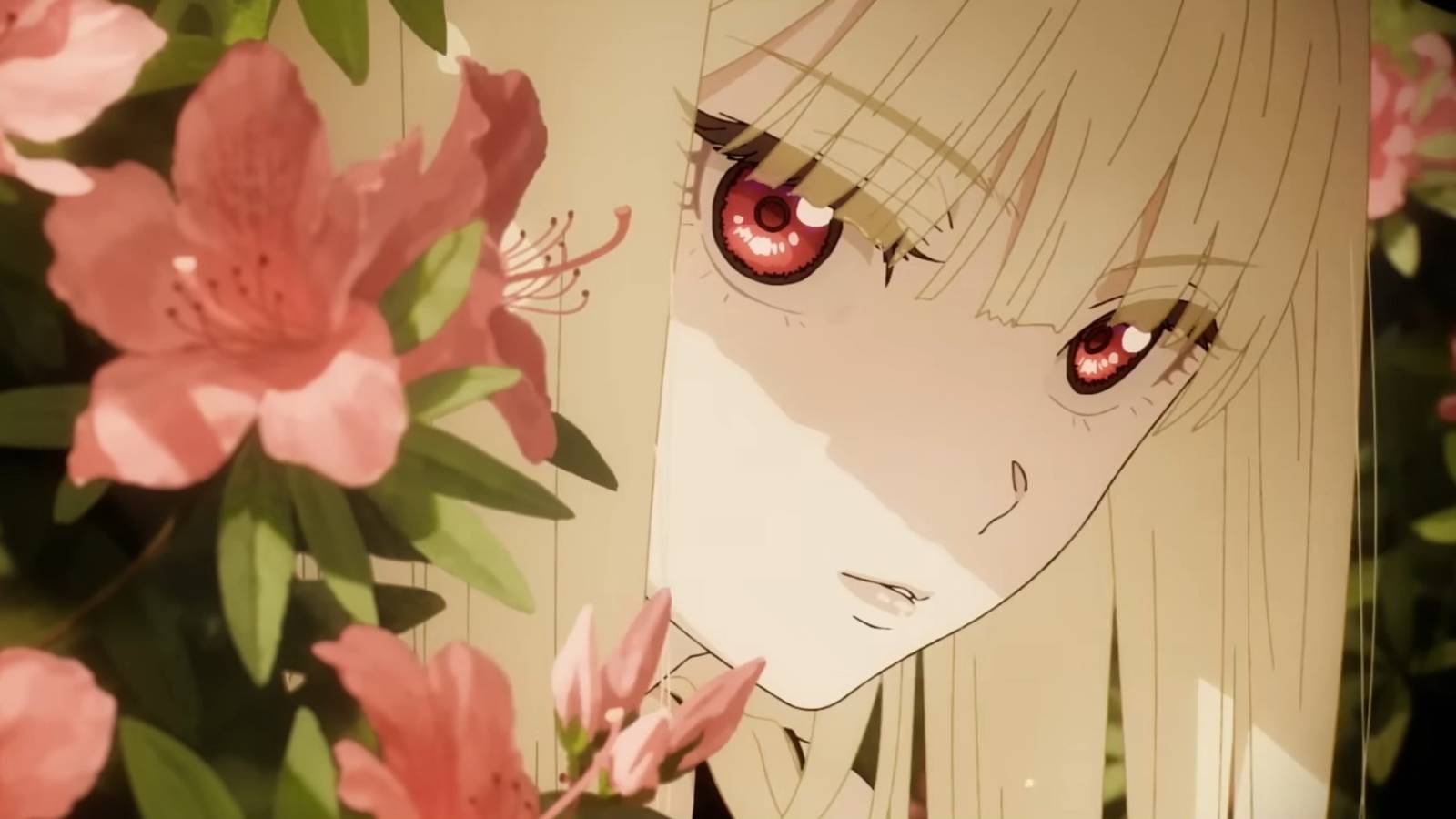
Atsushi Nishigori has spent much of his career inside the machinery of others’ anime. His years at Gainax — the hugely influential studio behind FLCL and Neon Genesis Evangelion — put him in the orbit of creators like Hiroyuki Imaishi and Kazuya Tsurumaki. He later worked on The Idolmaster, Darling in the Franxx, and Shin Evangelion. But for all the projects Nishigori helped bring to life, there were always other images the creator wanted to put to screen.
With Grotesqqque, CloverWorks’ new anthology film set to release in November, Nishigori finally has a chance to let his imagination run rampant. In a conversation with Polygon, Nishigori unpacked the three wildly different stories at the heart of Grotesqqque, his visual-first approach to animation, and the creative freedom that came with finally making something entirely his own. Ever-present in his mind were the characters and designs he had spent years waiting to bring to life.
“There were always a lot of scenes and character designs that I had wanted to do in the past, and I had just been piling them up inside me,” Nishigori told Polygon through a translator. “I really wanted to bring all of those ideas I had in my mind into this work, so I asked the company to let me make something where I could do whatever I wanted.”
That freedom became Grotesqqque, an original 104-minute anime movie made up of three wildly different stories: an alien comedy, a battle royale centered on girls in a world where morning never comes, and a vampire story set after humanity has long disappeared. The film had its world premiere at the Fantasia International Film Festival on July 24, where Nishigori appeared for the screening.

While the three stories of Grotesqqque are different in genre and setting, Nishigori says that contrast is precisely what attracted him to the project. He likes putting opposing ideas next to one another, allowing each to reveal something the other couldn’t on its own.
“I think I’ve always enjoyed combining contrasting themes,” he said. In the battle-focused story, called “Yoroshiku★Shoujo,” for instance, there are explosions, action, and violence, but Nishigori didn’t want any of these things to consume the whole movie. “If those elements were the only things portrayed, we’d just be looking at one facet of the story, and it wouldn’t show the full picture.”
Instead, he wanted to place larger-than-life elements alongside more grounded concepts, like relationships between the girls, what they consider precious, and the emotions they struggle to hold onto.

That impulse toward contrast runs through Grotesqqque. The movie jumps between science fiction, battle spectacle, and vampire fantasy, but Nishigori isn’t particularly interested in making those genres feel seamless. In fact, part of the fun seems to come from letting the contrast scream. That may also explain the movie’s title. “Grotesque” suggests horror, monsters, or something twisted out of shape in an unnatural way. But Nishigori’s definition is broader and more personal. He describes the movie as an accumulation of everything that’s ever felt strange to him — particularly the ideas and images that don’t always fit together neatly.
“Even as the creator of this film, there are many emotions and thoughts within me that aren’t completely set in stone or clarified,” he said. “There are a lot of scenes, characters, and emotions I wanted to portray while making this, but because I gathered so many different elements, some things naturally remain a bit undefined.”
For Nishigori, incompleteness became part of the movie itself, extending to how he approached each story. Rather than starting with a well-defined theme and building the visuals around it, Nishigori says he prioritized characters and images first and let those fuel the narrative.
“I really focused on the visual aspect, and then tried to bring the music to match the visuals, because I kind of think of it as a long-format music video,” he said.

That description might be one of the best ways to understand what makes Grotesqqque so unusual. Rather than treat visuals as an accessory to the story, Nishigori approached them as one of the movie’s fundamental building blocks. The music then becomes another layer, helping create the rhythm of each section and eventually the rhythm of the movie as a whole. It evokes classics like FLCL and Cowboy Bebop, which are fueled as much by their characters as by the music that swells around them.
Anthology films have become rare in today’s media landscape. Some of the best, from Neo Tokyo and Memories to Genius Party and Star Wars: Visions, often feel disjointed even when focusing on similar themes. Nishigori knew his anthology could easily feel like three unrelated projects placed next to one another, so he ensured the individual stories had their own identities while still creating one larger experience.

“I paid close attention to the viewer’s rhythm to ensure the experience is enjoyable, and they never get bored,” he said. “I wanted to make sure each of the three works had its own distinct look and flow while also balancing how those individual rhythms contribute to the overall impression of the film.”
The result, at least according to Nishigori’s description, is less interested in making every piece fit perfectly than in making the entire collection move with a deliberate rhythm. That‘s especially noticeable in “Nocturne,” the third story in Grotesqqque, which begins after humanity has already disappeared. Nishigori could have made the apocalypse itself the dramatic centerpiece, but he chose not to. What interested him more was the image left behind: four girls alone in a ruined world.
“If we showed the whole movie how dramatic it is, we wouldn’t be able to portray how the characters interact,” he said. Instead, he wanted to show the aftermath and let the audience imagine what came before. “There are a lot of pictures that give you room to imagine what happened during that appearance, so rather I want you to enjoy and imagine that.”


Nishigori has also deliberately placed recurring locations, emotions, and other elements throughout Grotesqqque, but he doesn’t want to tell audiences exactly what those repetitions mean. When asked whether the three stories exist within a multiverse, he stopped short of giving a definitive answer.
“There are certain locations or elements that I’ve intentionally layered to evoke a connection,” he said. “But I’m not going to explicitly explain how things link together. Instead, I would like each of you to experience the film and have fun imagining and interpreting it in your own way.”
Nishigori even suggested that viewers might find connections between Grotesqqque and some of his previous anime, noting that he personally sees a link between “Nocturne” and Darling in the Franxx. Neither work shares any direct connections in any specific way, more like character and conceptual echoes. Again, the invitation is to look rather than wait for the director to provide an answer. Such openness is somewhat surprising for a filmmaker whose career has been so closely associated with carefully constructed anime worlds. Yet Nishigori says one of the most important lessons of making Grotesqqque was figuring out how to take everything he had learned from his previous work and make it feel new.
Simply emptying his creative backlog onto the screen wasn’t enough. “I really wanted to make sure that this amalgamation of all of these pieces in the past is portrayed as something new, to make sure that it feels new to the audience, feels original.”
That desire to make something wholly real and original while still entertaining was one of the central balancing acts of Grotesqqque. Nishigori doesn’t want his film to become an exercise in obscurity simply because it is experimental.
“Finding that exact balance between the originality of the animation and pure entertainment value for the audience is what I paid the most attention to with this project,” he said.
It’s also why he doesn’t necessarily want viewers approaching Grotesqqque as something they need to decode. For Nishigori, the ideal experience is much more immediate.
“I’d like the audience to approach it almost like a festival,” he said. “I want them to come and just bathe in the visuals and the music, and to purely enjoy it as a fun, immersive experience.”

And he hopes people come back.
“Each time you watch it, you might experience different emotions or make new discoveries in the film,” Nishigori said. “There will definitely be something new to find with every viewing, and I really hope people enjoy that.”
Nishigori spent years accumulating ideas, images, characters, influences, and experiences from across his career. Now, rather than organize them into something tidy, he has assembled them into a deliberately mismatched collection of ideas that can be approached from different angles. It’s a fitting description for a movie called Grotesqqque. After years of animating other people’s visions, Nishigori finally has something entirely his own. If Grotesqqque is as intentionally strange, colorful, and difficult to pin down as he suggests, perhaps the best way to understand it is to experience it as many times as possible.
“I wanted to make this as pure, accessible entertainment, so I hid a lot of the darker reality of the world so it wouldn’t ruin the fun vibe,” Nishigori said. “But for the fans who love to look deeper, I think you’ll have a great time imagining what’s really going on.”
Grotesqqque premieres November 6, 2026 in Japan