


![19th Jun: The Vanished (2020), 1hr 55m [R] – Streaming Again (5.85/10)](https://occ-0-2605-1007.1.nflxso.net/dnm/api/v6/0Qzqdxw-HG1AiOKLWWPsFOUDA2E/AAAABUhIyOZNJ-KXpyKDEghNyVoO-rgfhG1wPCrtPpkKp4jf9MenVmRM9lytDxXR-AryxuyY3odSd_w51kgNIPzekYxDGCUFUQakPMaH.jpg?r=77d "19th Jun: The Vanished (2020), 1hr 55m [R] – Streaming Again (5.85/10)")


A new global study set out to answer a question most people have at least thought about once: what does it actually take to become a billionaire?
The findings are fascinating, slightly humbling, and for anyone who went to Montreal’s McGill University, maybe a little validating.
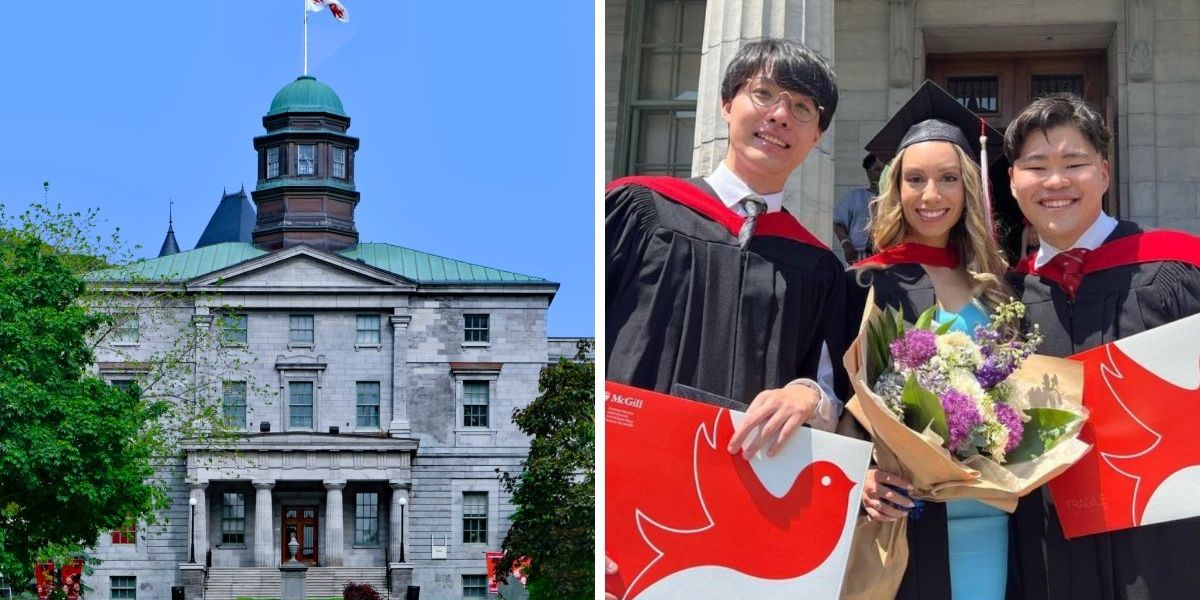
EssayHumanizer.io analyzed 3,184 billionaires from the Forbes 2026 list and mapped where they studied. And while McGill has slipped behind other Canadian institutions in recent global university rankings, it remains the Canadian institution most likely to produce someone whose net worth has nine zeros in it.
McGill landed at 44th globally — the highest-ranked Canadian university in the entire dataset — with 10 billionaire alumni whose combined net worth sits at $93.1 billion, or an average of $9.31 billion per person.
The University of Toronto came in at 60th globally with 7 billionaire alumni and a combined net worth of $36 billion. The University of Western Ontario rounded out the Canadian trio at 64th, also with 7 billionaire alumni but a combined wealth of $15.9 billion.
McGill’s notable alumni include Changpeng Zhao, founder of Binance and one of the most recognized names in cryptocurrency; Archie Aldis Emmerson, whose fortune is tied to timberland and lumber mills; and Michael Latifi, whose wealth comes from meat processing and who also happened to be the father of former Formula 1 driver Nicholas Latifi.
Globally, Harvard led the pack with 134 billionaire alumni and a combined wealth of $1.235 trillion — nearly one in every ten dollars of global billionaire wealth traces back to a single school in Cambridge, Massachusetts. Stanford came second with 86 billionaires and $1.208 trillion, while the University of Pennsylvania rounded out the top three with 63 billionaires and $1.093 trillion.
Those are the only three universities on earth where total alumni wealth exceeds $1 trillion.
As for what those billionaires actually studied, business and economics dominated by a wide margin at 35%. Engineering came second at 13.6%, and notably, about one in eight engineering billionaires also pursued a business or MBA degree. Computer science accounted for 4.3%.
Canada ranked 7th among countries with the most billionaire-producing universities, accounting for 2.2% of the global total. The full study is available at essayhumanizer.io.