


![19th Sep: Dhee Double Impact (2026), 26 Episodes [TV-PG] (6/10)](https://occ-0-2602-1001.1.nflxso.net/dnm/api/v6/0Qzqdxw-HG1AiOKLWWPsFOUDA2E/AAAABTjvMMlVIH4A8b7hlK_B35hSvM393zmg-CSqYTy5sgYoObCcqJqcNtHWzrdDu6KeTZ5rIlKb3prLmJ0g2rpuLlWxhmm9VrtupcXyAQNCgpXEECtstdNi8Z6FJXss_OpvAt6qG_Is057LT_W7qAwyMEEERupbmEvO2uYSvhP_E9EL6vuQD5I24iEE96iq4tM1Ok84wMcXMFdwphHhsuqB4KP8fpiU_02WUG_Kduhk7K3X0kUySixY1FcH5oUZmLSQFvkR347Dli7zDC1wj5WXxof7CLsdSYLZ1IxISaSxelBxd9qTVtuD44HyoHzenQ.jpg?r=7ef "19th Sep: Dhee Double Impact (2026), 26 Episodes [TV-PG] (6/10)")





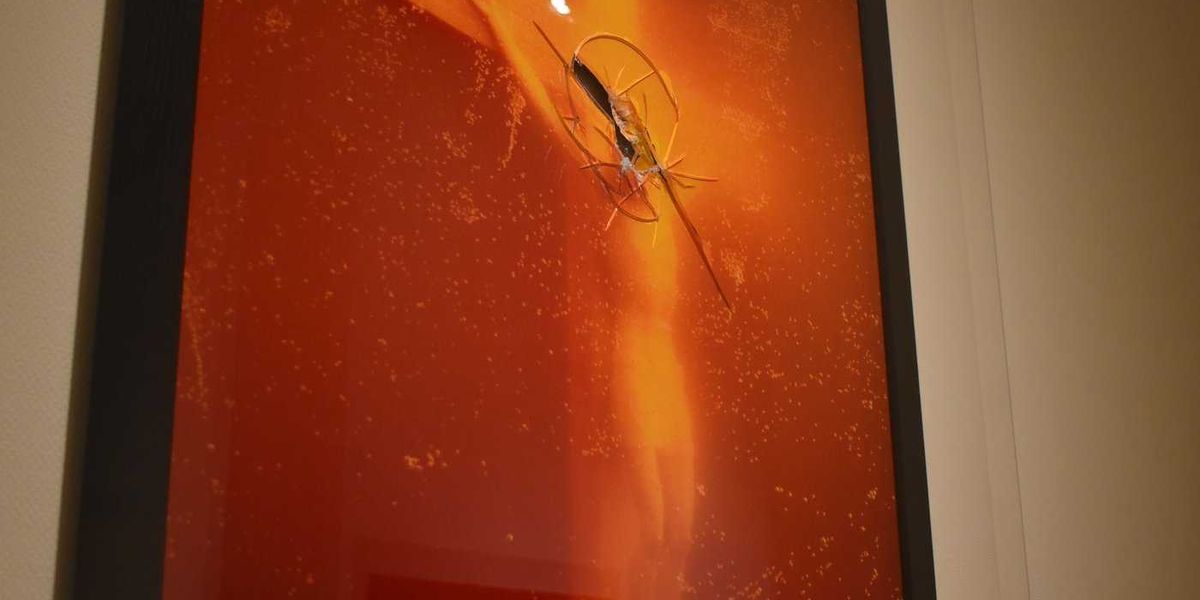
An art gallery in Eastern Canada is leveraging a notorious, damaged photograph of a crucifix floating in urine to spark public discourse — even drawing criticism from a member of Parliament.
The Beaverbrook Art Gallery, located in New Brunswick’s capital Fredericton, is exhibiting American artist Andres Serrano’s controversial piece until the end of November.
It marks the first time the Piss Christ (Immersions), on loan from the Rennie Collection in Vancouver, has been shown in Atlantic Canada.
And the gallery’s executive director Bernard Doucet says he’s not shying away from the controversy that surrounds the 1987 piece. It’s the role of the Beaverbrook, and other organizations like it, to get people talking, he says.
“Museums are also community infrastructure, with a responsibility to provide the impetus for conversation and dialogue,” Doucet said from a meeting room inside the gallery earlier this week.
Doucet said he’s displaying the “Piss Christ” photograph — criticized by some Christians as sacrilegious and degenerate — so the public can have the opportunity to experience the “range of emotions” it creates.
As the Serrano exhibit opened to the public this week, Conservative MP John Williamson criticized the piece as “not great art in any serious sense.”
“The Beaverbrook Art Gallery is recycling a controversy that peaked long ago. This is nostalgia for transgression, which is perhaps the most banal category of art programming imaginable,” Williamson said in a statement.
The Saint John—St. Croix MP added “the 1980s called and would like its photo back.”
The Roman Catholic Diocese of Saint John, N.B., which serves the Fredericton area, did not immediately respond to a request for comment.
For his part, Serrano maintains he is a Christian and has, in several interviews, described Piss Christ and many similar works as personal expressions of faith.
“It’s not an attack on God or the Church, but instead a celebration of both,” Serrano said in a statement provided to the gallery.
“I not only believe in God, I believe in religious art and the beauty and power of such art.”
The Piss Christ photograph is considered among the most controversial artworks of the last few decades.
It triggered a debate in the U.S. over public arts funding, and the agency that funded Serrano’s practice had its funding slashed, according to a description by the gallery. In 1997, while on display in Melbourne, Australia, the photograph was attacked with a hammer.
In 2011, Christian protesters used a hammer to smash the Piss Christ while it was on display at the Collection Lambert Avignon in France. The attack shattered the protective glass and an axe was used to damage the print, according to the gallery. After the attack, the French museum decided to keep it up so the public could see the damage.
Controversy even followed Piss Christ to Santa Barbara, Calif., in 2023. There, local media reported that Christian parents and students protested the use of the photograph in course material. It was later removed.
Sarah Moore Fillmore, CEO at the Art Gallery of Nova Scotia, says Piss Christ has a “polarizing effect” that’s moved it beyond minimalistic showrooms and into the broader public.
“It’s kind of entered into a space beyond the art world — but it definitely stands on its own as an artwork,” she said by phone.
Moore Fillmore anticipates people will want to see the Piss Christ in person because of the impact it’s had on mainstream culture over the years. And, when they do, they might walk away shocked or curious to learn more, she said.
The Andres Serrano: Incarnate exhibit will also include 1985’s Blood Cross (Bodily Fluids) and 1988’s Piss Pope, Part I and II (Immersions) — also photographs that mix Christian symbols with human fluids.
Serrano’s pieces will be displayed near other religious artwork in an area of the gallery called the Dali Chapel.
The “Andres Serrano: Incarnate” exhibit includes “Blood Cross (Bodily Fluids),” created in 1985, pictured at the Beaverbrook Art Gallery in Fredericton, on Thursday, June 18, 2026.
THE CANADIAN PRESS/Eli Ridder
The space includes Salvador Dali’s 1957 painting Santiago El Grande, a 13-foot tall canvas depicting Saint James the Great riding a white horse, among other centuries-old religious art.
Doucet said Serrano’s modern pieces are a way to engage audiences in the gallery’s large religious and ecclesiastical art collection.
“It shows audiences that religious art isn’t just from the 18th century, that it exists in a very, very contemporary context,” Doucet said.
“And it enables this institution to show the beauty and meaning and relevance of all of the other works, too.”
This report by The Canadian Press was first published June 20, 2026.
— With files from The Associated Press.
By Eli Ridder | Copyright 2026, The Canadian Press. All rights reserved.