





Davide Iodice’s Pinocchio. What Is a Person?, created with Scuola Elementare del Teatro / Conservatorio Popolare per le Arti della Scena and presented by Teatro di Napoli and Interno 5, is not simply a new staging of Collodi, a social project, or another performance about inclusion. It is a work that places its central question in the title and refuses to let the audience look away: What is a person?
That shift in emphasis is the production’s deepest artistic gesture. The question is not who Pinocchio is, how he should be performed today, or how Collodi’s tale can be updated for contemporary audiences. The question is more difficult and more unsettling: what makes someone fully human in the eyes of society? In Iodice’s hands, Pinocchio is no longer only a literary character. He becomes a figure for those whom the world still tends to consider too difficult, too unruly, too fragile, too different to fit its preferred idea of normality.
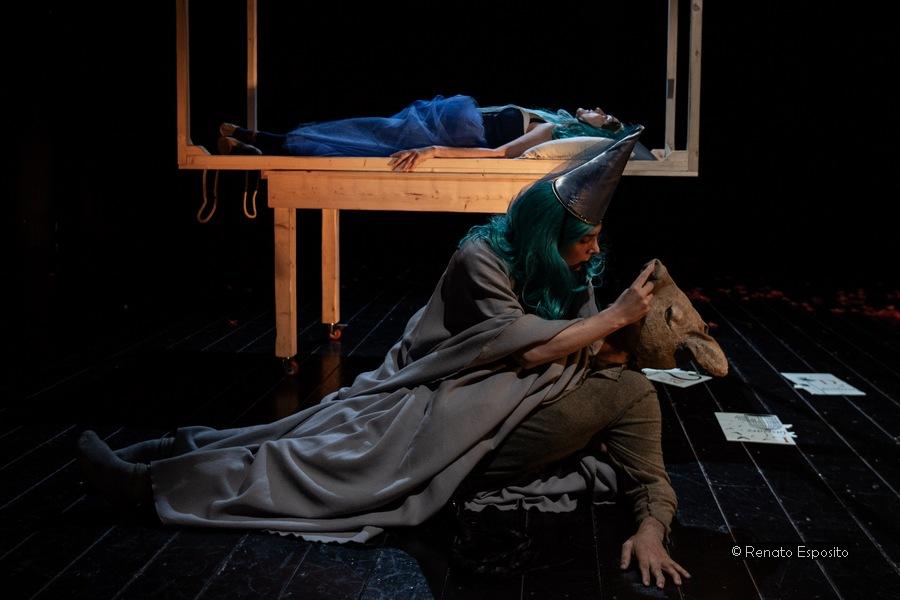
Photo by Renato Esposito.
This is why the production should be introduced not only as an Italian reinterpretation of a classic, but as a theatrical work emerging from a long-term artistic and pedagogical practice in Naples. Iodice’s collaboration with Scuola Elementare del Teatro is central to the performance’s force. The production grows not primarily out of adaptation in the literary sense, but out of lived human experience, community, and sustained work with performers whose lives and bodies challenge conventional ideas of who is usually allowed to occupy the stage at the centre of representation.
In the official framing of the production, Pinocchio is linked to adolescence, disorder, disability, social marginalization, and the biographies of those who have lived near crime, violence, exclusion, or prison. Yet one of the achievements of Iodice’s theatre is that it does not reduce these realities to illustrative material. It does not ask the audience for pity. It does not deliver a moral lesson. It does something rarer and more exacting: it restores to the stage the possibility of encountering another human measure.

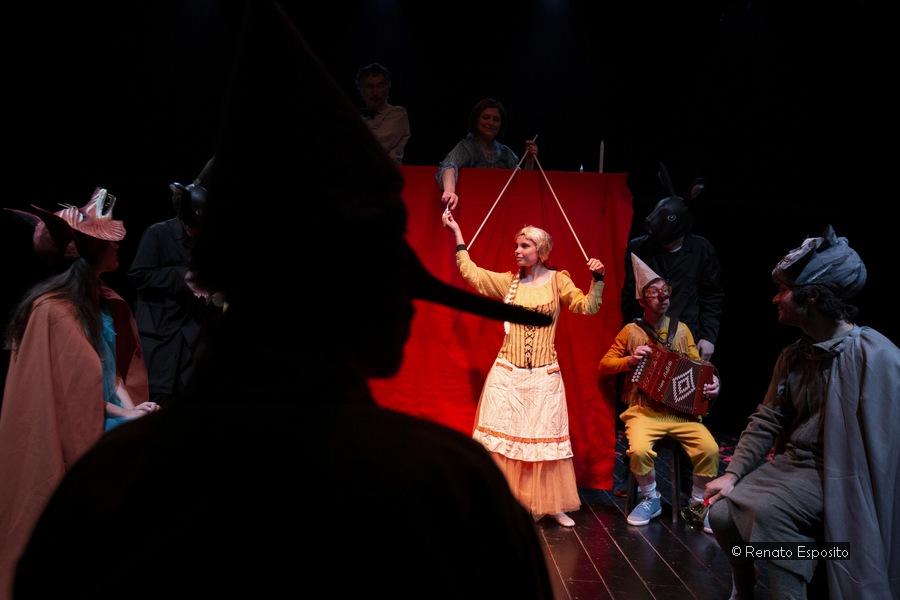
Photo by Renato Esposito.
For that reason, Pinocchio. What Is a Person? strongly resists condescending readings. This is not a performance whose value must be justified by its “social mission.” On the contrary, it is a work in which artistic form and human presence intensify one another. Italian critics have rightly insisted that this is not therapy disguised as theatre, but a fully realized stage statement: poetic, rigorous, and emotionally precise. In fact, Iodice’s production is more demanding than many impeccably “professional” works, because it asks the audience to abandon the comforting habit of dividing people into those who supposedly represent art and those who supposedly represent only a problem.
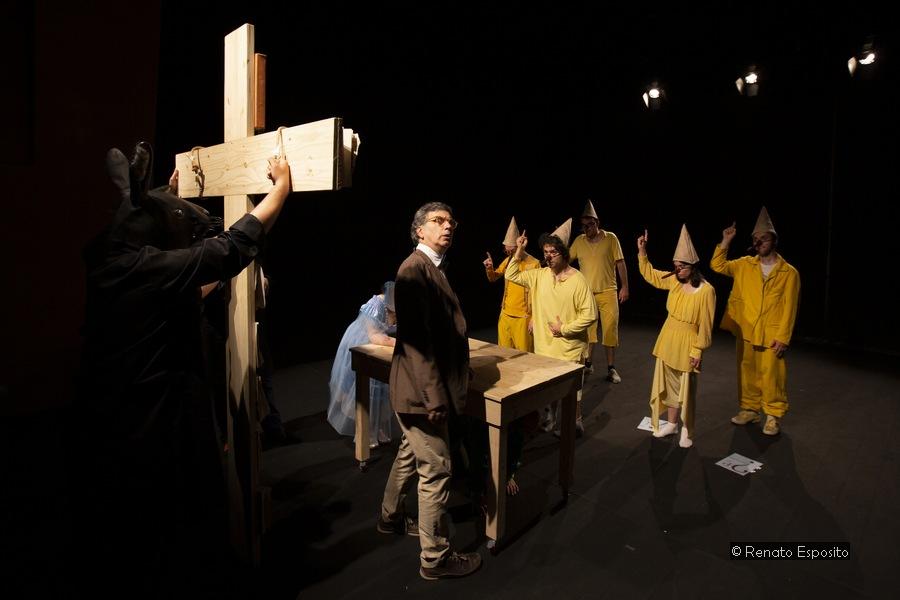
The stage space is plunged into darkness and inhabited by bodies that do not conform to conventional ideas of normality. Young and adult performers appear in zoomorphic masks – a world that is at once unsettling and fairy-tale-like. A large cross with books nailed to it appears on stage: the Cricket carries it like a figure in a Stations of the Cross procession, as if crushed by the weight of prejudice, competition, and discrimination. In this space, Pinocchio ceases to be a single character and becomes a plurality of human presences – fragile, stubborn, comic, vulnerable, and demanding to be seen.
Iodice’s directorial stance is crucial here. He does not romanticize fragility or turn vulnerability into a decorative sign of authenticity. His theatre does not aestheticize pain. But neither does it soften the difference or pretend that exclusion can be overcome by a humane slogan or a correct tone of voice. The difference in this performance retains its disturbing power. Pinocchio is not merely someone who is “not like the others.” He is someone whose very existence exposes the violence hidden inside the norm to which the adult world so confidently appeals.

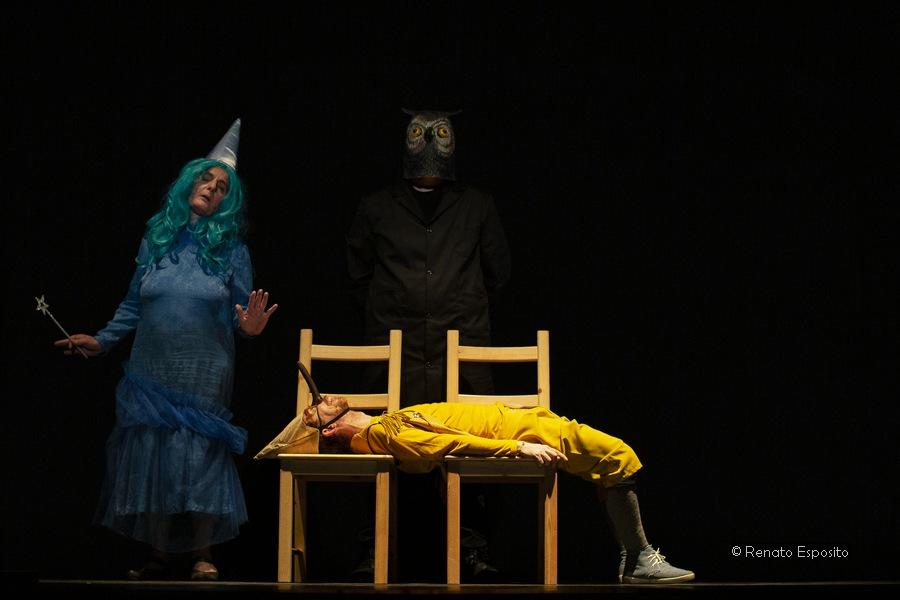
Photo by Renato Esposito.
That is what gives the performance its edge. Adolescent helplessness, unruliness, comedy, darkness, and instability appear here not as deviations from the human, but as inseparable parts of it. In that sense, the production may be closer to Collodi than many more literal adaptations – not on the level of plot, but on the level of the story’s inner cruelty. The history of Pinocchio includes the knowledge that an earlier version ended far more darkly, without the reassuring transformation into a “real boy.” Iodice works inside that crack in the myth. After this performance, the puppet’s metamorphosis into a proper child can no longer be received as a harmless happy ending.
Because immediately another question follows: who has the right to be recognized as “real”? Who is granted personhood, and by whom? According to what standard? Who has the power to decide?
The strength of Pinocchio. What Is a Person? is that it does not answer these questions abstractly. It does not argue a thesis. It creates a condition of presence in which the urgency of the question becomes unavoidable. Theatre here does not function as a platform for ideas or as an illustration of a social issue. It becomes a space in which dignity is returned to those who are too often described from the outside in medical, legal, pedagogical, or sociological language. More precisely, Iodice does not simply translate them into the language of the stage; he allows the stage itself to be transformed by the encounter.

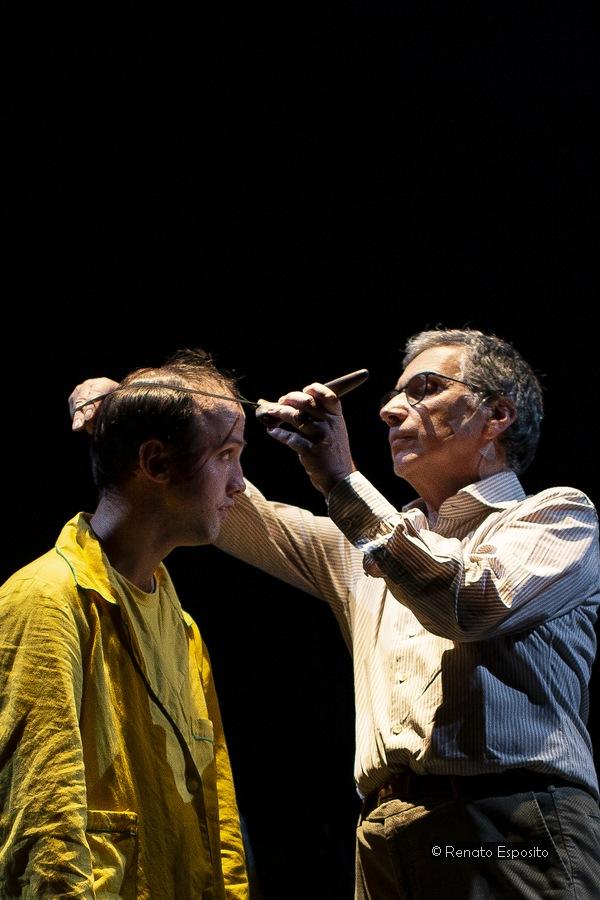
Photo by Renato Esposito.
That is why the origin of the work matters as much as its theme. This is a production born from years of shared practice, not from a one-time curatorial concept. It emerges from a community, from duration, from sustained mutual work. Perhaps that is what gives it a degree of inner truth that cannot be imitated. The performance does not ask to be believed. It does not solicit sympathy. It does not display exemplary social sensitivity for the audience’s approval. It simply exists as an event of encounter, and for that very reason, it strikes with greater force than many more polished and programmatic directorial constructions.
Its recognition in major festivals and professional contexts is therefore unsurprising. The production was included in the program of the Biennale Teatro di Venezia, while Davide Iodice received the Special Ubu Prize in 2024, in which both this work and his broader artistic path with Scuola Elementare del Teatro were acknowledged. Yet in the case of Pinocchio. What Is a Person?, recognition matters less as an institutional success than as confirmation that theatre still has the capacity to unsettle the categories through which society names and ranks human lives.
The production’s presence in MITEM’s program in Budapest deserves special mention. This was a case in which festival selection did not operate by inertia or reputation alone, but by genuine artistic necessity. Within the context of a festival where works often address power, guilt, history, and the human cost of political decisions, Iodice’s performance sounded with particular clarity because it returned the conversation to its most difficult foundation: who are we willing to recognize as a person at all? It was an astute curatorial choice. The selectors understood that this was not only a strong Italian production, but one of the moral and conceptual centres of the wider festival dialogue.
At its best, theatre does not “speak for” the other, nor does it benevolently “include” the other within a frame that remains unchanged. It changes the frame itself. Iodice’s production belongs to that rare category. It does not explain otherness, reconcile the audience to it, or turn it into a beautiful metaphor. It does something more substantial: it restores to otherness its density, danger, freedom, and dignity.
And then the question in the title ceases to be rhetorical. What is a person? After this performance, the question cannot be answered pedagogically, sentimentally, politically correctly, or in safely abstract philosophical terms. That may be the production’s deepest ethic: not to provide an answer, but to refuse the simplifications by which one human being is made legible to another.

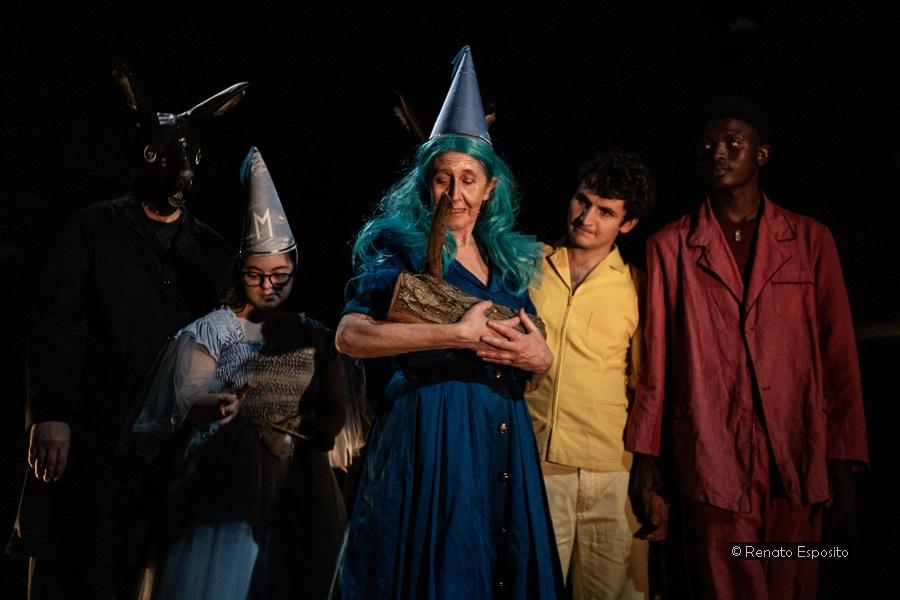
Photo by Renato Esposito.
This post was written by the author in their personal capacity.The opinions expressed in this article are the author’s own and do not reflect the view of The Theatre Times, their staff or collaborators.
This post was written by Emiliia Dementsova.
The views expressed here belong to the author and do not necessarily reflect our views and opinions.