
![21st Sep: Thomas & Friends: All Engines Go (2024), 3 Seasons [TV-Y] (4.2/10)](https://occ-0-1522-1001.1.nflxso.net/dnm/api/v6/0Qzqdxw-HG1AiOKLWWPsFOUDA2E/AAAABb-sbNnqvrZU74W_CTnGdnPWciToWyjwm0i7ZUYfAOUyK8IpKnYE56UYarNS-ZVd3iL1EzFKvl_kg3lXtRKdr80Z2HwFeASWNl3e.jpg?r=7bd "21st Sep: Thomas & Friends: All Engines Go (2024), 3 Seasons [TV-Y] (4.2/10)")



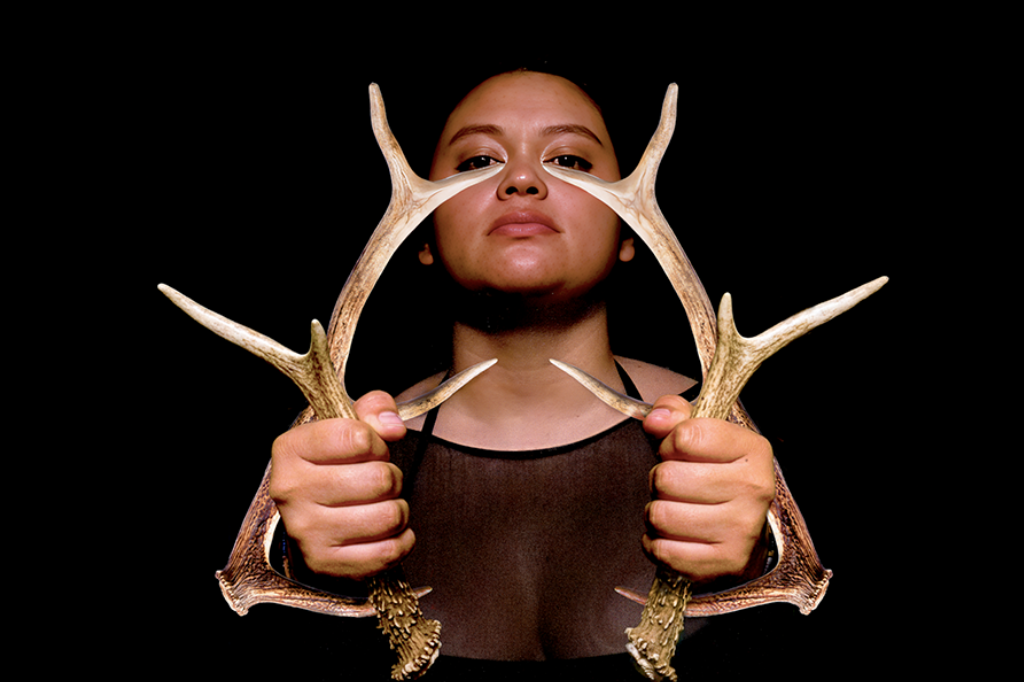
First developed in 2017 as a solo performance with actor Cherish Violet Blood, Tara Beagan’s Deer Woman has travelled internationally, from Australia to the Edinburgh Fringe. Now, it’s making its Spanish-language premiere at Aluna Theatre’s RUTAS Festival, a biennial Toronto showcase of the Americas’ cultural diversity.
Co-directed by Beatriz Pizano and Andy Moro, the production — called Mujer Venado — offers a fresh interpretation of the story of Lila, an Indigenous warrior whose younger sister has been killed. The translation connects the play’s existing themes to the experiences of missing and murdered Indigenous women across the Americas.
Playing at Factory Theatre, it will be presented with English surtitles, in a production starring Lissete VC.
Over email, Intermission connected with Beagan and Moro — who is also the show’s production designer — to discuss the evolution of Mujer Venado / Deer Woman. Their responses have been lightly edited for length and clarity.
Tara, what first drew you to Lila’s story, and what questions did you want her journey to raise about justice and accountability?
Tara Beagan (TB): The first impulse that drew Lila out was a strong desire to create a counterpoint to the works that appropriate our stolen women, girls, and Two Spirit stories: a powerful woman warrior. It also feels important to highlight the fact that violence impacts the perpetrator.
Alongside the play’s heavier themes, has humour been important in telling Lila’s story?
TB: I have a mighty and hilarious mom who attended that so-called “school” of horrors in Kamloops. I have always known that our people are as funny as we are fierce. The women I write must reflect that reality in order to be authentic.
Since Mujer Venado / Deer Woman was first created as a solo performance, it has travelled internationally and taken on new forms, including a filmed version during the pandemic. How has that journey changed the way you see Lila?
Andy Moro (AM): It’s interesting to think of the show as travelling internationally and taking on new forms, because in fact that international travel was how we built this show. Tara and I were first invited by our dear friends, Hone Kouka and Miria George [co-founders of Tawata Productions], to the Kia Mau Festival [in Wellington, New Zealand], where we were at a theatre called BATS — which is where we first got this show on its feet, with the exception of the Weesageechak Festival here in Toronto. That was the beginning of the development that has really just been [from] place to place. Every place we went, the show deepened itself and went further into its own creation process, and it has never stopped growing, to the extent that people actually often thought that it was Cherish’s true life story.
What we’ve really come to understand is that it’s not just that the show has taken on new forms, but that it is an entity unto itself. Sometimes it feels like it’s beyond us, to the point that even I sometimes forget that Lila is a character that Tara created.
TB: It is a rare gift to experience a play as much as we have this one. It helps deepen our understanding of our own creativity.
What does bringing Deer Woman into Spanish allow you to explore differently, particularly in the context of the Americas?
TB: The first I ever heard about any country’s people being stolen was Mexico’s los desaparecidos. At the time, I didn’t know that this was happening in one way or another all over Turtle Island. This feels like a full-circle moment. It is a way for all of our women to carry each other.
How are you thinking about bringing the visual and physical language of Deer Woman into this new production?
AM: The really exciting part of this journey started many years ago when Tara and I were in the lobby of Native Earth Performing Arts, and I remember clearly knowing that we were going to do something together. That had to have been around 10 years ago.
The miraculous part of being here now and working with Bea was that I always knew this was going to be a new exploration of the physical vocabulary; we built this show around the initial performer, Cherish Violet Blood, who is a Blackfoot woman from the Blood Reserve in southern Alberta and has a very strong and identifiable physical language of her own. The physicality is quite condensed and intense — the question of, ‘How does a body perform when it is delivering something directly to a camera?’
I’m strong as a director in terms of shape and structure and design, whereas Bea has the ability to go deep into every one of those choices and turn it into motivation for the actor. And that’s been the excitement of this part of the journey, having that collaboration that just continues to breathe new life.
What does the theatrical experience of Mujer Venado / Deer Woman offer that the story alone cannot?
AM: There is no separation between the theatrical experience of this story and the story itself. It was created, it was delivered to Tara, it made its way onto the page, and we immediately knew it was Cherish Blood — her embodiment of the story is why it exists, and who Lila is; we’re seeing an evolution of that now with Lissete. This theatrical experience is the way we’re communicating that story to a broader audience.
Mujer Venado / Deer Woman runs at Factory Theatre from October 1 to 3. More information is available here.
Aluna Theatre is an Intermission partner. Learn more about Intermission’s partnership model here.

WRITTEN BY
Krystal Abrigo
Krystal is Intermission’s Publishing and Editorial Coordinator. At any given moment, you can probably find her at a concert, or on a long walk somewhere in Toronto (or elsewhere).
LEARN MORE