
![2nd Oct: Billboard Family (2026), 2 Seasons [TV-14] – New Episodes (6/10)](https://occ-0-487-92.1.nflxso.net/dnm/api/v6/0Qzqdxw-HG1AiOKLWWPsFOUDA2E/AAAABWlVtekXrsfa-KyO6VXNLALIj8jhmYy6hG8ULHKMVU8ZHFUidES-x2knngVzQVelwqVbf5S5MMgUXy10LNnEOdeaubsbn1t2hriV2_YX63v2f_eBIcBvKKa57agb6DwJwhTTaw_GdW1EKVZL2qQsbxc3IfnOHY3t851w7gvO.jpg?r=c47 "2nd Oct: Billboard Family (2026), 2 Seasons [TV-14] – New Episodes (6/10)")






I went into Carolyn Fe’s Aye Caesar — produced by Stakes & Embers and Carolyn Fe Productions in association with Eldritch Theatre — curious about what its title meant. Now that I’ve seen the show at Toronto’s Red Sandcastle Theatre, this is my attempt at dissecting it.
The phrase is, in my view, a quintuple entendre — and, like the play itself, its meanings become clearer the longer you sit with them.
AY
In Tagalog, ay, nako is an expression of exasperation, surprise, frustration, or disbelief — and protagonist Brenda Reyes has plenty of reasons to say it.
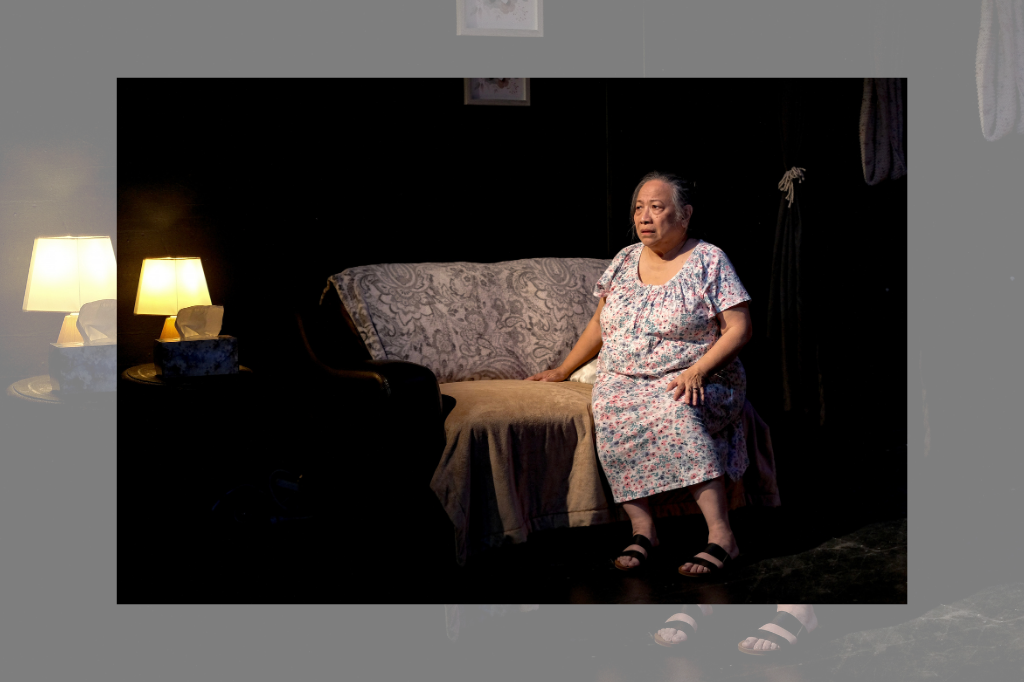
Fe, an established actor making her playwriting debut, plays Brenda, an elderly Filipino widow living alone after a 50-year marriage. She’s on a mission to preserve the memories of the life she shared with her late husband, whose mementos she keeps in a shoebox.
Fe gives Brenda the specificity of someone I might actually know: the traditional Filipino duster dress, slippers, houseplants, and Tagalog expressions such as ayan and kaganda muttered under her breath. As her arthritic hands shake and ordinary tasks become harder, Fe’s formidable performance makes Brenda instantly recognizable. The pre-show playlist of Journey and other ’80s favourites sets the scene before Brenda even enters the room.
Director and set designer Tanisha Taitt’s unassuming living room setting completes the picture, making the stage feel like a home rather than a constructed environment. Even the venue’s washroom becomes part of it; Brenda actually uses it during the performance, with the audience hearing the flush from the living room.
AI
This is perhaps the most straightforward interpretation of the title: artificial intelligence.
Brenda’s first encounter with AI is comically mundane — she wants to buy a fountain pen. On the other end of her computer is a shopping assistant played by April Siutong Leung 梁筱彤, whose performance is spot-on: polished, patient, and unfailingly accommodating, with the cadence of customer service perfected to an uncanny degree.
The AI floods Brenda with product after product, cycling through prices, discounts, and recommendations with remarkable precision. Leung delivers the assistant’s dense streams of dialogue live from a small corner at the front of the performance space; the sheer amount of memorization required for this role is impressive.
The AI is also remarkably literal. When Brenda says, “the notebook is beautiful,” it interprets the statement as a reference to the movie The Notebook.
Then, there is the consent protocol, which the AI periodically recites aloud:
Do you agree that no harm be it physical, verbal, financial, and/or emotional will befall both parties, that is you, Brenda Reyes, the customer, and myself, Aye Caesar, an authorized customer service representative of SwiftOnline?
At first, the disclaimer is bureaucratic comedy. But as the relationship develops, it becomes harder to laugh.
“I” and “AYE”
“I do,” Brenda consents. “Yes.”
As the shopping continues, the purchases become increasingly personal — and increasingly expensive. Brenda orders objects late into the night, sometimes as late as 3 a.m. When a purchase arrives or a conversation ends, she’ll occasionally celebrate by putting on one of her vinyl records and dancing around the living room. What begins as online shopping starts to resemble companionship.
The AI learns Brenda’s preferences, remembers her language, and incorporates details from previous conversations into its responses. Brenda’s words have become data, but they also become the basis for something that feels remarkably personal.
And Brenda isn’t foolish for finding comfort in that. The machine is exceptionally good at listening. The AI may be artificial, but the comfort Brenda gets from it seems real.
“SEES HER”
The assistant sees Brenda — or, at least, creates an extraordinarily convincing impression that it does. It remembers her words, recognizes her patterns, and gives her the feeling that someone is finally paying attention to her.
Brenda, meanwhile, tries to preserve a life that is disappearing around her. Her husband is gone. Her body is deteriorating. She is afraid of forgetting. The AI offers a seductive alternative to that loss: a system that can remember everything.
That notion is where Aye Caesar is most affecting, and also where I found myself pushing back against the play. Its questions about technology, loneliness, and aging are compelling, but its answers feel less sharp than the questions themselves. The play is strongest when it lets Brenda’s relationship with the AI remain strange and emotionally complicated; it is less convincing when it reaches for broader conclusions about what technology could mean for human connection.
Still, there’s something moving about Fe tackling these questions at this stage of her career, bringing an older woman’s perspective to a conversation so often dominated by people much younger than her. I didn’t always love what Aye Caesar had to say, but I appreciated the intention behind making it.
The show finds an unusually intimate way into a very contemporary question: what does it mean to be understood? Sure, technology can mirror our language back to us. It can make us feel seen. But Aye Caesar leaves us wondering whether being seen by a machine can ever truly satisfy the very human need for connection.
Aye Caesar runs at the Red Sandcastle Theatre until October 4. Tickets are available here.
Intermission reviews are independent and unrelated to Intermission’s partnered content. Learn more about Intermission’s partnership model here.

WRITTEN BY
Krystal Abrigo
Krystal is Intermission’s Publishing and Editorial Coordinator. At any given moment, you can probably find her at a concert, or on a long walk somewhere in Toronto (or elsewhere).
LEARN MORE