








During the pre-release weekend for Magic: The Gathering’s Marvel Super Heroes, I walked into my local game store in the late morning to get a few packs for the new set. It was a ghost town during the store’s open play hours (prerelease events didn’t start until the afternoon). Off in one corner, a couple played a random board game. The rest of the store’s tables sat empty.
While I rattled off which packs I wanted (one collector booster and four play boosters), I heard a pair of small feet rush up the stairs behind me. A young girl, probably 10 years old or so, came in with her mother close behind, excitedly bouncing around. She high-fived the life-sized statue of fiery Planeswalker Chandra Nalaar. As I started ripping my packs at an empty table, I noticed that they too were buying Marvel products — both the mother and girl. I couldn’t help but smile.
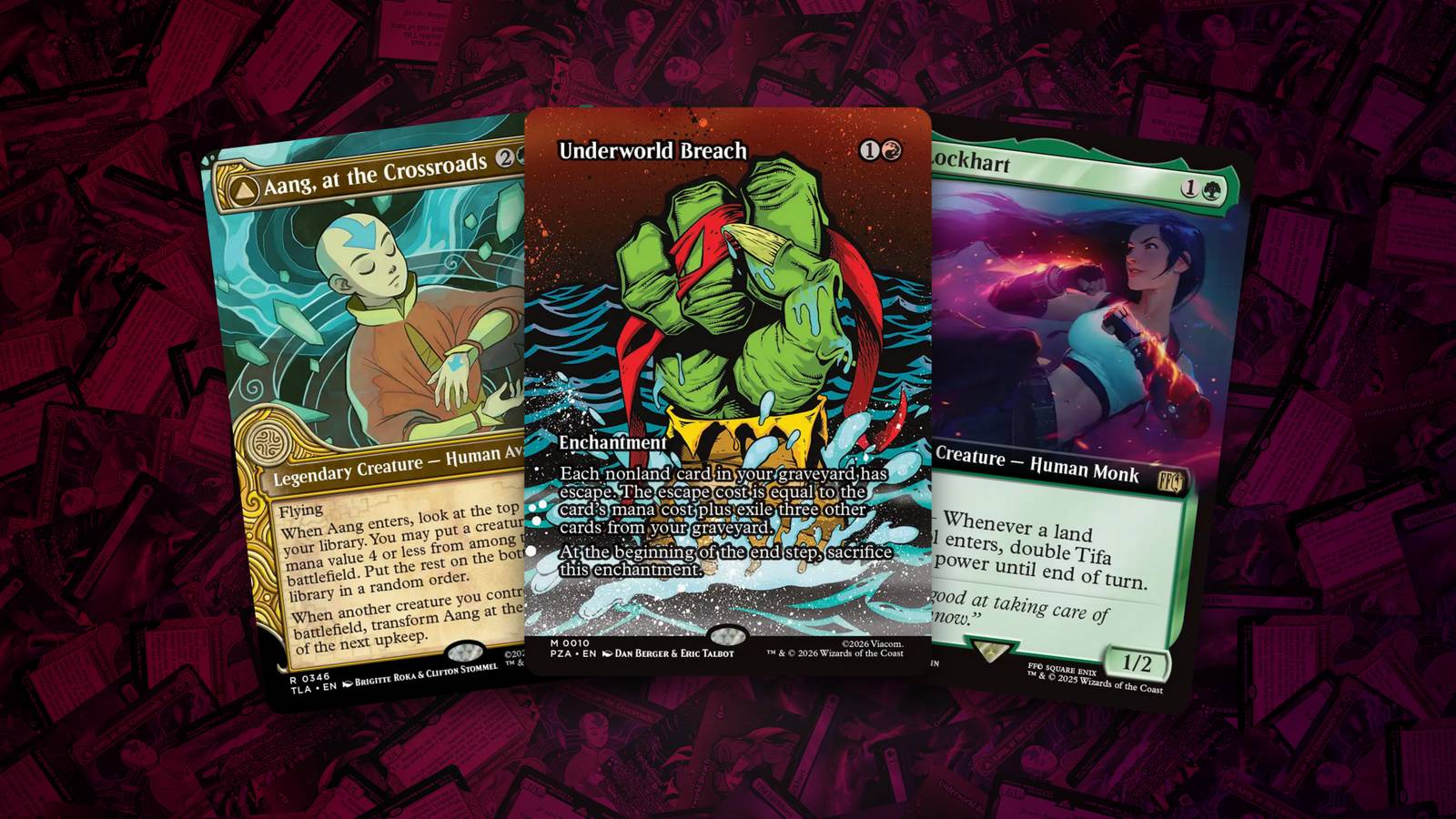
Say what you will about how Universes Beyond dilutes the core authenticity of Magic as a standalone game, but moments like this — of a young new player brimming with excitement — warm my heart. Universes Beyond gets a lot of flak from the wider Magic community, and it often feels like most of the people that dislike it are older players who want their game to stay the same. It’s a kind of gatekeeping where people say things like, “My hobby is being corrupted by an endless barrage of crossovers that are making it feel like Fortnite.”
And yet, sets like Avatar: The Last Airbender, Teenage Mutant Ninja Turtles, and Marvel Super Heroes attract new audiences in droves. What’s better for the health of any trading card game than new players entering the hobby and spending money?
As the oldest trading card game — and eclipsed only by the Pokémon TCG in terms of volume sold — Magic has a legacy going back more than 30 years, and plenty of its own in-universe lore. I was in kindergarten when the game first launched in 1993, and didn’t start playing until sometime around 2000. I have a bunch of old cards from Urza’s Block and even more from the Odyssey Block, along with Classic Sixth and Seventh Edition. I remember reading Magic novels like The Brothers’ War and Chainer’s Torment.
Falling in love with certain characters and then finding those same characters in a booster pack makes for one of the best card-collecting experiences possible. You get hyped. You build an entire deck around that character. Even if the deck itself is not that great, the journey of building it is the most entertaining part — at least for me. But these moments have always been few and far between for Magic, a game that sometimes seems to bounce around its multiverse in chaotic ways.
Pokémon TCG is bigger not because it’s a better game (I would argue it’s a lot worse), but because it understands that players and collectors alike crave that experience, of having a strong emotional attachment to a character and then finding them on a little piece of cardboard after gambling on the purchase of a booster pack. The most expensive Pokémon cards are often the Illustrated Rares depicting fan-favorite characters with beautiful art. A card might be borderline useless in competitive play.
But if it’s got a pretty Pikachu on it, somebody is going to pay thousands for it. Even today, the price of most Magic cards is typically determined by their usefulness in a deck, doubly so if it’s one of the special art variants. The lore and characters feel secondary, whereas in other TCGs, the characters and our relationships with them are the entire point.
I drifted away from Magic in high school, and then back briefly during college when I found some friends that played. I lapsed again for years before finding a new pod circa 2016. While we kept regular play sessions going via Magic Arena through the pandemic for some time, even that faded. I was only vaguely aware when Universes Beyond began with a Walking Dead crossover in October 2020. Then, 2023’s Lord of the Rings crossover got me very close to diving back in, but I resisted. Everything changed for me in 2025 with Final Fantasy.
If there are only two fandoms that defined my most formative years, they’re Magic: The Gathering and Final Fantasy. I discovered both within the same window of time. To see them collide pretty much broke my brain and transformed me from a more casual on-again, off-again Magic player into a diehard. I hunted for the Final Fantasy 7-themed Limit Break Commander deck for weeks before snagging one from my local Best Buy at MSRP. When I texted my friend a picture — the same friend who introduced me to Magic a quarter-century prior — he replied, “The best video game ever and the best card game ever
Final Fantasy might forever remain Magic’s most successful set of all time, having sold $200 million in a single day. Were I to wager a guess as to why, I’d say it’s because many of the people who went all-in were just like me: longtime Magic fans who drifted away from the game as they grew up, went to college, entered the job market, and had kids. That double dose of nostalgia at just the perfect time felt like lightning in a bottle. Perhaps best of all, the set was designed by a bunch of like-minded nerds who also have a great deal of love for the games. Different cards representing the same Final Fantasy heroes each represents a snapshot of who they were at different points in their journey — and the mechanics accurately reflect that.

Zack Fair from FF7 sacrifices himself to pass on his strength and weapon to another. Yuna from Final Fantasy 10 drags summons out of the graveyard and empowers them with buffs. Tidus, Blitzball Star depicts the FF10 protagonist as a charming sports star who cares about artifacts and disables defenders with his special trick shot. Universes Beyond is able to tell compelling stories through the mechanics and lore of a card in a way that normal Magic cards can’t do quite as well.
Not every Universes Beyond set has that level of thematic richness. Each one has felt pretty flavorful, to be sure, but they often rely on fans coming in with a lot of passion and lore knowledge to really “get it.” I love the Avatar: The Last Airbender series — now the second best-selling Magic set ever, by the way — and really enjoy what Wizards of the Coast did with some of the cards. But overall, the set feels mechanically dense in a way that turns me off ever so slightly. As a casual fan of Teenage Mutant Ninja Turtles, a lot of the more deep-cut references from that set went over my head. And yet, I know at least a few TMNT superfans who were positively delighted to see cards like Tainted Treats or Path to Exile, even if they had never played Magic before.
Having opened dozens of Marvel Super Heroes packs already, I didn’t feel quite the same rush I did while cracking Final Fantasy. That’s okay. The Marvel Cinematic Universe was born while I was in college. It’s not my childhood. For someone else, though, it absolutely is. Somewhere in those boosters is the first Commander deck that some kid will ever build around Iron Man, Thor, or Captain America. Somewhere is another kid walking into a game store for the first time because they already love the characters waiting inside the packs.
That’s the part of the Universes Beyond debate I think longtime Magic players sometimes lose sight of. We tend to ask whether Spider-Man belongs in Magic. Wizards of the Coast is asking a different question: how do we get someone who loves Spider-Man to discover Magic?

Every healthy hobby needs new blood. Magic has survived for more than three decades because it keeps reinventing itself, whether that meant introducing Planeswalkers, Commander, serialized cards, and now Universes Beyond. Some of those experiments work better than others. Some sets resonate more deeply than others. But I’d rather play a version of Magic that’s growing than one that’s so concerned with protecting its purity that it slowly fades into irrelevance.
Maybe, 20 years from now, that little girl I saw high-fiving Chandra will be the one introducing someone else to Magic. If Universes Beyond helped create that moment, then I think it’s done exactly what it was supposed to do. Magic doesn’t belong to those of us who started playing in 1995, 2000, or even 2010. We don’t own it simply because we’ve been here longer. Every new player deserves the same chance to fall in love with the game that we had — and if it takes Cloud Strife, Aang, or Spider-Man to get them through the door, I can’t think of a better trade.

Magic boss Mark Rosewater finally admits some players don’t like Universes Beyond
“There are still players that don’t like that we’re doing Universes Beyond, although that sentiment continually shrinks over time”