![1st Aug: WWE SummerSlam (2026), 39 Seasons [TV-14] – New Episodes (6.85/10)](https://occ-0-586-590.1.nflxso.net/dnm/api/v6/0Qzqdxw-HG1AiOKLWWPsFOUDA2E/AAAABQQ_EB8G0bFkGutPnlPTi-lYdXP3siHn_iB483XwW8RjdzYCpReJJisv9HA7ZoIqLCoaalfztCNRBGZbDYXmZvWXvQf22kfpIVvT6AmhECDkYnXt9mY0A8lTzTJnuyPWu2Rs_P_DU9CaNFPIA30mzOlOXLebHFkKwKzPKkp-4YxN0p7AkLZNuiQG4-s53wRkOdWyUP5k3TGupG67NnEyTxEHPOKt32zVSTI-wtuX-Dup9iQmTYH2XdSANYhMCbxsV4wJt8fBQw1YgfwzYDltQkNLWZW9MLm35dDSIWz0t8GmVtcSZTIXNlw_S4WEuI7Tzb-OVyApt5ruBvIHnwA-AFc.jpg?r=678 "1st Aug: WWE SummerSlam (2026), 39 Seasons [TV-14] – New Episodes (6.85/10)")



![2nd Aug: Mikael: Pemburu Dua Alam (2025), 1hr 59m [TV-MA] (6/10)](https://occ-0-858-92.1.nflxso.net/dnm/api/v6/0Qzqdxw-HG1AiOKLWWPsFOUDA2E/AAAABWem_q-0IECbhfLQlR6wQFIvsQYeZF1f4M3Jtn0kzN6WJwzmxuR1bCe-KJ9IFr5m0xt8NgNzHqzW9K9VXdwadUG5GKFQhcupMbGNo3TtLJweTg0KqCw74ORWkTTY4YExNEIVpiI0frCIP6Y0yhTdlgdubvs_s6DWI-Fs4FbBeBg0Tg.jpg?r=73e "2nd Aug: Mikael: Pemburu Dua Alam (2025), 1hr 59m [TV-MA] (6/10)")


Thanks to the legendary composer John Williams, Star Wars has an extremely distinctive musical signature. More than that, for generations of moviegoers, the Star Wars sound defines movie music. Brassy orchestral fanfares; sweeping, romantic strings; twinkling glissandos on a harp or celeste, evoking the starry depth of the cosmos. Williams scored all nine Skywalker saga films, and his sound has been carefully imitated by other composers working on Star Wars projects big and small.
Nothing could touch Williams — until 2019. Star Wars was making its debut in a new medium: live-action episodic television. Writer-director Jon Favreau envisioned The Mandalorian as a lone-gunslinger space Western about an armored warrior and an alien child getting into scrapes as they journeyed through the galaxy. He was influenced by samurai comics and old-school TV potboilers — exactly the kind of influences George Lucas had drawn on for the original movie, but that had been eclipsed by Star Wars’ own increasingly self-referential mythology.
Favreau needed music that would reach back to these influences, past everything Lucas and Williams had codified into pop culture. It also needed to recast Star Wars on a more intimate scale and bear repetition week after week, like the catchy TV themes of the 1960s. His inspired choice for this task was Göransson, the young Swedish composer then working on fusing Marvel’s own musical signature with African folk music for the Black Panther soundtrack. (By the time The Mandalorian aired, he’d have won an Oscar for it.)
Göransson answered the challenge with a masterpiece of musical storytelling, mostly performed by himself on an unlikely assemblage of instruments in his studio. A bass recorder trills out a breathy, two-note motif: it sounds ancient and tribal, like the Mandalorian society the show’s hero belongs to, and also innocent and childish. Ominous, distorted synth swells build tension. But then there’s a plucked guitar — when did you ever hear guitar in a Star Wars score? — and a steady, trotting drumbeat, like the hoofbeats of a horse, as implacable as Din Djarin himself.
Eventually the strings sweep in and the song explodes into a triumphant, Williams-style fanfare, announcing The Mandalorian‘s Star Warsness. But this flourish has been built on a bed of radically different sonic textures that the theme returns to by its end. It’s an amazing musical journey to take in a little over three minutes; I recommend delving into this music theory analysis of it by Levi McClain. (Göransson repeated the trick with a similarly great theme for The Book of Boba Fett, which unfortunately the show did not live up to.)
“The Mandalorian” is as reminiscent of the extraordinarily innovative spaghetti Western soundtracks of Ennio Morricone as it is of Williams — perhaps even more so. Göransson might as well be quoting the walking drumbeat and primitive flute trills of Morricone’s indelible theme for The Good, the Bad and the Ugly. Like Morricone, who wrote pop songs, experimental jazz-rock, and concertos as well as film scores, Göransson is a musical polyglot who’s at his best mashing styles together. (In an interview with Vanity Fair about his work on The Mandalorian, Göransson admitted his debt to Morricone, but interestingly said he had also studied Williams’ pre-Star Wars work to try to get into the mind of the composer before he invented his trademark sound.)
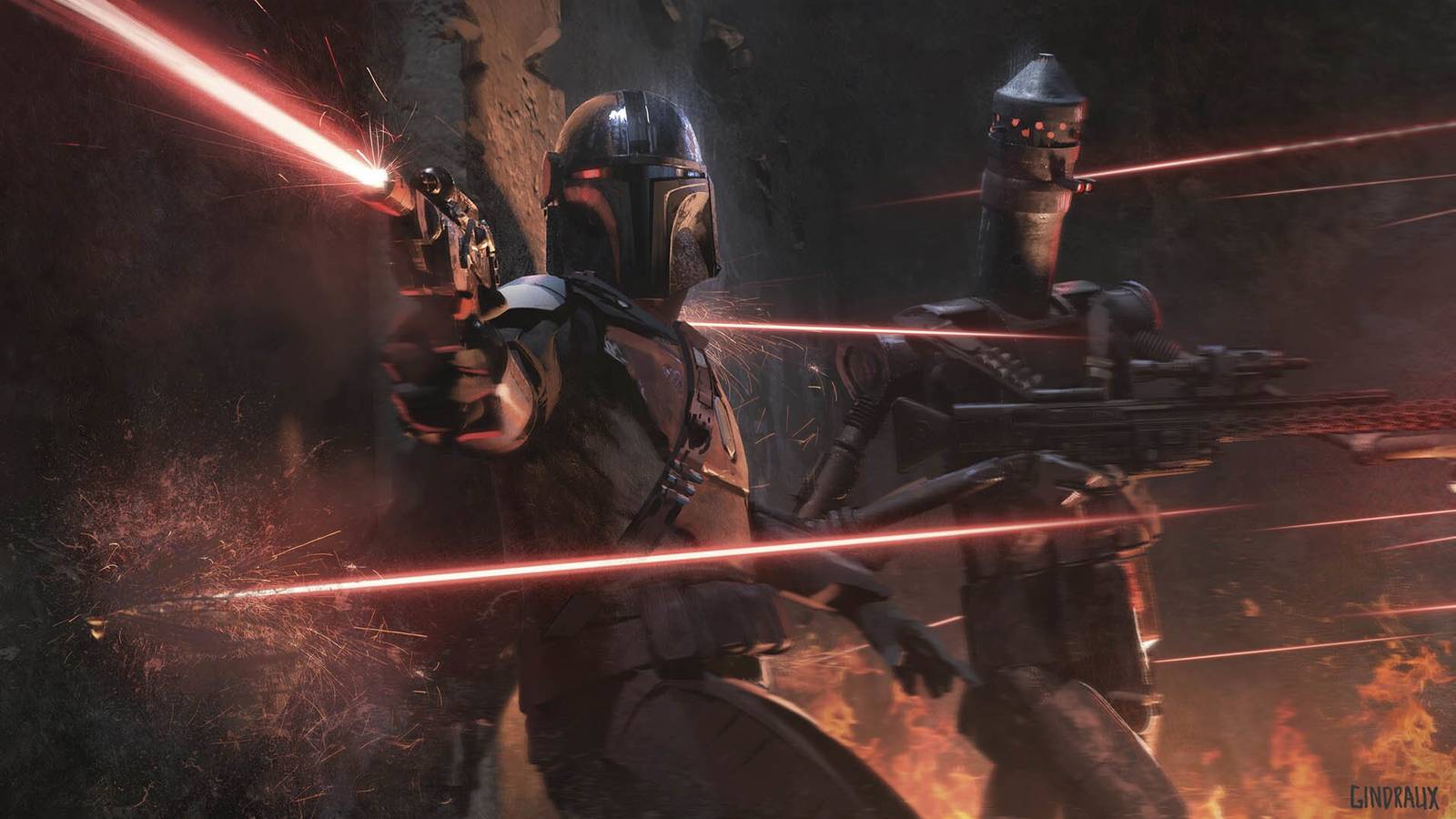
Music is a part of the fabric of Star Wars, just as inherent as its iconic sound effects and production design. The laid-back Göransson was incredibly bold in the ways he broke with Williams’ musical tradition. His reward was to write the first piece of music to pierce through that tradition and create a new musical iconography Star Wars that could stand alongside what Williams had built. The benefit for The Mandalorian, as it set out to establish an identity for Star Wars on TV, was immense, and it was reinforced by Favreau’s inspired decision to run the theme over the end credits of the show, accompanied by pulpy concept art that recapped the week’s adventure.
I don’t make a habit of listening to film scores before I’ve seen the movie — I consider it a spoiler of sorts. But this week, I haven’t been able to resist previewing Göransson’s score for The Mandalorian and Grogu, conjuring imagined movie scenes in my mind the way I did with the vinyl copy of the Empire Strikes Back soundtrack I borrowed from the library as a kid. A gypsy-jazz version of the Mandalorian theme made me laugh with delight; another new world for Star Wars (though arguably not so far from Williams’ famous “Cantina Band”). For me, Göransson is as much the star of this movie as Pedro Pascal or Baby Yoda. Whether the movie is any good or not is almost beside the point, because in three minutes and 18 seconds, Göransson invented a new musical frame for my imagination to play in.