






A good anime anthology can stitch together the most disparate ideas into a cohesive whole. Take Robot Carnival (1987), which features segments storyboarded and directed by the likes of Katsuhiro Otomo (Akira), Kōji Morimoto (Kiki’s Delivery Service), and Hiroyuki Kitazume (Mobile Suit Zeta Gundam). These stories, while exploring different themes, are connected by surreal imagery that portrays our hyper-reliance on technology and its consequences. While some stories prioritize satire and drama, others explore romance and heartbreak within a highly digitized world.
Eight years after Robot Carnival, Otomo was involved in yet another seminal anthology that uses three wonderful science fiction stories to dig deeper into our fraught relationship with technology. This 1995 film was Memories, whose three shorts — Magnetic Rose, Stink Bomb, and Cannon Fodder — highlight the talents of Morimoto (who served as an animator on Akira), Tensai Okamura (who did storyboards for Neon Genesis Evangelion and My Hero Academia), and the late, great Satoshi Kon (Perfect Blue, Paprika). Memories, which is now available to stream on Prime Video, is an unmissable gem for anyone who loves classic anime.
Both Stink Bomb and Cannon Fodder are based on scripts by Otomo but explore very different themes. The Okamura-directed Stink Bomb is about lab technician Nobuo Tanaka, who accidentally swallows experimental pills during a flu-induced haze. Reacting to the flu shot in his system, the experimental pills cause him to turn into a literal stink bomb that kills several people in his vicinity. This is obviously meant to be chaotic and satirical, but some of this short’s best moments can be found in the unexplored isolation that Nobuo experiences after becoming a weapon of mass destruction.
In contrast, the Otomo-helmed Cannon Fodder centers on a walled city that has to perpetually maintain and fire massive cannonballs to survive war. The primary draw of this short lies in the fact that it creates the illusion of one continuous shot. As the city dwellers mindlessly load their cannons, the crater-ridden wasteland remains covered in thick smoke, making it impossible to see the enemy (Are they even there?). This one’s also satirical in tone, which Otomo uses to make scathing commentary on the exploitation of the working class and the horrors of manufactured conflict. The single continuous shot lends these ideas striking beauty, allowing the more avant-garde visual elements of the story to shine.
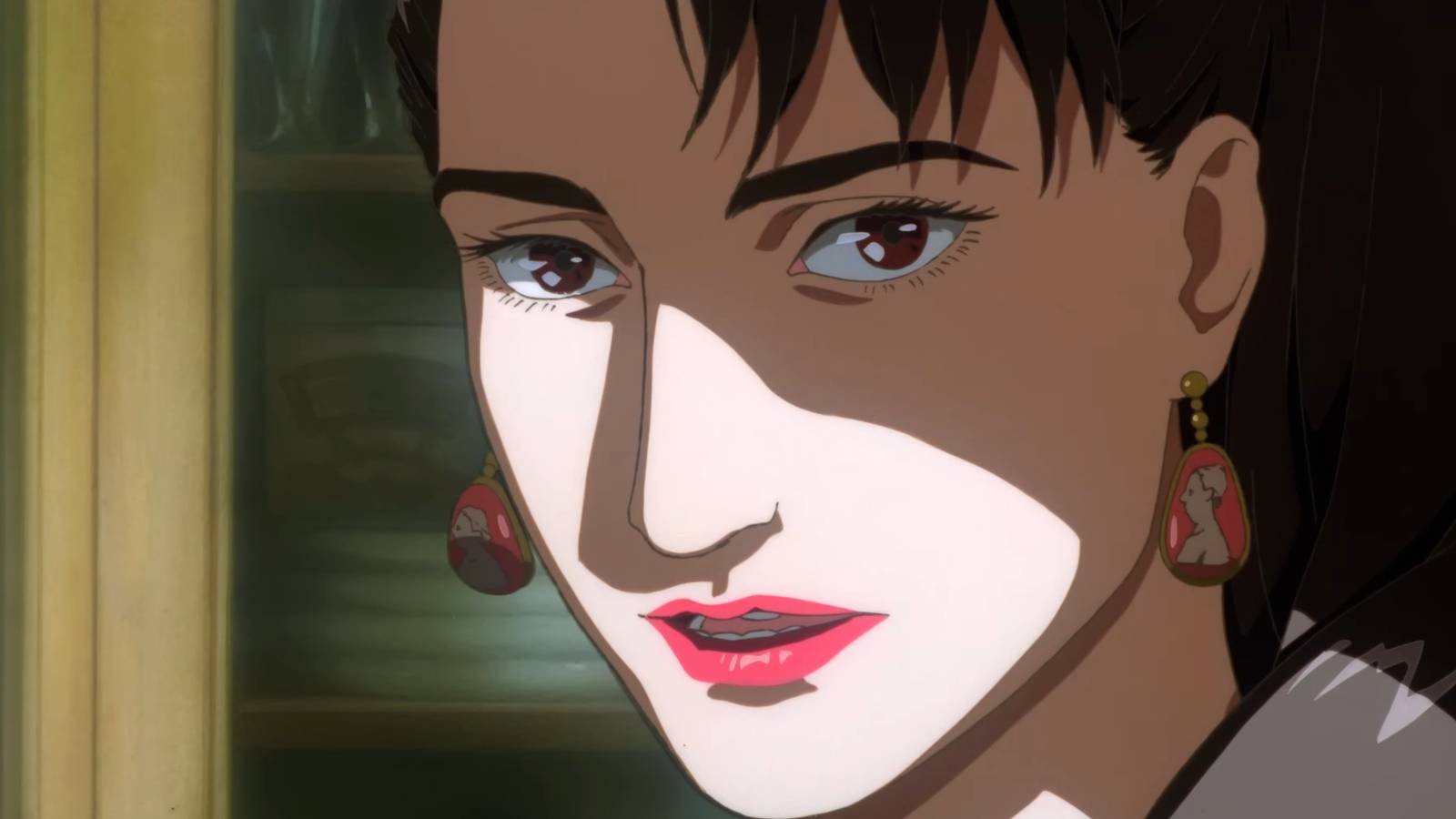
While these two stories are intriguing, it is Magnetic Rose — based on Kon’s screenplay and Otomo’s story — that elevates Memories to utter brilliance. A deep space freighter named The Corona arrives at a giant space station after receiving a distress signal, and two engineers named Heintz and Miguel enter to investigate. Inside, they find a decadent mansion in various stages of decay, in which the holograms of a mysterious opera singer named Eva Friedel guide their path.
Magnetic Rose gradually reveals itself to be a lesson about the dangers of obsessive memory, where desire for the past can turn memory into a prison. When we want something to the point of desperation, reality and illusion can often blur and make us lose sight of the present. Morimoto uses stunning animation and sound design to create a uniquely desolate feeling, which seeps into Heintz and Miguel’s disorienting journey.


Although Otomo’s story isn’t groundbreaking by any means, Magnetic Rose uses blood-weeping gargoyles and elegant robot statues to tell a bittersweet story that feels suspended in time. These inspired flourishes (like the sequence in which a lifelike memory melts into desiccated cobwebs) highlight how the Kon-Otomo-Morimoto team-up can enliven the most clichéd science fiction stories.
Memories is often overlooked, as those involved with it (like Kon and Otomo) are best known for works that have revolutionized animation as a medium. While these shorts pale in comparison to their most prolific creations, they fit rather well as a trio of varied tales about human obsession, memory, and technology.
Memories is available to stream on Prime Video.

![23rd Sep: Habeas Corpus (2026), 8 Episodes [TV-MA] (6/10)](https://occ-0-748-1001.1.nflxso.net/dnm/api/v6/0Qzqdxw-HG1AiOKLWWPsFOUDA2E/AAAABQGc6K5ui2s9TyULu0D6Rw9y0tME-tCK8AL_GTFaAuv9AorF0z1ZpD2pZ3FvFhAIyX44O-nZhZ2Ah_5Q_jpdgofOk72Cmrmzq6FGj8VlSNUPY7eJxYQxvhttwLui4ULcmkrd02Pw0muEbtJSM0R_mKXRxks6Esw6k9DSmNH1hwmF8w.jpg?r=79f "23rd Sep: Habeas Corpus (2026), 8 Episodes [TV-MA] (6/10)")