









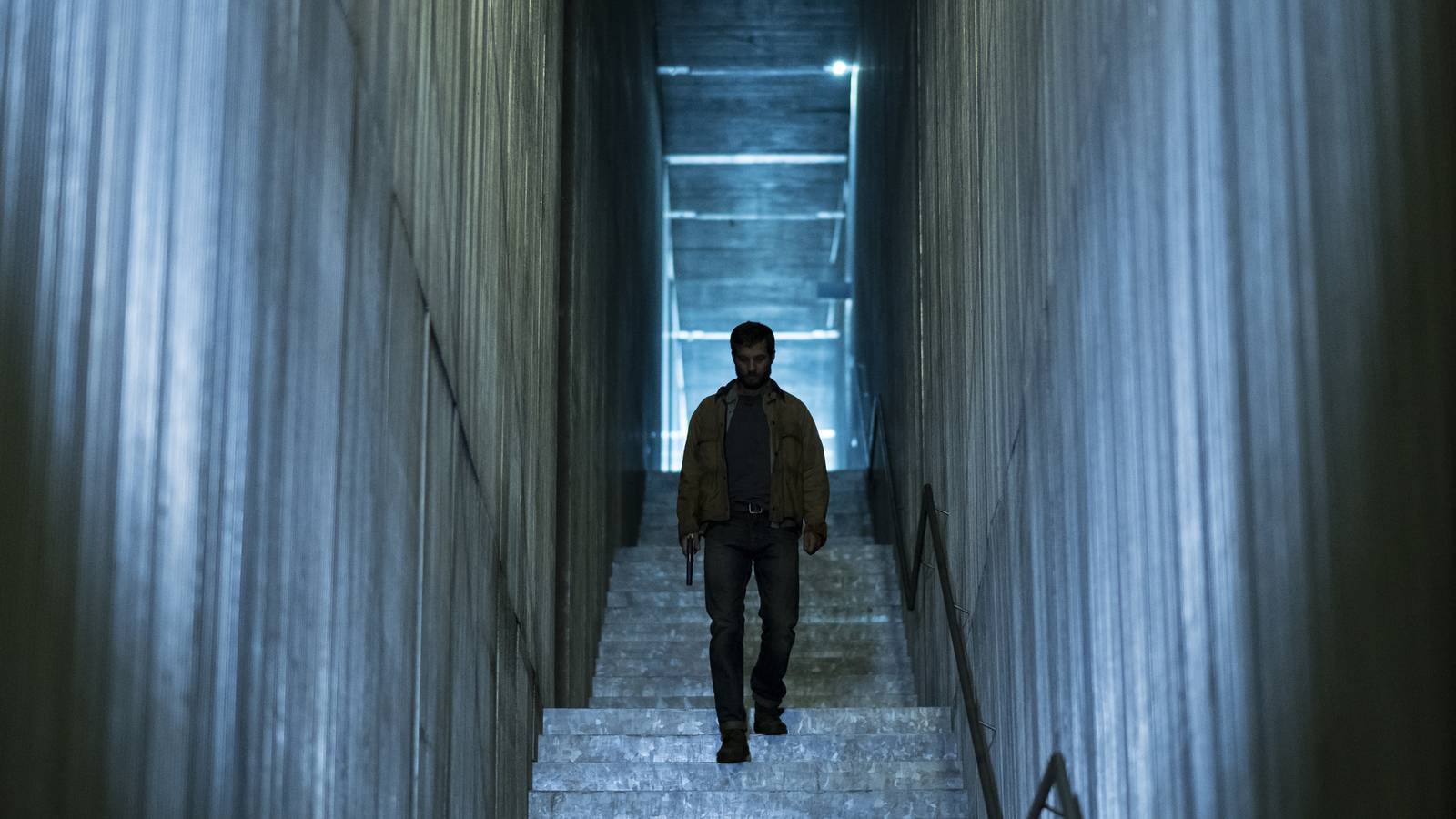
In 2026, all the hallmarks of the cyberpunk genre have come to feel like a warning that no one listened to. Someone’s been treating Shadowrun like it’s their personal vision board: unrestrained billionaires, corporate dominance, dark money, technocratic incompetence with far-ranging consequences. That’s a well-worn observation at this point, but that doesn’t mean it isn’t true.
That makes 2018’s Upgrade an odd watch. Due to a combination of careful satire and practical effects, it doesn’t feel like it’s aged at all. It could’ve been made last year. It could’ve been made yesterday. There’s a chance it was produced by time travelers.
Upgrade is the kind of movie that, in an earlier period, would’ve built a reputation and thrived off of the rental market and late-night cable. You’d have seen it playing on TBS every so often and always stopped to watch it for a few minutes, at least up to the end of the next big fight scene. The next time you scroll past it on your Netflix window, it’s worth checking it out.
In 2046, a car mechanic named Grey (Logan Marshall-Green) and his wife Asha (Melanie Vallejo) are attacked by four strangers. Asha is killed, while Grey is shot through the neck and paralyzed.
Subsequently, Grey’s client, tech billionaire Eron Keen (Harrison Gilbertson), offers to install an experimental chip in Grey’s spine. The chip, STEM, can manage a human’s motor functions, which restores Grey’s mobility.
What Eron doesn’t seem to know is that STEM is capable of independent thought. As soon as they’re alone, it offers Grey the chance to get revenge by seeking out the men who killed his wife. Even better/worse, STEM has the ability to take direct control of Grey’s body, which suddenly gives him superhuman combat ability.
The first big takeaway from Upgrade is its fight choreography, which does an incredible job of making STEM-as-Grey look completely inhuman. Marshall-Green carries most of the mail here, with jerky, stiff movements that come off like he’s been badly animated. STEM is brutal in ways that a human couldn’t be, without the need to wind up, feint, or twitch.
That’s emphasized by some strange camera work, which spins around Grey in the middle of fights in dizzying, unpredictable ways. According to director Leigh Whannel, this was achieved by strapping an iPhone onto Marshall-Green and having the camera lock onto it to automatically track his movements. It’s not simply another example of the “shakycam” trend that was in every post-Bourne Identity action movie for a while, but instead, it spins and weaves around Grey to emphasize the near-alien nature of his motions. All the while, Marshall-Green puts in an impressive performance as someone who is suddenly a passenger in his own body as it commits atrocities. You’ve never seen someone who’s so unhappy to be winning a fight.

That ties into the second big takeaway here, which is Upgrade’s love of body horror. Whannell is the co-creator and writer of the Saw franchise, and that love for gruesome onscreen violence comes into full play every time STEM gets set loose against another pack of unwitting humans. Nobody in Upgrade gets away with a simple sock on the jaw when they could be disfigured, decapitated, or blasted across a room.
That leads to the real secret of Upgrade. Without spoiling anything, it’s another entry in the same tradition as the original Terminator, where horror gets dressed up in science fiction’s clothes. Upgrade initially comes off almost as a dark superhero story, like a more tech-industry take on The Crow, but the further along it goes, the more Whannell’s horror chops come into the foreground.
One final, important note: go into Upgrade as cold as you can. We’ve focused on its choreography and visuals so far, but its final act is a must-see, and it’s important to remain unspoiled. Go in blind and enjoy the ride. This trip is worth the 100 minutes.