



Vancouver police have described how controlling the air around World Cup sites during the tournament became a key part of their mission, with officers using drones to manage crowds while dozens of civilian drones were “jammed” and brought down amid concerns about “weaponization” or other hazards.
Police piloted more than 800 drone deployments during Vancouver’s World Cup hosting run from June 11 to July 13, a news conference was told Monday.
Deputy Chief Constable Don Chapman said police drones were used for crowd management and to allow officers to “adapt on the fly” to avoid crushing events.
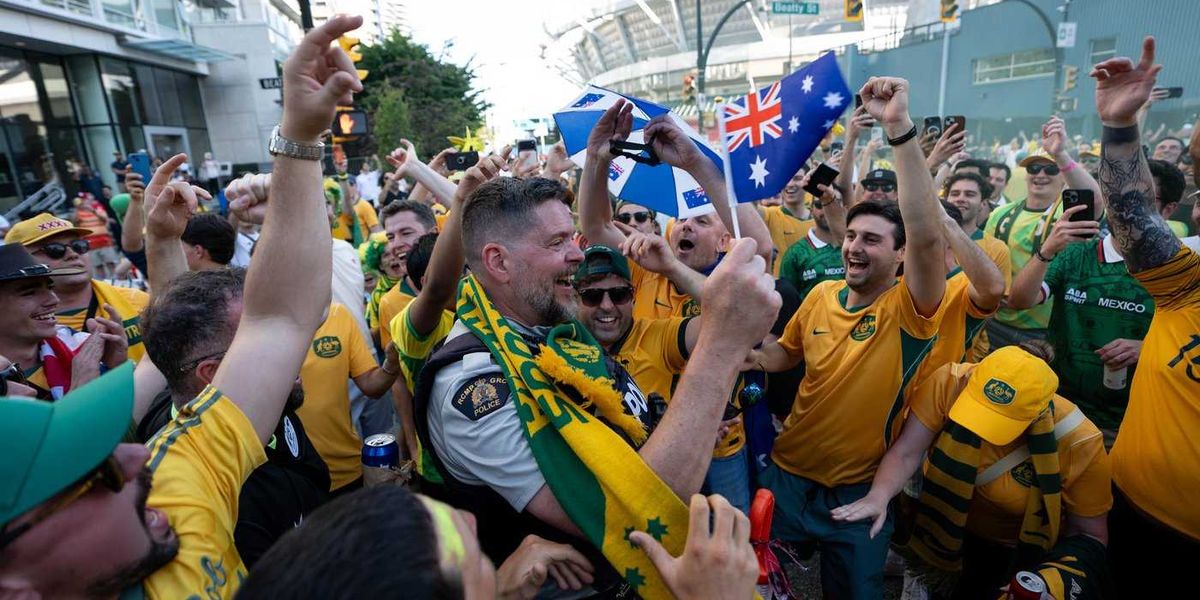
He noted there were 15 fan marches during the city’s hosting run, which included a total of seven games played at BC Place. Each match saw a sold-out crowd of 52,497 spectators, which meant crowd safety entering and exiting the stadium was a priority.
“There are different levers that we could pull or our commanders on the ground could actually pull, but in order to get that bird’s-eye perspective of what was transpired, our drone program was invaluable for that,” Chapman told a news conference Monday.
Chapman spoke of the potential risks that became apparent at the first match, between Australia and Turkey on June 11. Police “thought we had it right on day one, and we realized we didn’t,” he said, describing an incident when the way police public safety officers were deployed on the ground on the so-called “last mile” to the stadium was causing congestion.
“We really saw that crowd stack up at the turnstiles going into BC Place … we were like, well, we can’t have this anymore, we’re going to need to make a change here,” he said.
“And so we made a small operational change, basically the physical deployment of those officers in the last mile area that filtered the crowd in a much more effective manner and created a smoother entrance into the BC Place area.”
Most of the drone deployments on game days were over the last mile walk towards BC Place.
There were 745 unauthorized drone flights noted on Vancouver’s seven match days, the department said in a news release.
It said 45 operators were identified and told to bring down their drones, while another 40 drones were remotely jammed and removed from the sky in restricted zones, including around BC Place and over the Fan Festival in East Vancouver, during the same period.
“Airspace can become very congested and the last thing we want to do is have drones colliding with each other and or drones collided with manned aircraft,” Chapman said, noting the water airport in Vancouver Harbour.
“We also had to keep in the back of our mind that unfortunately you look across the world and you see drones and the weaponization of drones and how that might transpire.”
He said that in some situations, police contacted drone operators and told them to land their craft, while in others, jamming technology was used to send the drone back to its operator or into the hands of police.
Chapman said airspace is a federal responsibility, “hence why we brought in some of our partners with the RCMP to do that.”
Overall, Chapman hailed the World Cup a policing success.
The department said in a statement that as many as 1,300 officers were out on each of the seven matches with support from RCMP, Metro Vancouver Transit Police, and officers from the Delta, Calgary and Edmonton police services.
The department said there were just three Criminal Code arrests in the fan festival out of about 500,000 visitors, which Chapman said spoke to the positive fan behaviour during the games.
When asked if there were any major surprises, he cited the years of planning and responded, “I want to say almost proudly, no.”
The department said 16 foreign nationals were arrested across all FIFA venues, including the stadium, the fan fest and the Granville entertainment district, for either breaching the peace or being drunk in a public place.
While there were 36 Criminal Code arrests in the Granville entertainment district, Supt. Jeff Neuman said it was “largely peaceful.”
Neuman highlighted the years of planning that went into the event, but noted more uncertainty came once the group stage ended. Vancouver hosted five group stage matches and two knockout games.
“It was when we got to the winner-playoff series that it just gave us less time to plan for our intelligence for the teams that did come here,” he told the conference.
But Neuman said VPD’s experience working with protest groups helped them prepare for potential “soccer hooliganism.”
Chapman said the department was now in a “demobilization phase” as officers return to regular duties.
And when asked about updates on policing costs, he deferred those questions to the city and province, saying it is “very complex” due to cost-sharing agreements between various levels of government.
The provincial government said in April that the federal government would provide $100 million to help pay B.C.’s World Cup security costs.
This report by The Canadian Press was first published July 20, 2026.
By Brieanna Charlebois | Copyright 2026, The Canadian Press. All rights reserved.