




![House of the Dragon season 3 episode 6 ending explained: Is [spoilers] dead?](https://static0.polygonimages.com/wordpress/wp-content/uploads/2026/07/emma-d-arcy-_1.jpg?w=1600&h=900&fit=crop "House of the Dragon season 3 episode 6 ending explained: Is [spoilers] dead?")





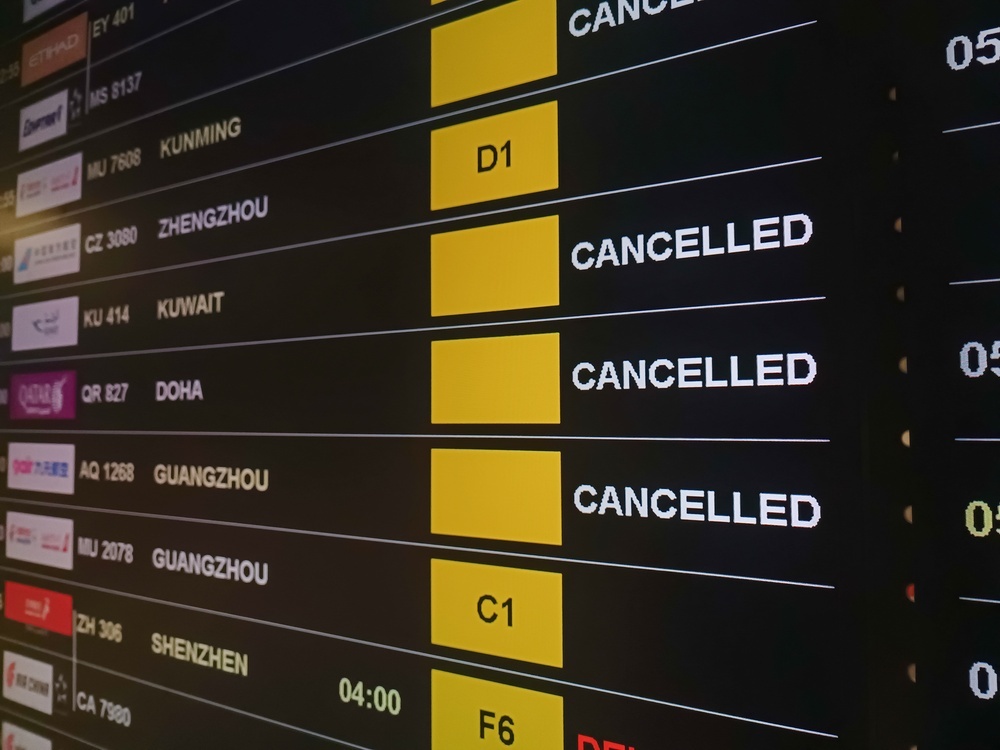
Whether it’s due to full-blown airspace closures or the knock-on effect of limited jet fuel supplies, the travel industry has endured significant disruption over the last couple of months, and the end is not yet in sight.
According to data from aviation analysts Cirium, at least 13,000 flights – which is just 2 percent of global aviation capacity, but represents around 2 million seats – have been slashed in the month of May. With the summer season fast approaching, travellers are left wondering how the next couple of months will pan out.
Below is all the latest information on which flights are most likely to be affected by cancellations, how worried you should really be about jet fuel shortages, and what to do if your travel plans are affected.
Recommended: How to finally go flight-free in 2026: A practical, actionable guide.
Which flight routes are affected by the war in Iran?
For UK travellers specifically, paths to Frankfurt and Munich (both slashed because of mass cancellations by German operator Lufthansa) have been heavily affected, with 4,000 passengers facing scheduling changes to the latter alone.
Miami, followed by Abu Dhabi and Amman in Jordan, Abuja, and then Edinburgh and Guernsey, are the destinations also facing significant cancellations.
Routes most likely to be affected generally tend to either be seasonal and low-demand regional flights or long-haul journeys that require more jet fuel to operate. Paths near the conflict zone or those set to travel through airspace threatened with closure are also more likely to be cancelled.
What’s the latest with the jet fuel crisis?
Chief analyst at StrategicAero Research Saj Ahmad explained that airlines have been cancelling flights because of jet fuel supplies. They either need to preserve stocks for higher priority flights or might face cancellation issues at destination airports, making return journeys tricky.
The jet fuel crisis stems from the closure of the Strait of Hormuz. Around 30 percent of Europe’s aviation fuel shipments have been cut off, and in 2025, the Middle East took up a 57.7 percent proportion of the continent’s jet fuel imports, according to another report by Cirium.
Société Générale has reported that fuel supplies will hit critical levels in June if only half of lost supply is replaced, which could lead to many more cancellations.
‘We anticipate additional cuts, particularly from carriers that have yet to make announcements,’ managing director of Alton Aviation Consulting Bryan Terry told The i Paper, ‘Every airline will be paring schedules, dropping the most unprofitable routes and reducing frequencies on busy routes where capacity exceeds demand.’
Which airlines are cancelling flights?
German operator Lufthansa cut 20,000 scheduled short-haul flights, which is the reason flights to and from major German cities have been so heavily affected. According to The Guardian, Turkish Airlines has also severely slashed its timetable.
However, operators such as easyJet and Wizz Air have both pledged to fulfill their planned summer flight schedules, and the industry says that it’s not currently – or yet – experiencing a shortage of fuel.
There have been reports of significant jet fuel shortages in Vietnam and the Philippines, and Cirium has found that airlines from Malaysia and Indonesia have cut planned flights by between 10 and 15 percent.
Will flights in Europe be more expensive this summer?
Unfortunately, the answer is probably yes. The price of jet fuel has more than doubled since the initial US-Israel attack on Iran, but so far, the impact on flight ticket prices has been described by the Financial Times as ‘tepid’.
In Europe, Goldman Sachs estimates that commercial jet fuel stocks could soon fall below the International Energy Agency’s critical 23-day threshold by the end of May, and in order to meet the new level of supply, consumption of jet fuel would have to fall by one fifth. Fewer flights mean higher demand, and that fact – combined with an effort to protect profits – could see ticket prices rise drastically.
What are your rights if an airline cancels your flight?
Airlines should offer you a refund or an alternative flight, whether your booking was refundable or not. Below are some steps to follow for UK passengers from Confused.com travel insurance expert Tom Vaughan, as well as a compensation guide.
- ‘Contact your airline as soon as possible to confirm your options, including rebooking or a refund
- Keep receipts for any essential costs like food, accommodation or transport, as these may be reimbursed
- You may still be entitled to assistance (such as meals or a hotel stay) while you wait for a new flight
- If you booked a package holiday, check if it’s ATOL protected and contact your travel provider for support
- If you paid by credit card, you may have additional protection if things don’t go to plan
- Review your travel insurance policy and speak to your insurer to understand what extra costs you could claim back’
Stay in the loop: sign up to our free Travel newsletter for all the latest travel news and best stuff happening across the world.


