





From designating new biosphere reserves to global geoparks, it’s safe to say UNESCO has had a busy year. Now, we’re moving onto the big one: every summer, the World Heritage Committee gets together to decide which sites will earn a permanent seal of importance and become an official World Heritage Site. This year, meeting in Busan, South Korea, they’ve decided on 25 properties.
Of those, 19 are cultural sites built by humans; five are natural, covering landscapes, wildlife and ecosystems; and one is a mixture of the two.
D-Day beaches, castles and ancient Buddhist sites added to UNESCO’s list
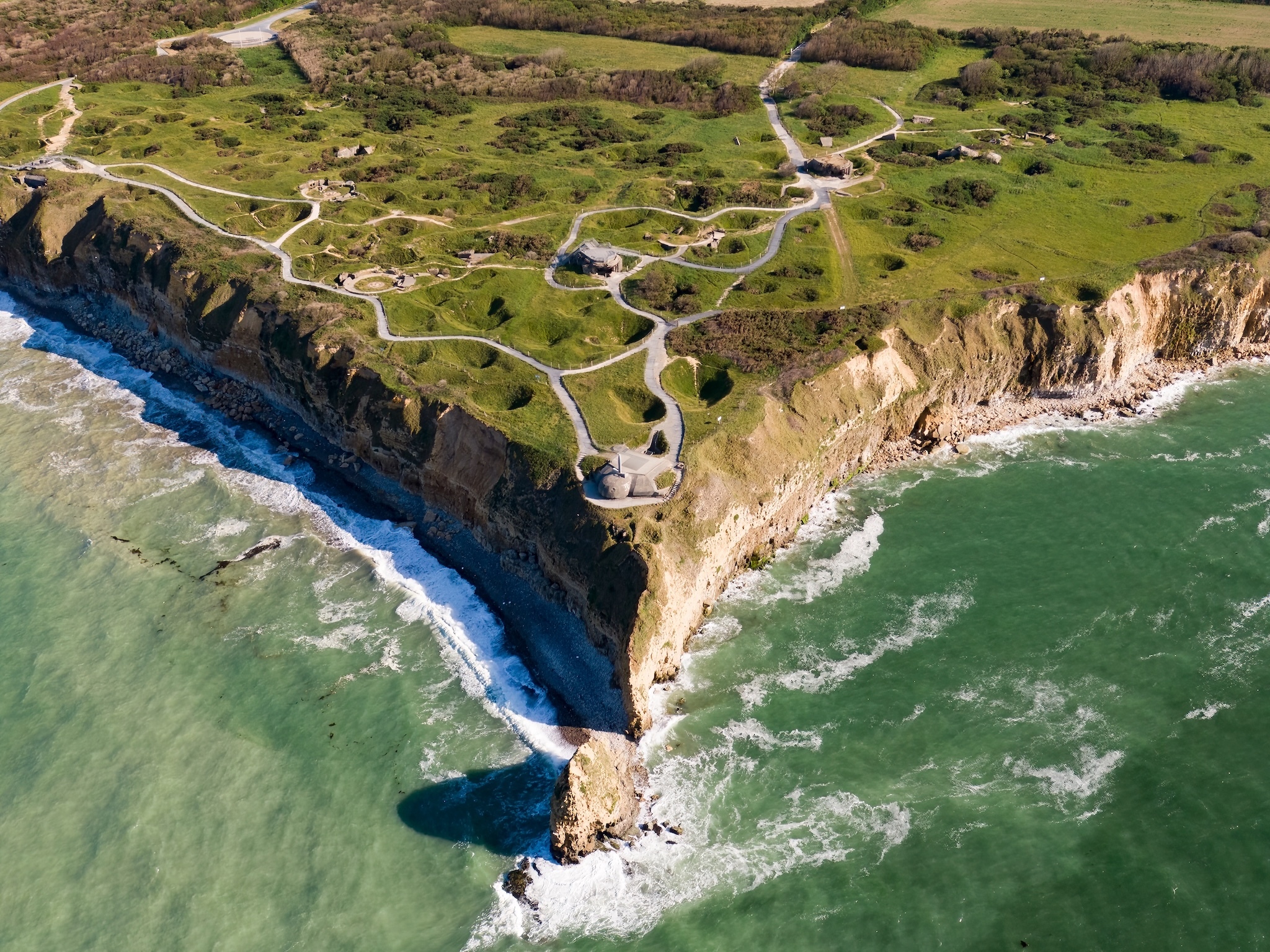
Among the newly designated sites are the Beaches of the D-Day Landings in Normandy, France. The inscription covers Utah, Omaha, Gold, Juno and Sword beaches, plus Pointe du Hoc, along with the remains of the German Atlantic Wall and the American Cemetery at Colleville-sur-Mer. It’s the kind of place you’ve probably seen in a hundred war films, and now it’s permanently protected as one of humanity’s most significant historical landscapes.
Iran’s Alamūt Castle and Related Fortifications also joins the list, a network of forts perched dramatically in the Alborz Mountains that once served as the political and intellectual centre of the Nezāri Ismaʿilis, a Shia Muslim community whose stronghold became the stuff of legend among outsiders, eventually inspiring the ‘Assassins’ of popular culture (including that video game franchise).
Over in India, the Ancient Buddhist Site of Sarnath gets its due. This is the spot where the Buddha is believed to have delivered his very first sermon back in the sixth century BCE, making it older than the Colosseum. It fell into obscurity for centuries before being rediscovered in the eighteenth century, and today it’s both a major archaeological site and a working pilgrimage destination for Buddhists worldwide.
Then there’s Greece’s Mount Olympus, this year’s only designated ‘mixed’ site, recognised for both culture and nature in one go. Culturally, it’s the mythological HQ of Zeus and the rest of the Twelve Olympians. Naturally, it’s a biodiversity hotspot for Mediterranean plant life and a glacial refuge for ancient forest species. Turns out the gods had impeccable taste in scenery.
Not every addition is a straightforward celebration. Boma-Badingilo Migratory Landscape in South Sudan, Mount Amel Castles in Lebanon, and Sebastia in the State of Palestine were all fast-tracked onto the list via an emergency procedure, reserved for heritage facing serious, immediate threats from conflict. All three have simultaneously been placed on UNESCO’s List of World Heritage in Danger.
All 25 new UNESCO World Heritage Sites for 2026
Cultural properties:
- Aalto Works, Finland
- Alamūt Castle and Related Fortifications, Iran
- Amazonia Theaters, Brazil
- Ancient Buddhist Site of Sarnath, India
- Ancient Capitals of Asuka and Fujiwara, Japan
- Beaches of the D-Day Landings, Normandy, 1944, France
- Gdynia Modernist City Centre, Poland
- Jingdezhen Handicraft Porcelain Industry Sites, China
- Mount Amel Castles, Lebanon
- Rock Mosques and Associated Sacred Sites of Mangystau, Kazakhstan
- Royal Capetian Fortresses of Languedoc, France
- Sebastia, State of Palestine
- Tashkent Modernist Architecture, Uzbekistan
- The Cemetery Complexes of the Xiongnu Nobility, Mongolia
- The Medinas of the Historic Sultanates of the Comoros, Comoros
- The Roças of Sao Tome and Principe, Sao Tome and Principe
- The System of Italian-style Condominio Theatres, Italy
- Village of Sidi Bou Saïd, Tunisia
- Wat Phra Mahathat Woramahawihan, Nakhon Si Thammarat, Thailand
Natural properties:
- Aqaba Marine Reserve, Jordan
- Boma-Badingilo Migratory Landscape, South Sudan
- Okefenokee National Wildlife Refuge, USA
- The Bony Fish Fossils of the Western Limfjord, Denmark
- Wadi Wurayah, United Arab Emirates
Mixed properties
- The wider area of Mount Olympus, Greece
Fancy more UNESCO content? A travelling disco is heading to an Italian UNESCO World Heritage Site this year
Plus: This opulent European royal palace has just reopened to the public after a four-year closure.
Stay in the loop: sign up to our free Travel newsletter for all the latest travel news and best stuff happening across the world.