





Andrew, this is such an expansive film with incredible specificity in its community, music and vocations. What was personal about this story for you?
Andrew Patterson: It takes place where I was born and raised. My grandparents were farmers in Altus, Oklahoma, and I wanted to see something that looked like the places that were twenty minutes from my house, where people were getting through life together. But they were never really precious about it. They’re not counting their time, and they’re not too worried about anything other than making a living. I hadn’t seen that done, and that was what I started with; with this world that I wanted to see on screen.
Matthew, having a vocation as unique as a beekeeper in a role is a real gift for an actor. Watching the scenes of you handling the bees, there’s this marvelous level of calm you must be able to harness there. What did learning about the art of beekeeping teach you about yourself as an actor and as a person?
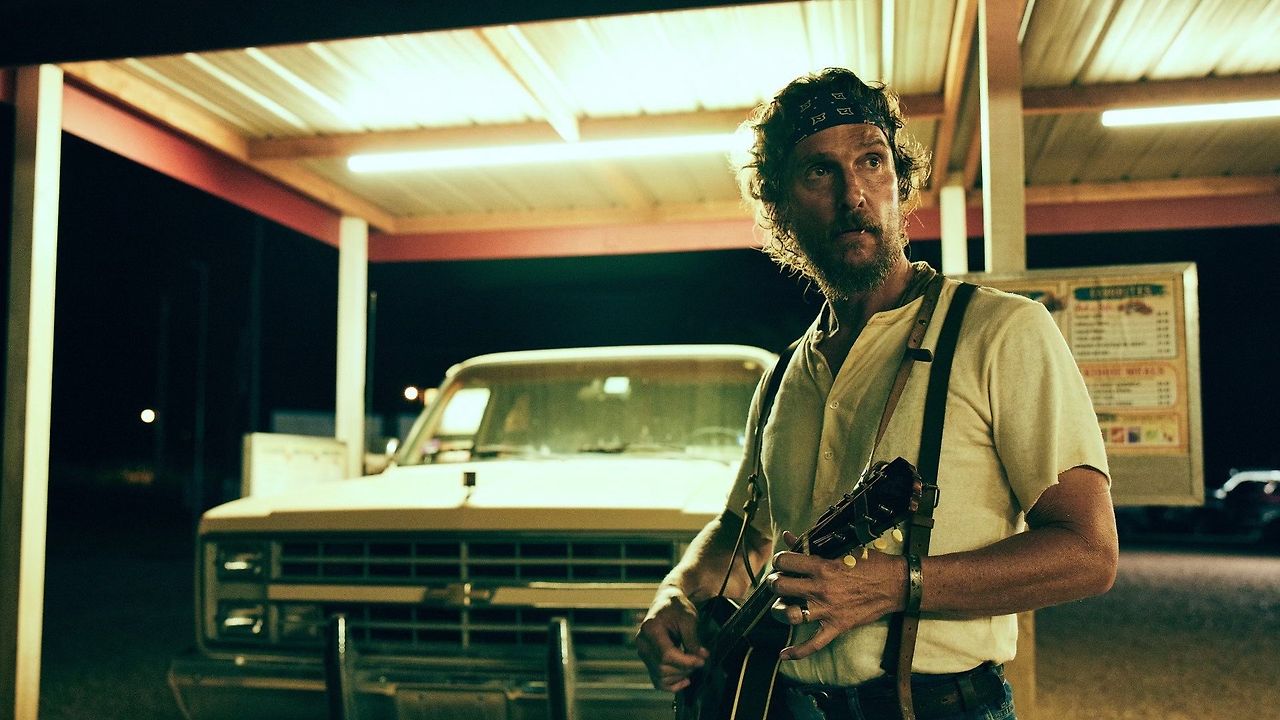
Matthew McConaughey: Amziah’s in church when he’s with the bees. They’re his muse, they’re his mirror to how he goes through life, how he sees society, how he sees community, and they’re a mirror to his misfit tribe all around him. He’s then reunited with a princess, who he shepherds and helps become a queen later on, so there’s that metaphor.
Where Andrew and I met spiritually was that, regardless of your denomination or what your definition of religion is, we both believe that life is essentially a religious experience. If you want to call it that or not, there’s a hope of a better future. Whatever the reason to wake up, there’s something to look forward to. Amziah has a great appreciation for the community of bees and how they work, and how everyone must play a role for the community to work. The amount of patience they have, the amount of organization they have. And they can admit the evil in mankind, in rivals, in enemies—whether it’s a damn honey bear or a tornado, they’re coming so be ready. You can deny they’re coming, but you’re going to get eaten up.
That’s true, whether we want to admit it or not. Death is a part of life, and it’s not a morose thing to admit that. Our lead character, Amziah, leaves the film right in the middle of it. You’re thinking, “What? That doesn’t make any sense.” Well, sure it does. Because he goes on living, spiritually, through Kateri, and the rest of the tribe after he’s physically gone from this life. That’s about Amziah and the bees, right there.
Andrew Patterson: I arrived at the notion of what the bees are in the plot pretty soon. I knew enough about the industry that I could write the drama that occurs in the story, but it doesn’t mean as a viewer you’re going to care, right? We’ve seen really smart ideas, high concept things, in movies where you think you should maybe have had more investment. Ultimately, that’s just the location for a potential dynamic, if I’ve done it right. Once I established, “Alright, this is about bees, this is about honey,” the things that actually make this movie unique aren’t even that. It’s just how the characters disarm you. It’s their sense of humor, it’s the music, it’s those things that stick out. When I’m writing, the beats of the narrative come quickly, and then the things that actually make the movie new and unique end up coming from the characters as you get to know them more.
You’ve said that you wanted to make a musical without it feeling like the movie stopped for the music. How did you work to build the music into the rhythm of the movie, or perhaps more accurately, to build the rhythm of the movie around music itself?
Andrew Patterson: When I was writing the script, I gave myself absolutely no parameters early on. This was going to be something I just did with some friends, shoot it on credit cards, and let’s see what happened. It was leaner, let me be really clear about that. Some of the biggest set-pieces you see in the final version weren’t there, just the original idea of “If I had a movie that I wanted to make and nobody told me anything, it wasn’t trying to get into a festival, what do I want to see in it?” I got to about page six in this early draft, and Amziah meets his daughter, and he sits her down at his kitchen table and says, “Hey, what kind of music do you listen to?” He then grabs an instrument and starts to pull her out of her shell.
This was an early draft, just for me, for a movie I was going to make for nothing. Over the years, my career changed and I got more opportunities. I had more people chasing me, and every single time I had an opportunity to do anything else, nothing captured my imagination like what I thought this could be, with this music in this world, if I pulled it off. Nothing. That’s how in love I was with the potential of what I could maybe pull off. That’s how intrinsic it was.