



Pictures courtesy of Getty Images / BBC
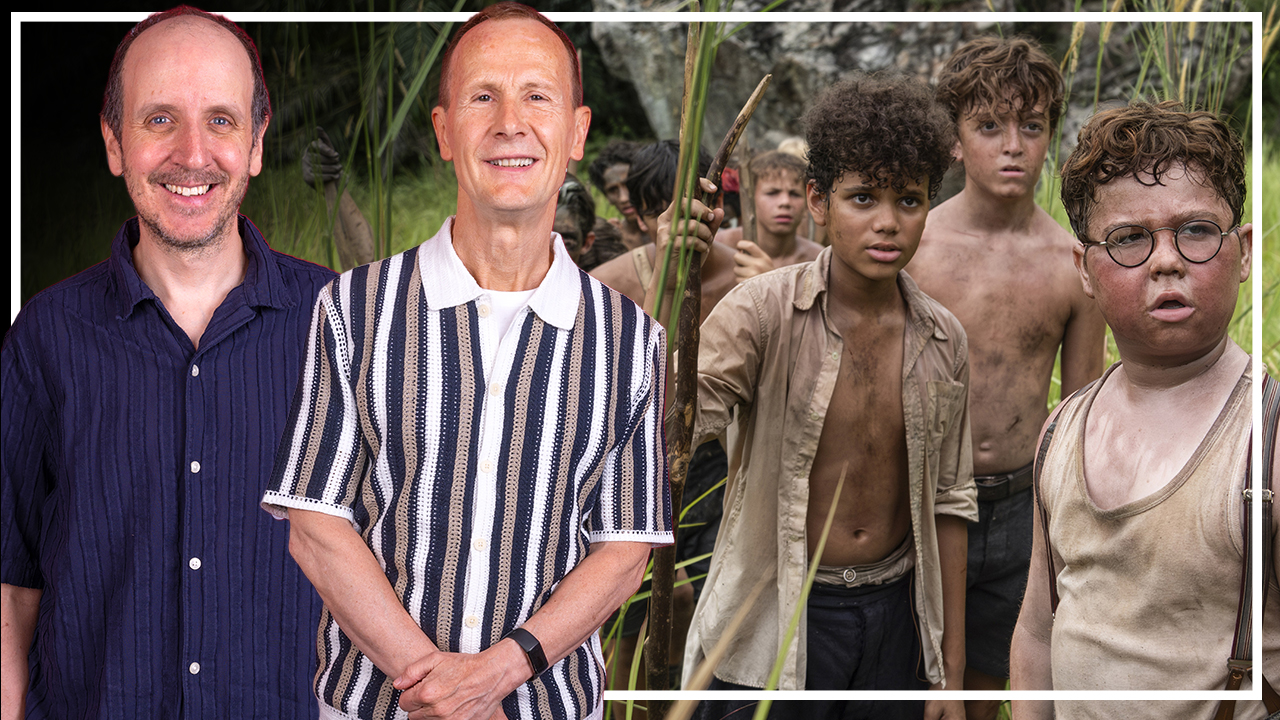
Adapting William Golding’s seminal novel Lord of the Flies for the screen required celebrated screenwriter Jack Thorne and director Marc Munden to exit their comfort zones. In this big interview, they dive into their creative processes and explain just how they managed to adapt Golding’s literary masterpiece.
Acclaimed screenwriter Jack Thorne is one of the most acclaimed TV writers out there. Look no further than his work on Adolescence, Netflix’s most successful limited series ever. For his latest project, he adapted William Golding’s seminal 1954 novel Lord of the Flies — a story he says “changed me as a kid.” In revisiting the story for an adaptation, he reunited with long-time collaborator and director Marc Munden. The duo had previously worked together on several projects, including Help (2021) and miniseries National Treasure (2016).
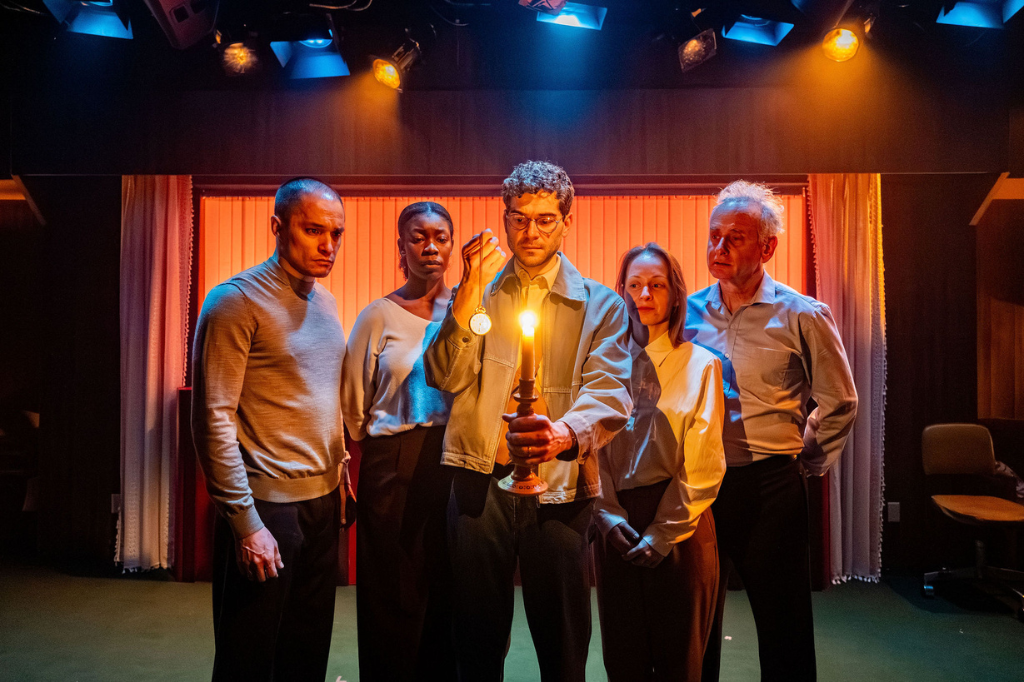
Adapting Lord of the Flies presented one of their biggest creative challenges yet. The story, known for its allegorical commentary on human nature, follows a large group of British schoolboys stranded on a tropical island following a plane crash. As they attempt to govern themselves through a blend of both democracy and, later, dictatorship, they ultimately descend into savagery. It’s one of the most brutal and disturbing shows you’ll watch this year.
“It’s the book that changed me as a kid; it’s the book that did the most damage to me as a kid; it’s the book that left me most confused as a kid. And it’s one that I’ve read and re-read all my life. It was something that I tried to make 15 years ago for Channel 4, and we couldn’t get the rights. This time, it was Joel Wilson, who’s our executive producer. I was having Sunday lunch at his house. And he said, ‘go on, what’s the book? What’s the one book you’d do anything to do?’ And I said, Lord of the Flies. And he said, ‘I’m going to make that happen.’… and he did.”
Naturally, with the project locked down, Thorne reached out to director Marc Munden to helm the ambitious adaptation. “I stood behind him going, please, please, poking him in the back as he read the script.”
Picture Credit: BBC / Netflix
Munden himself was intimidated by adapting such a coveted work. “When I read the script, I was quite daunted by making it because I saw the Peter Brook film; it’s quite an iconic film. And I thought, what’s the point of remaking it? And of course it was made 50 years ago or so — so there was a reason for doing it. But it wasn’t to modernise it in any way. It’s just to do what I think Jack brought out of the book, which was an exploration of the characters and the time to explore it over four hours. I knew that we’d have fun making it.”
“I do think that there’s something about television that suits this book,” Thorne added.
How did Thorne and Munden work to bring Lord of the Flies to television? What were the biggest trials and tribulations they faced? Check out our full interview down below!
What’s On Netflix: On the surface, Lord of the Flies can be seen as black-and-white, but as you dig deeper, you realise it’s so much deeper than that. You approach the series specifically focusing on different perspectives? Talk me through that multi-perspective approach?
Jack Thorne: I think there’s something about the chapter format of television, the vocabulary of television, which can really help you understand the book. And what we tried to do in adapting it was bring that out. So by giving the second episode to Jack, I think you’re given a window into why the chaos happens and you’re given a sympathy for the chaos-maker, which helps the telling. And it’s very true to how Golding wrote that book. He wrote that book with tenderness towards all the boys.
That [multi-perspective approach] was in our first pitch, that it was a relay race. The interesting thing is that it was really clear who should have episodes two and three. And two, because the fire goes out had to be Jack. And because two is the hunting and the killing of a pig also is Jack’s story. It suited me that Jack was given the conch for that episode. Simon also, for obvious reasons, it had to be Simon’s episode: He talks to the Lord of the Flies in it.
With Ralph and Piggy, it was actually quite tricky to know who should have which bit, because Ralph is ostensibly the eyes with which you see the whole the whole thing happen. Golding, interestingly, doesn’t open with Ralph — he opens with Piggy meeting Ralph. But Ralph is ourlead character, and I thought there was something really intriguing about having him as the fourth episode. When war is breaking out, you see it through the character whose eyes have been kept from you for the whole show. And then he drives us through to the end.
Marc Munden: It’s not so much about perspective as those characters being right at the centre of the piece. And I think one of the great things about doing it in four hours was that, when you’ve got writing like Jack’s, the character is the story. You’re exploring those characters interactions, so it’s about really digging into that. I think one of the things that I really enjoyed was trying to echo those characters outwards into the world that we’d created. It was about trying to take those individuals and echo them outwards into the into the setting of the island and also, the design and music and things like that.

Picture Credit: BBC / Netflix
WoN: You’ve mentioned that when you read that book as a child, it changed you. When you revisited Lord of the Flies as an adult, did anything hit you differently or did you see from a different perspective from an adult’s point of view?
Jack Thorne: When I read it when I was 11, I read it thinking I’m Simon. I understand what Simon’s trying to do on the island. I feel like Simon. I know Jack on my playground. I know who Jack is and I hate Jack. Then I read it in my 20s and went, ‘oh, I’m not Simon’. I’m not good enough to be Simon because 20s was a very solid period of self-hatred for me. It wasn’t until my 30s when I read it again and I went, ‘oh, he’s not writing Jack like I thought he did’. Jack is not the character that I thought he was. There’s tenderness here. There’s truth here. This is not something which is inevitable. What happens on the island isn’t inevitable. There isn’t inevitability to the breakdown of relationships. This is a guy that’s actually capable of better. He just gets drawn to worst. And that’s the tragedy of the story. It was Jack who changed for me most radically.
Marc Munden: For me, I could see that there was a political parable in some ways. And I think it’s not about the inevitability of that breakdown of society. It’s as Jack says, it’s about those incremental little decisions that are made and the weaknesses within the characters. I think it was about a challenge of trying to put those very clearly on the screen because they’re not always to do with the incidents but to do with the characters as well. They’re to do with Jack’s loneliness. They’re to do with Simon’s isolation. Just make sure that those were components in that inevitable breakdown.
WoN: Tell me about filming in Malaysia, which must’ve been as incredible as it was challenging. What were the biggest challenges you faced in filming in that environment?
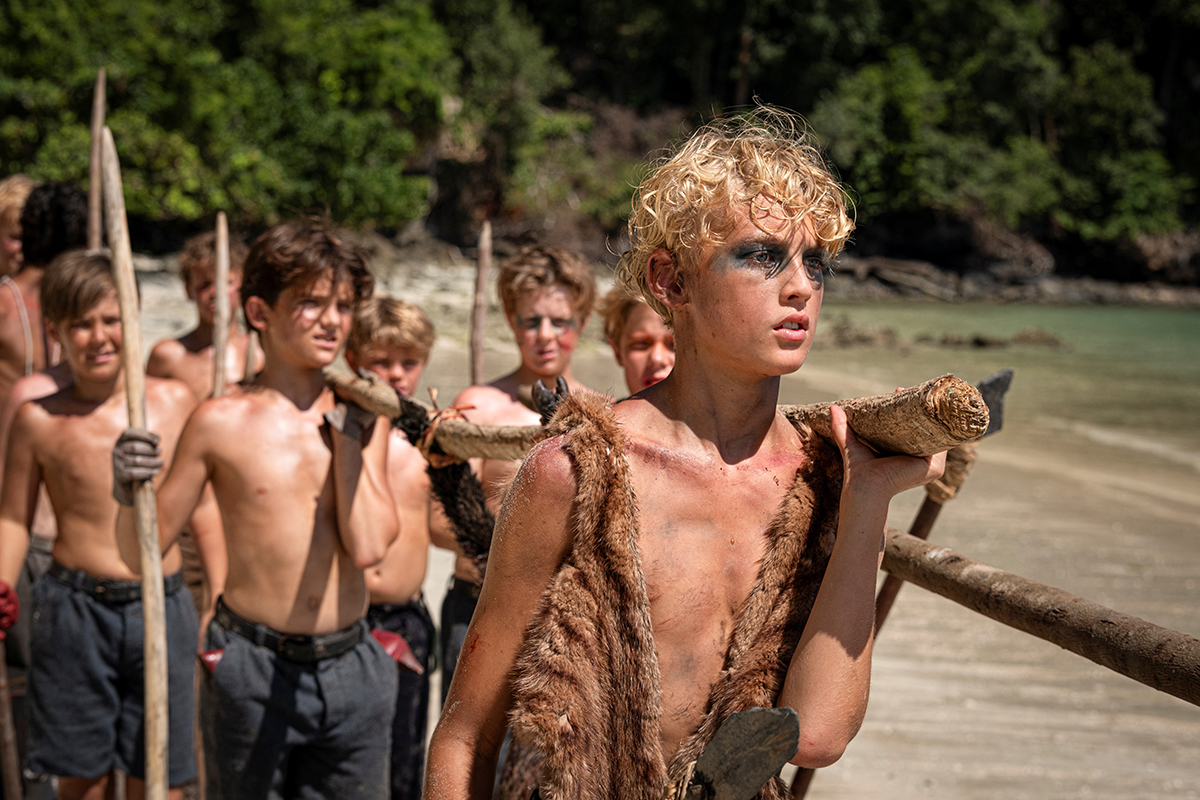
Marc Munden: Every single decision we made was the most difficult one [laughs]. I mean, a normal production would be filming on islands very close to facilities and things. We actually filmed on uninhabited islands in which we had to travel to for 40 minutes every day, where you couldn’t build anything. You couldn’t really build shelters. We had tents and things. We also filmed during the monsoons as well. A lot of torrential rain and also extreme humidity. So that was another decision which perhaps, if we’d been given the luxury of being able to plan it, we might not have done as well.
So it was tough. But I think that what you get from that is the sort of incredible alien beauty of the rainforest and of these beaches. That is obviously a big part of the piece. First of all, as an extraordinary exotic environment, but as the piece progresses, it echoes the sort of the disintegration of those of that little group of boys. All of that — the incredible life in the rainforest and the way that the rainforest ecosystem works with bits dying away and bits growing and bits helping each other out — all echo the boys’ journeys.
One day we got completely flooded out. Another day we were caught on an island in a storm so we couldn’t leave it. Tables were flying across the sets. I got covered in leech bites everywhere. I was bleeding all over from this leech bite. I mean, it really was sort of quite out there. I got a rattan plant through my ear as well.
Jack Thorne: There were men with machetes who were making paths for us. It really was Werner Herzog type Fitzcarraldo craziness. We did look at other islands that were much more sensible. And Mark went, ‘no, no, no.’
Picture Credit: BBC / Netflix
WoN: Why was it vital for you to keep this adaptation in the 1950s rather than updating it to present day?
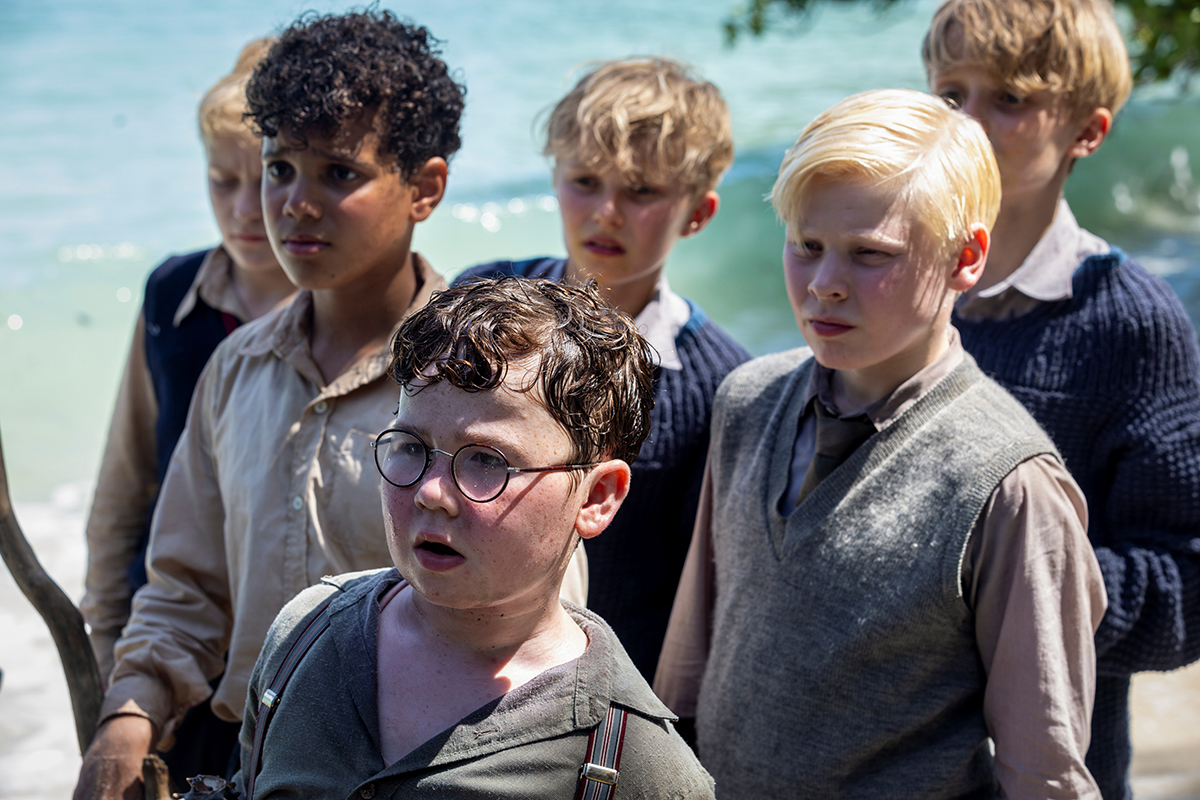
Jack Thorne: I think the language and behaviour is specific, and that’s what I love about it, that a lot of people say that this is a story about people in the state of nature. It isn’t. It’s about a bunch of public school boys in the 1950s. That’s what makes it special. That’s what makes it interesting, that he has such sociological insight into the human condition because he knows these boys. And if you’re trying to faithfully represent the book, which is what we were trying to do all the time, you have to go with the boys that Golding knew. So I’m sure it is possible to reinvent it for our modern age. Arguably, Yellowjackets did. I think the influence of Lord of the Flies on Yellowjackets is pretty clear to see. But we wanted to tell the story of this book. And that meant being true to the time.
Most of those boys have parents who probably lived through two world wars.
Marc Munden: The book written in 1954 was Golding’s response to his service in the Second World War and the horrors that he saw there. And it’s also written in the middle of the Cold War. And I think that Cold War haunts us right throughout this adaptation. There are also boys that are mimicking their parents in some sort of way and making decisions that their parents might have made, with all the class elements that come with that as well. And I think that’s probably changed over time. But it still seems in the way that Jack wrote it, it still seems quite modern.
Jack Thorne: That’s extraordinary to think about; that they are traumatised. Those parents are traumatised by war. And the boys have been taught how to be humans by people that are traumatised by war and probably overwhelmed with hate. And you need to understand that when you’re trying to shape these boys because those are the boys that Golding knew.
WoN: Jack, there’s a real conversation running through your (especially) recent work about boys, violence, and emotional damage. Why do you think you keep returning to those themes?
Jack Thorne: I mean, it’s not always intentional. It’s not like I went, ‘all right, now I’m doing my boy era ‘where I’m just going to go into that sort of teenage boy stuff. And thankfully, the stuff I’m writing next isn’t going into that realm. But I do keep going back to it because I do think if we understand how we’re made, we might have some sense of understanding the world in which we live. And I am confused and confounded by the world in which we live right now. I don’t see kindness as much as I want to. And so trying to understand what’s gone wrong, trying to get the spanner out to understand what’s gone wrong, I think does require looking at that time. We are all still haunted, all of us. If you go on a date with someone and you ask them what they were like at school, then you’ve got three hours of conversation. We’re all haunted by it and we’ve all got to look at it. And if we look at it with specificity, then maybe we can understand it.
Marc Munden: And I think one of the lucky things that we encountered was that as soon as we got those boys in, they all implicitly understood that behaviour from the playgrounds. They all implicitly understood bullying and who’s the coolest.
This interview has been edited for clarity and brevity.
We thank Jack Throne and Marc Munden for their time Lord of the Flies is now streaming on Netflix.